

Most vans need a Thatcham S7 tracker to satisfy insurer tracker conditions; vans requiring Automatic Driver Recognition need S5 instead. Either way, professional installation and a valid installation certificate are non‑negotiable. Approved trackers can reduce premiums on some policies, but no insurer guarantees a discount, so confirm terms before you buy.
TL;DR:
- Most vans need a Thatcham S7 tracker, while vans requiring Automatic Driver Recognition need an S5, with professional installation and certification being essential.
- Insurance discounts from approved trackers are possible but vary between 5 and 20 percent, and insurers often bundle tracker requirements into eligibility rather than a guaranteed price reduction.
- The typical cost for fitted Thatcham trackers starts around 329 pounds, with the first-year total including subscription ranging from 479 to 779 pounds depending on features and bundle options.
- To satisfy insurance conditions, trackers must be installed by accredited fitters who provide a certificate including serial number, installation date, and contact details, then shared with the insurer.
- Confirm with your insurer whether S5 or S7 is required before purchase, ensure proper paperwork, and remember that certification is necessary but not a guarantee of a discount or acceptance.
Table of Contents
- What does “insurance approved” mean for van tracker insurance in the UK?
- Do trackers actually lower van insurance premiums, and by how much?
- What does a Thatcham tracker for a van typically cost?
- How do I get a tracker certificate that satisfies my insurer?
- Which tracker features actually matter for a working van?
- How do I choose the right tracker: a checklist before you buy
- Why Thatcham certification matters and what it actually guarantees
- Where the conventional advice on van trackers gets it wrong
- Getting your van fitted with an insurance approved tracker
- Sources
- FAQ
What does “insurance approved” mean for van tracker insurance in the UK?
Thatcham Research is the UK body that tests and certifies vehicle security equipment, including trackers, so insurers have a common standard to work from. When a policy says a vehicle must have an “insurance approved tracker,” it almost always means a device certified to one of Thatcham’s categories, not any GPS gadget bought online.
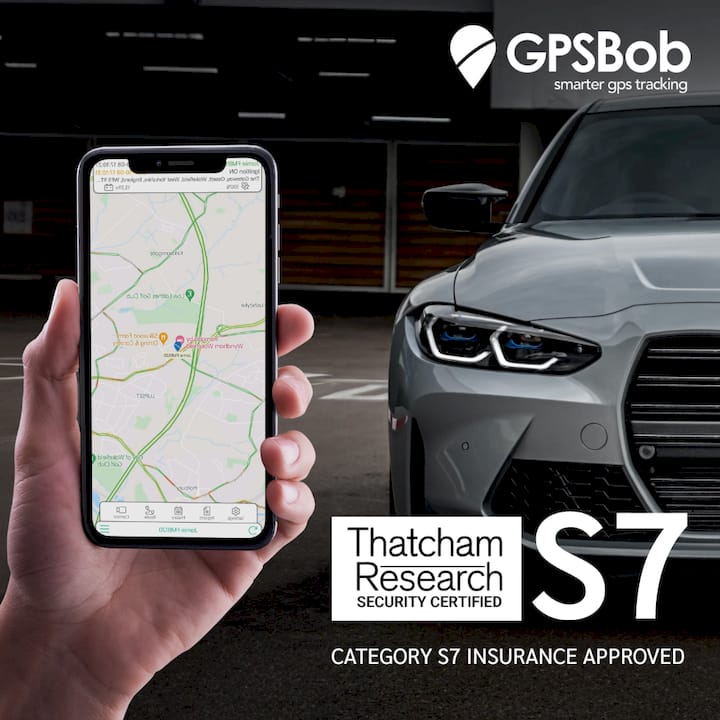
For vans, that usually means S7 or S5. Both are asset location systems built around continuous monitoring rather than a simple locator app.
S7 typically covers:
- 24/7 monitoring through a centre meeting the BS 8591 Category 1 equivalent standard
- Roaming SIM connectivity, so the tracker keeps reporting even if one network drops out
- GPS location with a backup battery, so it still transmits if the vehicle battery is disconnected
- Tamper resistance and regular self health checks
S5 carries every S7 requirement plus one extra layer: Automatic Driver Recognition (ADR), which identifies who is driving via a tag or fob. Insurers ask for S5 mainly on higher‑value vans, refrigerated fleets, or vehicles carrying expensive tools where driver identity matters for risk assessment.
One catch worth flagging: plenty of policy documents still use the old naming, Category 5, 6, or 7, rather than S5 and S7. They map across, but don’t assume your insurer’s wording and your tracker’s spec sheet use the same language. Email your insurer and ask them to confirm which current category satisfies your policy.
Do trackers actually lower van insurance premiums, and by how much?
Discounts exist, but they’re inconsistent. Industry commentary on fleet and van telematics points to savings of roughly 5 to 20 percent on some policies, though the exact figure depends heavily on the insurer, the van’s value, and how it’s used.
What drives the variation:
- Insurers weigh theft risk differently depending on postcode, van type, and claims history
- A high‑value refrigerated van or one carrying specialist tools tends to see a larger swing than a standard panel van
- Some insurers bundle the tracker requirement into eligibility rather than a price cut, meaning you need the device just to get cover at all
Statistic: Fleet telematics providers cite savings in the 5 to 20 percent band, but that range reflects reported outcomes across multiple insurers, not a fixed rate any single policyholder can expect.
Thatcham certification gives insurers a reliable way to assess theft risk. It doesn’t automatically trigger a discount, because certification and insurer acceptance are two separate things; acceptance is negotiated insurer by insurer.
The practical move is to get two quotes, one with the tracker fitted and one without, before you commit to buying. Then ask for any discount confirmed in writing, not verbally over the phone. If your renewal letter simply says “tracker required” with no percentage attached, push for a number before you spend money on hardware.
What does a Thatcham tracker for a van typically cost?
Costs vary by device, fitting complexity, and subscription length, but there’s a workable pattern across the market. Fitted S7 units often start from around £329 for the hardware and fitting, with first‑year totals including subscription landing somewhere between £479 and £779 depending on the product and whether you take a multi‑year bundle.
What typically makes up the total:
- Hardware and professional fitting, usually the largest single cost in year one
- An annual or monthly monitoring subscription covering 24/7 alerts, recovery coordination, and police liaison
- Optional extras: ADR tags for S5 compliance, immobiliser add‑ons, or fitting on multiple vans
Ongoing subscription fees pay for the monitoring centre that watches the tracker around the clock and coordinates with police if the van is stolen. Skip that subscription and the hardware becomes a locator with nobody watching it.
Fleet owners fitting several vans should ask about multi‑vehicle pricing before ordering one at a time; per‑unit rates on subscriptions and installation call‑out fees often drop once you’re past two or three vehicles. It’s worth asking the question even if you only run three vans now, since most suppliers scale pricing at that point.
How do I get a tracker certificate that satisfies my insurer?
Self‑fitting a tracker, even a genuinely Thatcham‑certified device, won’t satisfy most policy conditions. Installation has to be carried out by an accredited fitter, and that fitter needs to issue paperwork your insurer can verify.
Steps to get this right:
- Book installation with a Thatcham‑accredited fitter, not a general auto electrician
- Confirm the certificate includes the device’s serial number, fitting date, and the installer’s contact details
- Activate the monitoring subscription immediately, since an inactive tracker isn’t a monitored one
- Send your insurer written confirmation of fitment, attaching the certificate rather than just describing it
- Keep a copy of everything, ideally a scanned PDF, in case of a claims dispute later
Pro Tip: Ask the fitter to email the certificate directly to you and your insurer’s underwriting address on the same day, rather than posting a paper copy. It closes the loop faster and gives you a timestamped record if there’s ever a query.
Insurers ask for this paperwork because a tracker without proof of professional fitment is unverifiable, and an unverifiable device doesn’t reduce their risk assessment.
Which tracker features actually matter for a working van?
Not every van needs the same setup. A window fitter’s panel van carrying a few hundred pounds of kit has different risk exposure to a refrigerated delivery van worth £45,000.
Immobilisation is worth adding if your van carries valuable tools or stock, since it stops the vehicle being driven away even if someone gets past the locks. It’s a separate system to the tracker, but the two work well paired.
Dual‑tracker setups, a primary hardwired unit plus a hidden backup, improve recovery odds because thieves who find and disable one device often don’t know a second exists. Trade vans are increasingly fitted this way given how targeted tool theft has become.
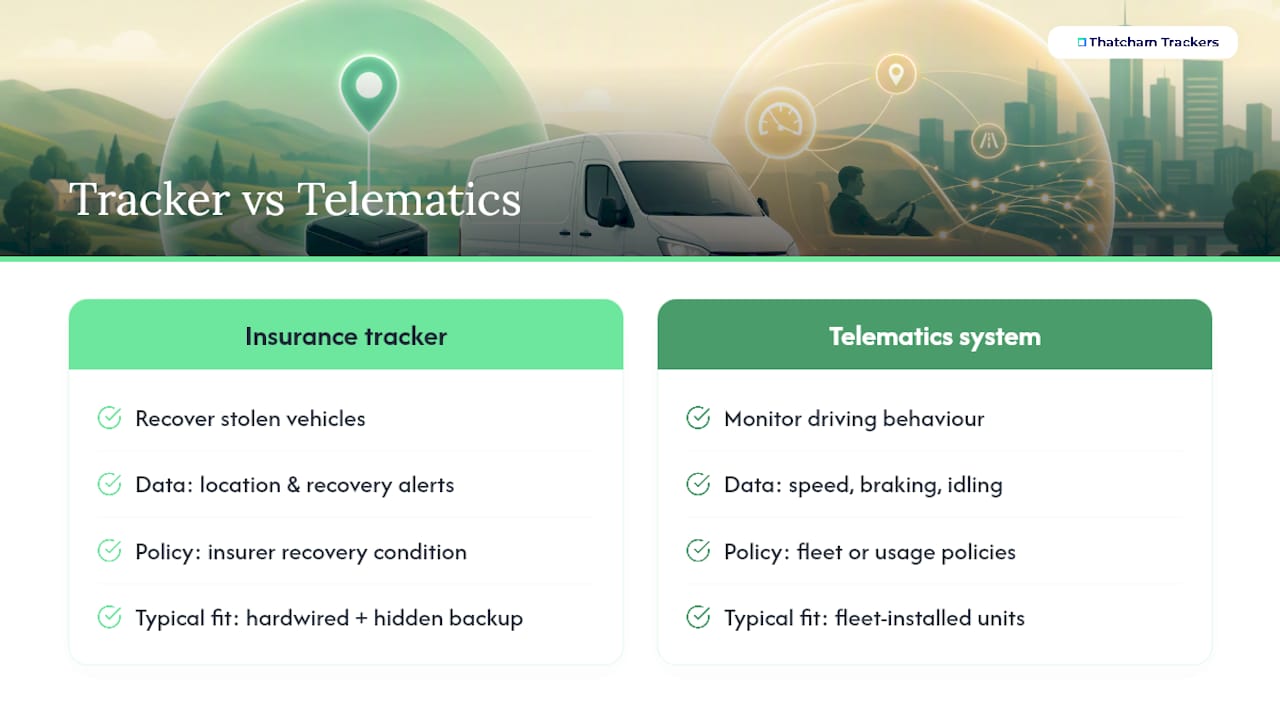
It’s also worth separating two different technologies that get lumped together. Insurance trackers exist to recover a stolen vehicle. Telematics systems monitor driving behaviour, harsh braking, speed, idling time, for fleet management or usage‑based policies. Some fleets need both, but buying one doesn’t automatically satisfy a policy condition written around the other.
Pro Tip: If your van carries tools worth more than the vehicle itself, pair the tracker with a physical deterrent like a good lock or alarm rather than relying on recovery alone. Prevention beats recovery every time a thief is opportunistic rather than targeted.
How do I choose the right tracker: a checklist before you buy
Work through this before contacting suppliers, not after.
Checklist:
- Confirm with your insurer, in writing, whether they specify S5 or S7 (or the older Cat 5/6/7 equivalent)
- Check the installer holds current Thatcham accreditation, not just general vehicle fitting experience
- Ask whether the monitoring centre meets BS 8591 Category 1 equivalent
- Establish whether ADR is genuinely required, since it’s the deciding factor between S5 and S7
- Ask about backup battery life and roaming SIM coverage, particularly if the van is parked somewhere with patchy signal
- Get the premium impact and any discount confirmed in writing before fitting
Questions worth sending your insurer directly: “Which Thatcham category satisfies my policy condition, S5 or S7?” and “What discount, if any, applies once the tracker is fitted and certified?” Fleet managers should also ask suppliers about multi‑vehicle pricing and whether fleet telematics can run alongside the insurance tracker without duplicating hardware.
Why Thatcham certification matters and what it actually guarantees
Thatcham Research runs an independent testing programme, meaning no manufacturer marks its own homework. Devices are assessed against the S5 and S7 feature lists, covering monitoring standards, connectivity, tamper resistance, and battery backup, and certified products face ongoing review.
Certification gives insurers a robust, independently verified benchmark for a device’s security performance. It confirms the tracker meets a defined technical standard. It does not, on its own, guarantee that any specific insurer will recognise it or apply a discount, because acceptance is negotiated between manufacturers and insurers rather than granted automatically.
What certification proves:
- The device passed defined technical tests for monitoring, connectivity, and tamper resistance
- Certified products undergo periodic review, not a one‑off test at launch
- The standard is consistent across manufacturers, so an S7 device from one supplier meets the same bar as another
That last point is exactly why buyers should never assume certification and insurer acceptance are the same conversation. Confirm both, separately.
Where the conventional advice on van trackers gets it wrong
Most guidance on this topic treats certification as a one‑and‑done fix: fit an S7, submit paperwork, watch your premium drop. Thatcham Trackers has seen enough insurer variance to disagree with that framing.
Certification is necessary, but it’s a floor, not a ceiling. The bigger mistake we see van owners make is fitting a tracker before checking whether their specific insurer wants S5 or S7, or before confirming any discount actually applies to their policy. That order should be reversed. Confirm the requirement and the financial upside first, in writing, then buy.
The second overlooked point is documentation. A tracker without a properly issued installation certificate, serial number, and installer contact details is functionally invisible to an insurer. It doesn’t matter how good the hardware is if the paperwork trail doesn’t exist when a claim is made.
Trade van owners should also stop treating trackers and immobilisation as competing purchases. They solve different problems, recovery versus prevention, and the vans most likely to be targeted for tool theft benefit from both.
— Thatcham Trackers
Getting your van fitted with an insurance approved tracker
Certified S7 and S5 devices are often available with accredited installation services nationwide, so the certificate your insurer asks for can arrive as standard, not as an afterthought you have to chase.
Before ordering, confirm with your insurer which category your policy actually requires, S5 for vans needing Automatic Driver Recognition, S7 for most others, then follow a fitting process built around getting your insurer‑ready paperwork rather than just a working gadget. Browse the full Thatcham‑approved tracker collection to compare fitted bundles, or head straight to the S7 product page if your van fits the standard category. Fleet managers running multiple vans can request pricing across the collection before booking installation dates.
Sources
For readers who want to verify anything in this guide directly at the source, start here:
- Vehicle security product definitions and guidelines (Thatcham Research)
- Thatcham approved trackers: S5 vs S7 (KeepClose)
- How van GPS trackers reduce insurance costs (GRSFT blog)
FAQ
What is the best van tracker in the UK?
There’s no single “best” device; the right choice depends on whether your insurer requires S7 or S5. For most vans without an ADR requirement, a certified S7 unit with 24/7 monitoring and a roaming SIM covers the typical policy condition.
Which trackers are insurance approved?
Only devices certified by Thatcham Research to the S5 or S7 standard, fitted by an accredited installer with a valid certificate, count as insurance approved. A GPS tracker bought without certification or professional fitting won’t satisfy most policy wording.
Is it illegal to put a tracker on a vehicle in the UK?
No, fitting a tracker to a vehicle you own or have legal authority over is legal. Covertly tracking someone else’s vehicle without consent, however, can breach data protection and privacy law.
Can I refuse to have a tracker fitted to my company van?
If your employment contract or the vehicle’s insurance policy makes tracker fitment a condition of use, refusing may breach that agreement rather than being a matter of personal choice. Check the specific policy or contract wording, since conditions vary between employers and insurers.