

Car tracker insurance requirement proof is the official documentation that confirms a Thatcham-certified tracking device has been professionally installed and is actively monitored on your vehicle. UK insurers treat this proof as a condition of cover or as the basis for a premium discount. Without it, a theft claim can be delayed, reduced, or rejected outright. Thatcham Research is the UK’s central automotive risk intelligence organisation, and its certification categories, primarily S5 and S7, are the standard insurers reference when assessing tracker compliance. Getting this right from the start protects both your vehicle and your policy.
What do UK insurers require as car tracker insurance requirement proof?
UK insurers require proof that a tracker is Thatcham-category certified and professionally installed, typically in the form of an official installation certificate. That certificate is not a receipt or a product box. It is a document issued by a Thatcham-recognised installer that records the device model, certification category, installation date, and the installer’s credentials.
The two main Thatcham certification categories relevant to car insurance are S5 and S7. S5 certified trackers provide GPS tracking with a monitoring centre response. S7 certified trackers add driver identification technology, which is why they are commonly required for high-value cars and motorhomes. Insurers specify which category they require in the policy wording, so reading that section carefully matters.
The full set of documents most insurers expect includes:
- Installation certificate issued by a Thatcham-recognised installer, showing the device category, serial number, and fitting date
- Purchase receipt confirming the tracker model and its Thatcham certification status
- Monitoring subscription confirmation showing the subscription is active and linked to your vehicle
- Written insurer acceptance confirming your specific device and installer meet the policy conditions
Pro Tip: Request written acceptance from your insurer before the tracker is fitted, not after. This removes any ambiguity about whether the device and installer meet their exact requirements.
How to verify your car insurance tracker requirements before buying
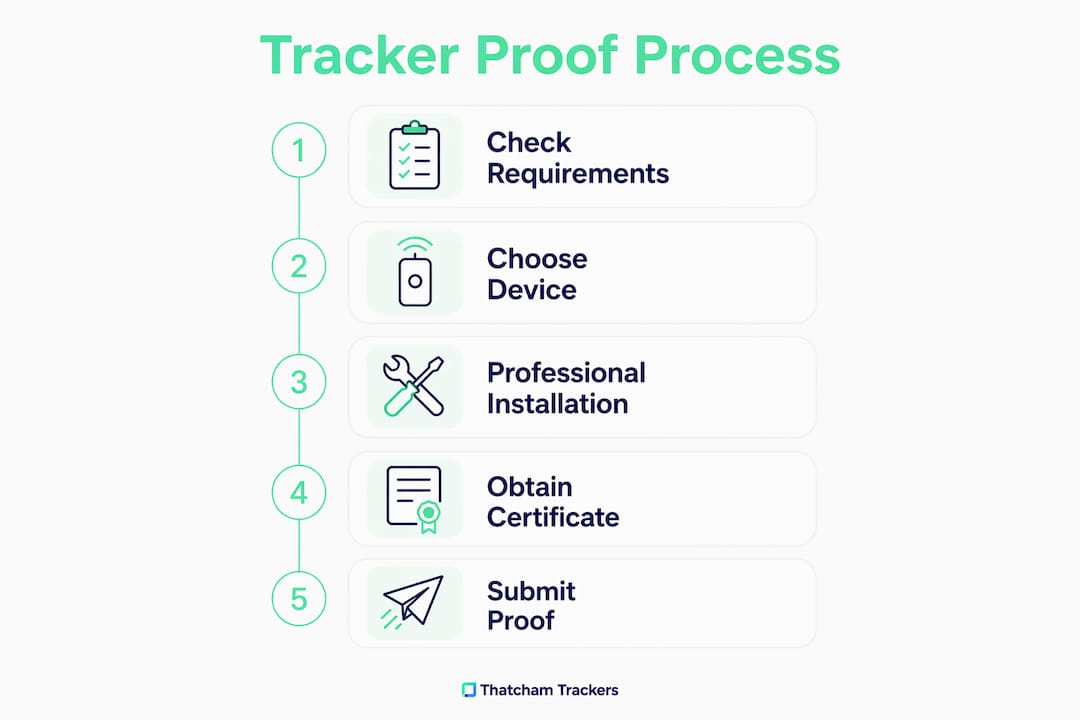
Confirming your insurer’s exact requirements before purchasing a tracker saves time and money. Always confirm tracker category and insurer requirements directly from your policy wording or broker, rather than relying on vendor claims alone.
Ask your insurer or broker these specific questions:
- Is a tracker mandatory on my policy, or optional for a discount? Some policies, particularly for sports cars and high-value motorhomes, make a tracker a condition of cover rather than an optional extra.
- Which Thatcham category is required? S5 and S7 carry different monitoring obligations. Confirm the exact category before purchasing.
- Does the installer need to be Thatcham-recognised? Most insurers require this. A tracker fitted by an unrecognised installer will not satisfy the proof requirement even if the device itself is certified.
- Is an active monitoring subscription required throughout the policy term? Subscriptions for GPS monitoring must be kept active during the policy term to maintain insurance benefits and validity.
- Do you need written confirmation of tracker acceptance? Requesting written confirmation of tracker acceptance from your insurer helps avoid compliance disputes at claim time.
- Are there any restrictions on tracker model or brand? Some insurers maintain an approved list. Check whether your chosen device appears on it.
New car insurance tracker requirements and sports car insurance tracker requirements often differ from standard policies. A new car may carry a manufacturer-fitted tracker that does not meet Thatcham S5 or S7 standards. A sports car insurer may require S7 with driver identification as a non-negotiable condition. Always do a new car tracker requirement check against your specific policy, not a generic guide.
How to obtain and provide valid tracker installation proof
Getting the right documentation is a process, not a single step. Follow this sequence to build a complete proof file.
- Confirm requirements in writing before booking installation. Contact your insurer, get their tracker requirements confirmed by email or letter, and keep that correspondence.
- Book a Thatcham-recognised installer. Thatcham-certified trackers installed by approved installers are the industry standard for insurance acceptance in the UK. Ask the installer to confirm their recognition status before the appointment.
- Obtain the installation certificate on the day. Do not leave without it. The certificate should state the device model, Thatcham category, serial number, installer name, and fitting date.
- Activate the monitoring subscription immediately. Some insurers require proof that the subscription was active from the date of installation, not from a later date.
- Submit your proof to the insurer proactively. Do not wait for them to ask. Send the installation certificate, purchase receipt, and subscription confirmation together. Request written acknowledgement that they have accepted the documentation.
Pro Tip: Scan every document and store digital copies in a dedicated folder alongside your insurance policy. If a claim arises, you can produce the full proof file within minutes rather than searching through paperwork.
Insurers require an auditable paper trail with certificate numbers, installer details, and evidence the tracker was activated and monitored. That phrase, auditable paper trail, is the key standard to meet.

Maintaining coverage: subscriptions and ongoing proof management
Providing proof at the point of installation is not the end of the process. Maintaining that proof throughout the policy term is equally important.
Insurers scrutinise installation verification, monitoring status, and documentation when investigating theft claims. A lapsed subscription at the time of theft is treated as a failure to meet policy conditions, regardless of whether the tracker was originally installed correctly.
Keep your documentation current with these practices:
- Set a subscription renewal reminder at least 30 days before the monitoring contract expires. A gap in coverage, even a brief one, can create a compliance issue.
- Notify your insurer of any changes to your vehicle or address. Changes such as moving house or policy renewal trigger reassessments of tracker acceptance and subscription status.
- Keep a complete dossier. Insurers require detailed record keeping of installation certificates, installer information, and monitoring proof for claims. Store this alongside your policy documents, both digitally and in hard copy.
- Reconfirm tracker acceptance at each renewal. Policy conditions can change. Ask your insurer at renewal whether your existing tracker and subscription still satisfy their current requirements.
- Check subscription status after any vehicle work. A garage visit or battery replacement can occasionally affect tracker function. Confirm the device is still active and communicating with the monitoring centre afterwards.
Car tracking insurance is only as strong as the documentation behind it. An active tracker with lapsed paperwork offers far less protection than one with a complete, current proof file.
Common mistakes when providing tracker insurance requirement proof
Most compliance failures come down to a small number of avoidable errors. Knowing them in advance is the most direct way to prevent them.
- Using a non-certified GPS tracker. Consumer self-install trackers lack Thatcham certification and will not satisfy insurer tracker conditions. A tracker purchased from a general electronics retailer and fitted at home does not count as tracker insurance proof, regardless of its technical capability.
- Losing or failing to collect the installation certificate. This is the single most common error. Without the certificate, there is no verifiable record of what was installed, when, or by whom.
- Letting the monitoring subscription lapse. An expired subscription means the tracker is no longer actively monitored. Insurers treat this as a breach of the tracker condition.
- Failing to notify the insurer. Fitting a tracker and assuming the insurer knows about it is not sufficient. Proof of a car tracker must be submitted and acknowledged.
- Submitting incomplete documentation. A purchase receipt alone, or a subscription email without an installation certificate, does not constitute complete proof. Insurers expect the full set.
“Insurer investigations focus equally on documentation and activation status as on the tracker hardware itself. A correctly installed device with incomplete paperwork carries the same risk as no tracker at all.”
If a claim is questioned due to tracker proof issues, contact your insurer immediately, provide every document you hold, and request a formal review. If the dispute continues, the Financial Ombudsman Service is the appropriate escalation route in the UK.
Key takeaways
Proof of a Thatcham-certified tracker installation requires an official installation certificate, active monitoring subscription, purchase receipt, and written insurer acceptance, all retained throughout the policy term.
| Point | Details |
|---|---|
| Certification category matters | Confirm whether your insurer requires Thatcham S5 or S7 before purchasing any device. |
| Installation certificate is mandatory | Obtain this document from a Thatcham-recognised installer on the day of fitting. |
| Active subscription is a condition | Keep the monitoring subscription current throughout the policy term to avoid claim issues. |
| Written insurer acceptance protects you | Request and retain written confirmation that your tracker and installer meet policy conditions. |
| Full documentation must be maintained | Store installation certificate, receipt, and subscription proof together, digitally and in hard copy. |
Thatcham Trackers: our view on proof management
The most common problem we see is not a lack of intention. Car owners and motorhome owners fit a certified tracker, pay for the subscription, and then assume the job is done. The gap appears later, at renewal or at claim time, when the insurer asks for documentation that was never collected or has since been lost.
Proof of a car tracker is not a formality. It is the mechanism by which your insurer validates that the security condition in your policy was genuinely met. A tracker without a complete paper trail is, from the insurer’s perspective, an unverified claim. That distinction matters enormously when a vehicle worth tens of thousands of pounds has been stolen.
The practical advice we give consistently is this: treat your tracker documentation the same way you treat your V5C or MOT certificate. It belongs in a dedicated file, backed up digitally, and reviewed at every renewal. The five minutes that takes at installation can prevent weeks of dispute later.
Proactive communication with your insurer is equally important. Submitting your proof file before they ask for it signals that you understand the policy condition and have met it. That positions you far better than scrambling to produce documents after a claim has been raised.
— Thatcham Trackers
Thatcham Trackers: certified devices and installation proof, ready for insurers
Meeting your insurer’s tracker requirements starts with choosing the right certified device.
Thatcham Trackers supplies insurance-approved trackers across S5, S5 Plus, and S7 categories, all professionally installed by Thatcham-recognised engineers who issue the official installation certificate on the day. Every fitting comes with the documentation your insurer needs: certificate, device details, and subscription confirmation. Whether your policy requires a standard S5 certified tracker or a higher-specification S7 device for a high-value car or motorhome, Thatcham Trackers provides a complete, insurer-ready solution from a single source.
FAQ
What counts as valid proof of a car tracker for insurance?
Valid proof includes an official installation certificate from a Thatcham-recognised installer, a purchase receipt confirming the device’s certification category, and confirmation that the monitoring subscription is active. Written acceptance from your insurer completes the proof file.
Do I need a Thatcham-certified tracker or will any GPS tracker do?
Only Thatcham-certified trackers satisfy UK insurer tracker conditions. Self-installed, non-certified GPS devices do not meet the standard, regardless of their technical specification.
What is the difference between Thatcham S5 and S7 for insurance purposes?
S5 trackers provide GPS tracking with monitoring centre response. S7 trackers add driver identification, making them the required category for many high-value cars, sports cars, and motorhomes where insurers demand a higher security standard.
Can my insurance be affected if my tracker subscription lapses?
Yes. A lapsed monitoring subscription can invalidate the tracker condition in your policy, potentially affecting claim outcomes or removing any premium discount linked to the device.
Do I need to tell my insurer when I fit a tracker?
Fitting a tracker without notifying your insurer and submitting proof does not satisfy the policy condition. Always submit your full documentation and obtain written confirmation that the insurer has accepted it.