

Most car tracker misconceptions come down to one of three misunderstandings: that trackers prevent theft, that any connected app will do, or that certified devices are too expensive to justify. None of these hold up. Here is the short version before the full breakdown.
TL;DR — myths and the one-line reality:
- “Trackers stop thieves” — False. A tracker aids recovery; it does not prevent theft.
- “My car’s built-in app tracks it if stolen” — False. Connected car features are convenience tools, not certified recovery systems.
- “GPS jammers make trackers useless” — Partly true. GPS-only devices are vulnerable; multi-technology systems are significantly more resilient.
- “My phone can track my car” — False. Smartphone apps track phones, not vehicles.
- “Trackers drain the battery” — Largely false. A correctly configured modern tracker draws under 2–10 mA in sleep mode.
- “Trackers are only for fleets” — False. Private owners benefit equally, especially for insurance purposes.
- “Car trackers invade privacy” — Mostly false. UK law governs consent and data use; lawful use is well-defined.
- “Trackers are too expensive” — False when weighed against insurance savings and vehicle replacement costs.
- “Installation is complicated” — False. Professional fitting takes a few hours and is the recommended route.
- “All trackers are equally reliable” — False. Thatcham Research certification is the key differentiator in the UK.
Pro Tip: Check whether your insurer specifies a Thatcham-approved class (S5 or S7) before purchasing any device. Buying the wrong category means no premium reduction and potentially no cover.
Table of Contents
- The most common misconceptions about car trackers, debunked
- How vehicle trackers actually work
- Real-world limitations you should know about
- How to check whether your vehicle is being tracked
- How to choose and use a tracker in the UK
- Why Thatcham Research certification matters in the UK
- Key takeaways
- The case for getting this right from the start
- Certified protection, professionally installed
- Useful sources and further reading
The most common misconceptions about car trackers, debunked
1. A tracker will prevent your car from being stolen
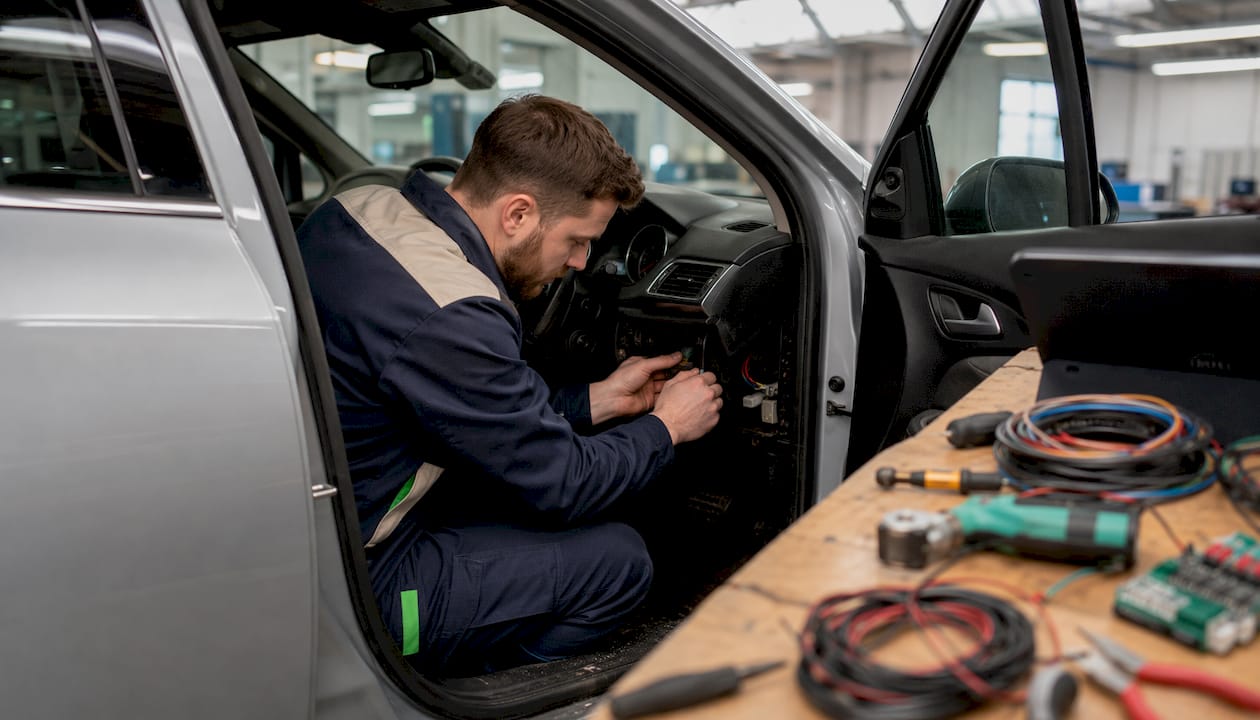
Myth: Fitting a tracker means thieves will not bother with your vehicle.
Reality: Trackers are recovery tools, not deterrents. Physical prevention — steering locks, immobilisers, and secure parking — remains the first line of defence. A tracker records and reports location; it does not stop a determined thief from driving away. Security guidance consistently stresses that prevention measures should be in place before relying on recovery technology. The two approaches work together, not as substitutes for each other.
2. Your car’s built-in connected app is good enough
Myth: Manufacturer apps like Kia Connect or BMW ConnectedDrive provide live stolen-vehicle tracking.
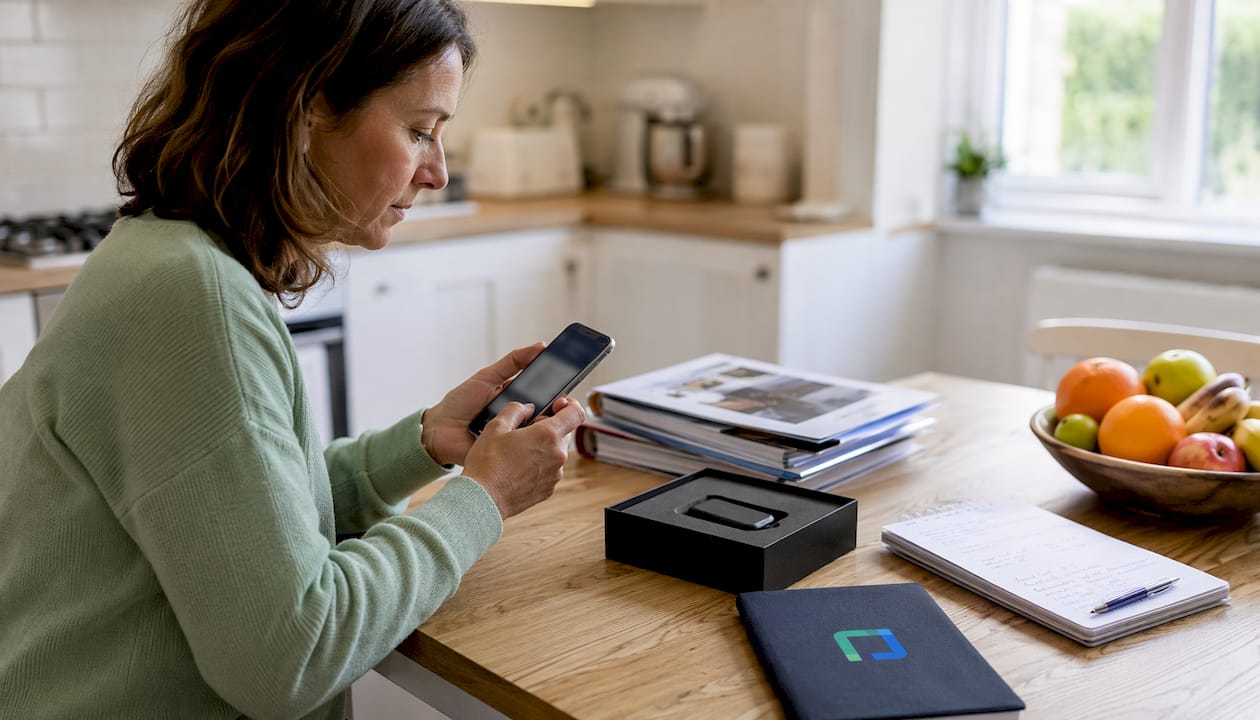
Reality: Thatcham Research warns that most in-car connected features are designed for convenience, not certified security recovery. Kia told the BBC directly: “Kia Connect is a customer convenience feature, not a certified security vehicle tracker.” UK law further restricts how location data from these services can be released, even to the vehicle’s owner. These apps are not engineered with independent power sources, professional monitoring centres, or police liaison protocols — all of which dedicated certified trackers provide.
3. GPS jammers make any tracker useless
Myth: Criminals can simply buy a jammer and render your tracker invisible.
Reality: GPS-only devices are genuinely vulnerable to jamming, and organised theft groups do use this tactic. However, multi-technology systems that combine GPS and GSM with an alternative radio signal such as VHF remain operational even when GPS and mobile signals are blocked. The UK government moved in February 2025 to criminalise electronic tools used to facilitate vehicle theft, reflecting how seriously this threat is taken. Choosing a certified multi-technology device substantially reduces the risk that jamming defeats your tracker entirely.
Pro Tip: When comparing devices, ask specifically whether the tracker includes a VHF or alternative radio fallback. A device that relies solely on GPS and GSM offers materially weaker protection against organised theft.
4. A smartphone app can replace a dedicated car tracker
Myth: Phone-based GPS apps track your vehicle just as effectively as a dedicated unit.
Reality: Smartphone apps track the phone, not the car. If the phone is not in the vehicle, or the thief removes it, the app is useless for vehicle recovery. Dedicated trackers are hardwired or battery-backed into the vehicle itself, transmit independently of any phone, and report to a professional monitoring centre around the clock. Thatcham Research advises that devices should carry their own independent power source and provide genuine real-time location monitoring — criteria no smartphone app meets.
5. Car trackers drain the vehicle battery
Myth: Leaving a tracker fitted will flatten your battery, especially during periods of inactivity.
Reality: A properly installed modern tracker typically draws a very low current in sleep mode. Most reported battery drain incidents trace back to configuration errors — devices left in active mode — or to a vehicle battery that was already weak. Modern units use tiered sleep modes (deep sleep, ultra deep sleep) and wake via accelerometer triggers, meaning a healthy battery is not meaningfully affected over normal use cycles. The problem is almost always installation or configuration, not the tracker itself.
6. Trackers are only useful for fleet managers
Myth: Vehicle tracking is a commercial tool with little relevance to private car owners.
Reality: Private owners benefit from trackers in several direct ways: insurance premium reductions, improved recovery odds if the vehicle is stolen, and peace of mind for high-value or classic cars. Insurers in the UK frequently require or reward Thatcham-approved devices regardless of whether the vehicle is personal or commercial. For prestige and high-theft-risk vehicles, a certified tracker is often a condition of cover rather than an optional extra.
7. Car trackers invade your privacy
Myth: Fitting a tracker means someone is always watching your movements without your knowledge.
Reality: UK law is clear on this point. The UK GDPR and the Data Protection Act 2018 require that tracking data is collected lawfully, with a legitimate purpose and appropriate consent where required. Employers tracking company vehicles must inform drivers. Fitting a tracker to a vehicle you own and consent to monitor is entirely lawful. The “big brother” concern applies to unlawful covert tracking, which is a separate legal matter — not to legitimate, disclosed use of a certified device on your own vehicle.
8. Trackers are too expensive to be worth it
Myth: The cost of a certified tracker and professional installation outweighs any benefit.
Reality: The calculation changes quickly when you factor in insurance premium reductions, which can offset a significant portion of the device and installation cost over one or two years. Beyond that, the alternative — vehicle replacement or a total-loss insurance claim — is considerably more expensive. Thatcham-approved devices are available across a range of price points, and Thatcham Research certification is the standard insurers use to validate that a device genuinely meets recovery performance criteria.
9. Installation is complicated and intrusive
Myth: Fitting a tracker requires extensive vehicle dismantling and takes days.
Reality: Professional installation of a hardwired tracker typically takes a few hours. Installers hide the device in a location that is not obvious to a thief, configure sleep modes correctly, and set voltage alerts to flag any battery issues early. Professional installation also ensures the device is positioned and powered in a way that maximises both concealment and signal reliability. DIY fitting is possible for some OBD2 plug-in units, but these are easier for a thief to locate and remove.
10. All trackers are equally reliable
Myth: Any GPS tracker sold in the UK offers the same level of protection.
Reality: There is a significant gap between a basic consumer GPS unit and a Thatcham-approved certified device. Thatcham Research independently tests and certifies trackers against defined performance standards. Insurers reference these classes — primarily S5 and S7 — when assessing theft risk and setting premiums. A device without certification may not include a professional monitoring centre, police liaison capability, or independent power backup. The certification is not a marketing badge; it is a tested performance standard that determines whether a device is fit for stolen-vehicle recovery in the UK.
How vehicle trackers actually work
Understanding the technology helps separate realistic expectations from marketing claims.
A GPS tracker determines its position using signals from the Global Navigation Satellite System (GNSS), which includes the US GPS constellation and the European Galileo network. The device calculates its location from multiple satellite signals, then transmits that position data via a GSM/mobile modem to a cloud server or monitoring centre. From there, the location is visible in a web portal, a mobile app, or — for certified systems — to a professional response centre that can alert police directly.
Signal flow in a certified system:
Position fix (GNSS) → GSM modem → cloud server → monitoring centre → police liaison
Power arrangements vary by device type:
- Hardwired: Connected directly to the vehicle’s electrical system. Stable power, minimal drain when sleep modes are correctly configured. The preferred option for certified recovery devices.
- OBD2 plug-in: Inserted into the vehicle’s diagnostic port. Easy to fit, but also easy for a thief to locate and remove. Generally not suitable for high-security applications.
- Battery-backed: Includes an internal battery that maintains operation if the vehicle’s power is cut. Thatcham Research specifically recommends devices with an independent power source for stolen-vehicle recovery.
Some certified systems add a VHF (Very High Frequency) radio layer. This operates independently of GPS and GSM, so it continues to function in underground car parks, shipping containers, or areas where mobile signal is absent — all environments where stolen vehicles are commonly concealed.
Pro Tip: Ask your installer whether the device includes an independent power backup and a VHF fallback. These two features are the clearest indicators that a tracker is engineered for genuine recovery rather than convenience monitoring.
Real-world limitations you should know about
No tracker is infallible. Understanding where they fall short helps you make realistic decisions.
Jamming and signal blocking are the most significant technical threats. GPS-only devices can be defeated by inexpensive jammers available online. Organised theft groups increasingly use these tools. A stolen vehicle moved into a shipping container, underground car park, or metal-lined building will lose GPS and GSM signal entirely. Multi-technology devices with VHF reduce this risk but do not eliminate it.
Physical removal is a straightforward countermeasure for a thief who knows where to look. A poorly hidden tracker — particularly an OBD2 plug-in — can be removed in seconds. Professional installation that conceals the device in a non-obvious location is the primary mitigation.
Mobile network coverage gaps affect GSM-dependent reporting. Rural areas and some underground locations have limited or no mobile signal, which means position updates may be delayed or absent. This is a real limitation, not a myth, and it is one reason VHF fallback matters.
“Industry experts warn that criminals increasingly use signal-jamming and other countermeasures; relying solely on entry-level GPS devices is insufficient against organised groups.” — Business Motoring
False expectations about live recovery are common. A tracker reports location; it does not guarantee police will respond immediately or that the vehicle will be recovered undamaged. Recovery depends on police availability, the accuracy of the location data, and how quickly the theft is reported. A professional monitoring centre that maintains direct police liaison channels improves response times, but it is not a guarantee.
Practical mitigations:
- Combine a certified tracker with physical deterrents (steering lock, immobiliser, driveway security).
- Choose a multi-technology device with VHF and independent power backup.
- Use a professional monitoring centre with documented police liaison protocols.
- Report theft to police immediately and provide your monitoring centre’s contact details.
How to check whether your vehicle is being tracked
If you suspect an unauthorised tracker has been fitted to your vehicle, a structured approach is more reliable than a random search.
Physical sweep checklist:
- Check the OBD2 port under the dashboard — plug-in devices are fitted here most frequently.
- Inspect the wheel arches (front and rear) with a torch; magnetic battery-powered units are often placed here.
- Check under the vehicle along the chassis rails and near the fuel tank.
- Look behind the front and rear bumpers.
- Inspect the boot area, spare tyre well, and under rear seats.
- Look for any wiring that appears recently disturbed or does not match the vehicle’s original loom.
Detection tools: RF and GPS detector devices can identify active transmissions from a tracker. However, they have real limitations. A tracker in deep sleep mode transmits infrequently, which means a detector may miss it. Shielded or hardwired devices are harder to detect than battery-powered units. Detectors are a useful first step, not a definitive answer.
What to do if you find a device:
- Do not remove it immediately. Photograph it in situ and note the location.
- Contact your local police and report it. In the UK, covert tracking without consent is a criminal matter under the Protection from Harassment Act 1997 and the Investigatory Powers Act 2016.
- Seek advice from a professional installer who can assess whether the device is factory-fitted, an aftermarket security unit, or an unauthorised tracker.
- Do not attempt to operate the vehicle until you have taken advice, particularly if you suspect the device may be connected to a planned theft.
Pro Tip: If you have recently purchased a used vehicle, ask a professional installer to perform a sweep as part of a post-purchase security check. Unauthorised devices are occasionally discovered on second-hand cars.
How to choose and use a tracker in the UK
Buying the right device is straightforward once you know what to prioritise.
Features that matter:
- Thatcham Research certification (S5 or S7 class) — the primary filter for UK buyers and a requirement for many insurers.
- Multi-technology recovery — GPS, GSM, and VHF as a minimum for high-value or high-risk vehicles.
- Independent power backup — maintains operation if the vehicle’s battery is disconnected.
- Professional monitoring centre with documented police liaison capability.
- Driver identity tags — confirm the authorised driver is present and can trigger alerts if the vehicle moves without a recognised tag.
- Immobilisation capability — prevents the engine from being restarted remotely after theft is confirmed.
Questions to ask your installer and monitoring provider:
- Is the device Thatcham-approved, and which class (S5 or S7)?
- Does the monitoring centre hold a police-approved status and maintain direct liaison channels?
- What is the subscription cost, and what does it include?
- How is the device hidden, and what sleep mode configuration will be used?
- What voltage alert thresholds are set, and how will you be notified?
- What warranty covers the device and the installation?
Costs and ROI: Device and installation costs vary by class and vehicle type. The return comes primarily through insurance premium reductions and the avoided cost of vehicle replacement. For high-value vehicles, a single year’s premium saving can cover a significant portion of the initial outlay. Thatcham-approved devices are available at multiple price points to suit private owners and fleet managers alike.
Maintenance tips:
- Check the device’s status via the app or portal every few months.
- Set up voltage alerts so you are notified if the vehicle battery drops below a safe threshold.
- Confirm the monitoring centre subscription is active and up to date.
- After any significant electrical work on the vehicle, ask the installer to verify the tracker’s power connection and configuration.
Why Thatcham Research certification matters in the UK
Thatcham Research is the UK’s central automotive risk intelligence organisation. It independently tests and certifies vehicle security products, including trackers, against defined performance standards. Insurers use these ratings to assess theft risk, set premiums, and in some cases make certification a condition of cover.
The two primary tracker classes are:
- S7: Entry-level certified tracking. Suitable for many standard vehicles and a common insurer requirement.
- S5: Higher-specification certification, typically required for prestige, high-value, or high-theft-risk vehicles. Includes stricter requirements around monitoring centre capability and police liaison.
Certification is not self-declared. Thatcham Research tests devices against its published criteria, and only devices that pass carry the approved designation. This matters because the market includes many uncertified GPS units that make recovery claims without independent validation.
Why insurers reference Thatcham classes:
- Certified devices have demonstrated performance in testing, not just in marketing materials.
- Monitoring centres linked to certified devices maintain police-approved status and direct liaison protocols.
- Insurers can reliably assess risk reduction when a known, tested standard is in place.
Pro Tip: Before purchasing, check your insurer’s specific requirement. Some policies require S5; others accept S7. Fitting the wrong class means the device may not qualify for the premium reduction or the cover condition.
Vehicle tracker certification is explained in detail on the Thatcham Trackers website, including how to verify a device’s approval status before buying.
A professional monitoring centre linked to a certified device does more than display a map. It monitors alerts, contacts the vehicle owner to confirm theft, and notifies police through established channels — a process that materially improves recovery outcomes compared with self-monitoring via an app.
Key takeaways
Car trackers improve recovery odds significantly, but only when the device is Thatcham-approved, correctly installed, and supported by a professional monitoring centre.
| Point | Details |
|---|---|
| Trackers aid recovery, not prevention | Physical deterrents remain the first line of defence; a tracker works alongside them, not instead of them. |
| Thatcham certification is the primary filter | S5 and S7 classes are independently tested; insurers use them to set premiums and cover conditions. |
| Multi-technology devices resist jamming | GPS plus GSM plus VHF reduces the chance that signal blocking defeats the tracker entirely. |
| Battery drain is a configuration issue | A correctly set-up device in sleep mode draws under 2–10 mA; most drain complaints trace to settings or a weak battery. |
| Thatcham Trackers supplies certified devices | Thatcham-approved S5 and S7 trackers with professional installation and monitoring are available via Thatcham Trackers. |
The case for getting this right from the start
The most persistent car tracker misconception is not about technology. It is the belief that any device, fitted any way, provides meaningful protection. The gap between a basic GPS unit and a Thatcham-approved, professionally installed, monitoring-centre-backed system is substantial. One reports a location to an app. The other triggers a trained response, contacts police through established channels, and continues operating even when GPS and mobile signals are blocked.
Thatcham Trackers sees this distinction matter in practice. Owners who fit uncertified devices and assume they are covered — by their insurer, by the technology, by the monitoring — often discover the gaps only after a theft. The certification standard exists precisely to close those gaps before they become a problem.
The advice is straightforward: combine physical prevention with a certified tracker, use a professional installer, and confirm the monitoring centre subscription is active. That combination does not guarantee recovery, but it gives every realistic advantage the technology can provide.
Certified protection, professionally installed
Thatcham Trackers supplies Thatcham-approved trackers across the S5 and S7 classes, fitted by professional installers and supported by monitoring centres with direct police liaison. Every device meets the certification standard that UK insurers recognise for premium reductions and cover conditions. For fleet managers, the VanGuard Series provides commercial-grade security across multiple vehicles. For owners of prestige or high-value cars, S5-class devices with independent power backup and driver identity tags are available from the Thatcham Trackers catalogue. Check the full range and get in touch with the team at thatchamtrackers.com to confirm which class your insurer requires and arrange professional installation.
Useful sources and further reading
The following sources were used in researching this article and provide reliable further reading on UK vehicle tracking, certification, and legal context.
- BBC News — “Car tracking features for ‘convenience not security’ warns Kia”: Thatcham Research’s warning about connected car apps and the gap between consumer expectation and technical reality.
- Prism News — “UK law limits car tracker live tracking, experts warn buyers”: Covers the February 2025 UK legislation targeting electronic theft tools and the legal context for live tracking.
- Business Motoring — “Connected car tech not a substitute for stolen recovery systems, Tracker warns”: Industry commentary on multi-technology recovery and the limitations of GPS-only devices against organised theft.
- Fleetmate — “GPS tracker battery drain: myths vs facts explained”: Technical detail on sleep modes, milliamp draw, and the real causes of battery drain complaints.
- BrickHouse Security — “How to find and remove a GPS tracker from a car”: Practical guidance on physical sweeps, detector tools, and their limitations.
- Thatcham Trackers — Vehicle tracker certification: UK car owner’s guide: Explains Thatcham Research classes, the certification process, and how to verify approval status.
- Thatcham Trackers — Car tracker professional installation benefits explained: Details on why professional fitting improves concealment, configuration, and long-term reliability.
- Thatcham Trackers — Vehicle tracking response centre benefits explained: Explains monitoring centre workflows, police liaison, and how professional centres improve recovery outcomes.