

Choosing a Thatcham-approved tracker for your car or motorhome is straightforward in principle but genuinely complicated in practice. Once you start to compare approved car tracker costs, you quickly discover that the price on the product page is rarely the full story. Hardware, installation, annual subscriptions, and the level of Thatcham certification all combine to determine your real outlay. This guide breaks down every cost component, explains the three main approval categories, and gives you a clear method for making a confident, well-informed decision.
Key takeaways
| Point | Details |
|---|---|
| Total cost has four parts | Hardware, installation, subscription, and additional features all contribute to the real cost of ownership. |
| Category determines price and benefit | S5, S7, and S5+ trackers sit in distinct price brackets and offer different levels of insurance recognition. |
| Insurance savings can offset cost | A Thatcham-certified device can reduce premiums enough to recover a significant portion of upfront expenditure. |
| Subscription terms vary widely | Annual monitoring fees range from £30 to £150 depending on features, so always check contract length and exit terms. |
| Professional installation matters | A mobile-fitted tracker includes a police-recognised certificate, which insurers require for discount validation. |
Compare approved car tracker costs: what you are actually paying for
When you set out to compare approved car tracker costs, it helps to separate the price into four distinct components. Most buyers focus on the hardware cost and overlook the others, which is where unexpected expenses tend to appear.
Hardware costs
The device itself varies considerably. Basic GPS tracking starts from around £5 to £10 per month on subscription-only models, but Thatcham-approved units are purchased outright and carry a higher upfront price. S7 models cost around £189 to £249 fully fitted, S5 models range from £349 to £449, and S5+ units sit between £549 and £599 including installation.
Installation costs
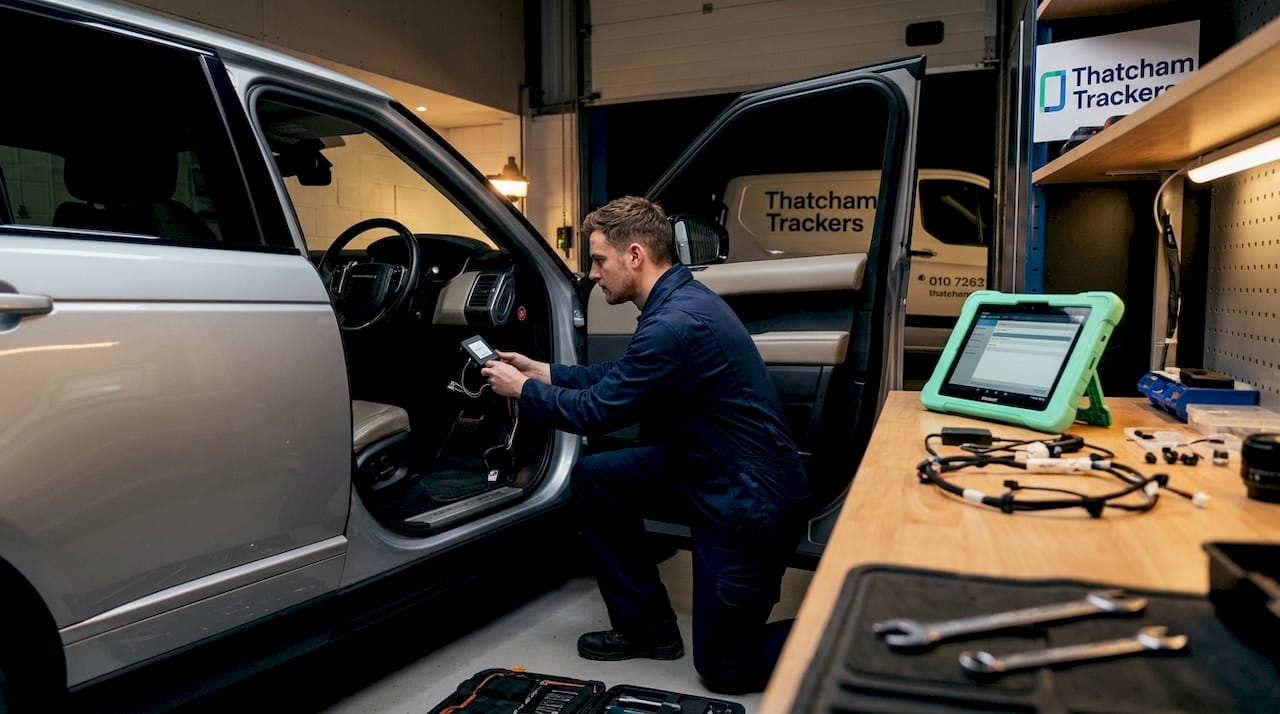
Installation is either mobile (a technician comes to you), carried out at a workshop, or in some cases self-installed via a plug-in device. Mobile fitting is included in most Thatcham-approved tracker packages. DIY plug-in options reduce upfront costs but can create insurance compliance issues because they are not hardwired and may not meet insurer requirements.
Subscription fees
Monitoring services, live tracking alerts, and control room access are billed annually. Subscription costs typically range from £30 to £150 per year. The lower end covers basic GPS location updates, while the higher end includes continuous monitoring, stolen vehicle response, and driver behaviour reporting.
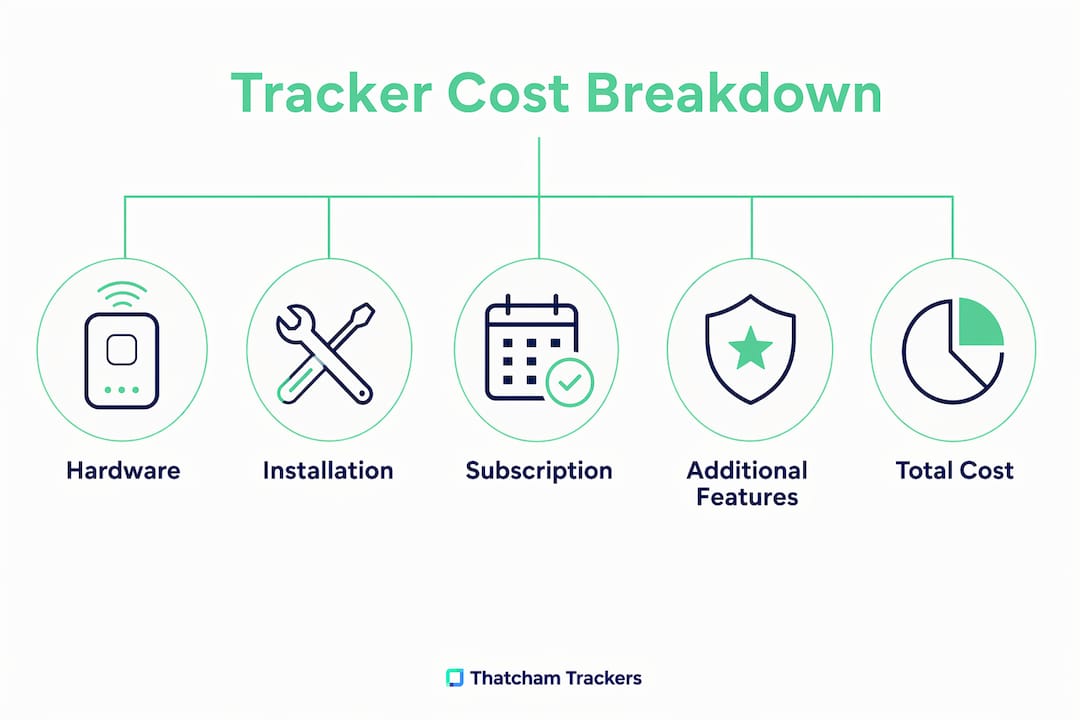
Additional costs
Some trackers offer optional extras such as immobilisation (remote engine cut-off), smart key fobs that authenticate the driver, and dedicated control room services with 24-hour police liaison. These add value but also add cost, so it is worth clarifying which are included and which are add-ons before purchasing.
Pro Tip: Ask each supplier for a full three-year cost projection including hardware, installation, and subscription. A cheap device with a high annual fee can easily outpace a more expensive unit with a low recurring charge.
| Cost component | Approximate range |
|---|---|
| Hardware (S7 category) | £189 to £249 (fitted) |
| Hardware (S5 category) | £349 to £449 (fitted) |
| Hardware (S5+ category) | £549 to £599 (fitted) |
| Annual subscription | £30 to £150 per year |
| Additional features | Variable; often £30 to £80 per year |
Thatcham approval categories explained
Thatcham Research is the UK’s central automotive risk intelligence organisation. It independently tests and certifies vehicle security systems, and insurers use those ratings to assess theft risk. The three categories most relevant to private vehicle owners are S5, S7, and S5+.
S7: entry-level approved tracking
S7 is the most accessible category and the least expensive. It provides GPS tracking and alerts but does not include immobilisation or a driver ID system. S7 trackers are recognised by most mainstream insurers, and they are a solid choice for standard cars where the insurer does not require a higher category. Price range: £189 to £249 fitted.
S5: the mid-range standard
S5 trackers include all S7 features plus a driver ID system (typically a key fob or PIN) that confirms the authorised driver is present. This distinction is important for insurers because it significantly reduces the chance of an unauthorised driver operating the vehicle. S5 models are commonly required for high-value vehicles and are often stipulated in specialist insurance policies. Price range: £349 to £449 fitted.
S5+: highest level of protection
S5+ combines driver authentication with remote immobilisation, meaning the vehicle can be disabled by the control room during a theft. This category commands the highest price, sitting between £549 and £599 fully installed, but it also unlocks the greatest potential insurance benefit. Motorhomes often benefit from this category or at minimum S5, given their high replacement value and the fact that many specialist motorhome insurers require it.
| Category | Key features | Typical fitted price | Best suited for |
|---|---|---|---|
| S7 | GPS tracking, alerts | £189 to £249 | Standard cars, budget-conscious buyers |
| S5 | S7 + driver ID | £349 to £449 | High-value cars, specialist insurance |
| S5+ | S5 + immobilisation | £549 to £599 | Motorhomes, premium vehicles, fleet |
Pro Tip: Check your insurance policy wording before purchasing. Some insurers specify the minimum Thatcham category required for a discount or even for cover to be valid. Buying the wrong category wastes money and may void your discount.
Key features that affect value beyond price
Price comparison alone will not tell you which tracker is right for your vehicle. Several features influence the day-to-day usefulness of a device and, more importantly, its effectiveness in a theft recovery scenario.
- Compatibility with your vehicle type. Not all trackers fit all vehicles. Motorhomes, campervans, and modified vehicles may need specialist installation. Confirm compatibility with the supplier before purchasing.
- Real-time tracking accuracy. Some trackers update location every few seconds; others update every few minutes. The frequency of updates directly affects recovery speed in a theft, so this matters more than it might initially appear.
- Tamper alerts. A quality unit will notify you immediately if someone attempts to disconnect or interfere with the device. This feature is particularly valuable for vehicles left unattended for long periods.
- Remote immobilisation. Only available on S5+ category devices, this allows the control room to disable the vehicle safely. It removes the ability for thieves to drive the car away once the theft is reported.
- App quality and historical data. A well-designed app lets you review trip history, check live location, and receive push notifications. If the interface is difficult to use, you are less likely to monitor your vehicle regularly.
- Monitoring contract flexibility. Some providers lock you into a three-year subscription at purchase. Others offer rolling annual contracts. The difference matters significantly if your circumstances change or if you sell the vehicle.
Protecting a high-value vehicle from theft requires a layered security approach, and a Thatcham-approved tracker is one of the most effective layers available. That said, the tracker’s features must match the risk profile of the vehicle.
How to compare GPS tracker prices effectively
A car tracking device comparison that only looks at upfront price will often lead to a poor decision. The following steps give you a consistent framework for evaluating options side by side.
- Gather the full cost of ownership. For each tracker you are considering, note the hardware price, installation cost, annual subscription, and any optional features you want. Then calculate the total cost over three years. Total cost of ownership is the only figure worth comparing.
- Confirm the Thatcham category. Verify that the device is certified to the category your insurer requires or recommends. A tracker marketed as “approved” without a specific Thatcham category number may not qualify for any discount at all.
- Check the subscription terms. Identify whether the contract is rolling or fixed term, what happens if you miss a payment, and whether the monitoring service is 24 hours a day throughout the year.
- Ask about installation certification. Professional installation includes a certificate of completion per UK police guidelines. Confirm that your installation includes this document, as insurers require it when processing a Thatcham tracker insurance discount claim.
- Factor in the insurance saving. Request a revised quote from your insurer once you have identified the tracker you intend to buy. Thatcham certification can reduce premiums by a meaningful percentage, and that saving should be subtracted from your total cost of ownership calculation.
Pro Tip: Use a simple spreadsheet with one column per tracker and one row per cost component. It takes ten minutes to set up and immediately shows which option offers genuine value rather than just a low headline price.
Verifying quality and managing issues after purchase
Buying a tracker is the start of the process, not the end. Several checks are worth carrying out once installation is complete.
- Confirm the certification document. You should receive a Thatcham-approved installation certificate. Keep this document safe and provide a copy to your insurer immediately. Without it, the insurance benefit may not apply.
- Test the tracking function. Log into the app and verify that your vehicle’s live location is accurate. Check that alerts are working by simulating a tamper event if the supplier supports it.
- Review subscription renewals. Set a calendar reminder before your annual subscription renews. Prices can change, and it is worth confirming the renewal terms and comparing them against current market rates.
- Monitor for false alerts. Occasional false tamper alerts can occur, often caused by interference or battery issues. A persistent pattern of false alerts should be reported to the provider for investigation.
- Know your escalation path. Understand how to contact the monitoring control room, what steps they follow when a theft is reported, and how they liaise with police. This knowledge reduces stress significantly if a theft does occur.
My view on tracker costs and what most buyers miss
I’ve worked with vehicle security products and owners in the UK long enough to have a clear perspective on where buyers go wrong, and it almost always comes down to the same two issues.
The first is treating the upfront hardware price as the primary decision factor. I’ve seen buyers save £100 on an S7 unit when their insurer required S5, rendering the entire purchase useless for discount purposes. The category must match the insurer’s requirement, full stop.
The second issue is underestimating the subscription trap. A device priced at £199 with a £120 annual subscription costs more over three years than a £349 device with a £40 annual subscription. The maths is simple, but it gets missed because buyers compare the upfront figures and stop there.
What I find genuinely underappreciated is the insurance recovery angle. A well-documented Thatcham tracker insurance discount claim, backed by a valid certificate and the correct category, can return a significant portion of the total cost within the first two years of ownership. The tracker pays for itself. Not in marketing language. In actual premium reductions.
The technology is also evolving. S5+ units with remote immobilisation and two-way control room communication are increasingly affordable, and the gap between S7 and S5+ pricing has narrowed. For motorhome owners especially, the additional security and insurance alignment of S5+ is worth the price difference.
— Thatcham Trackers
Find your approved tracker with Thatcham Trackers
Thatcham Trackers offers a full range of Thatcham-approved vehicle trackers covering S5, S7, and S5+ categories, with professional mobile installation and certification included as standard. Every device in the collection is independently certified by Thatcham Research and recognised by UK insurers for premium discount purposes. The range is designed to suit standard cars, high-value vehicles, and motorhomes alike. If you are unsure which category fits your vehicle and insurance requirements, the tracker selection guide walks you through the decision with clear criteria. Rated 4.8 out of 5 on both Trustpilot and Google Reviews, Thatcham Trackers is a trusted choice for UK vehicle owners seeking approved security with transparent pricing.
FAQ
How much does a Thatcham-approved tracker cost in the UK?
Prices range from around £189 to £599 fully fitted, depending on the category. S7 units start at approximately £189, S5 at £349, and S5+ at £549, all including professional installation.
What is the difference between S5 and S7 Thatcham trackers?
S7 provides GPS tracking and alerts, while S5 adds a driver ID system that confirms an authorised driver is present. S5 is required by many insurers for high-value vehicles and specialist insurance policies.
Can a Thatcham tracker reduce my car insurance premium?
Yes. Thatcham certification can reduce premiums by a meaningful percentage depending on your insurer, provided the device meets the required category and a valid installation certificate is held.
Do I need a subscription for a Thatcham-approved tracker?
Yes. All Thatcham-approved trackers require an active monitoring subscription, which typically costs between £30 and £150 per year depending on the service level and features included.
Are Thatcham trackers suitable for motorhomes?
Motorhomes often require S5 or S5+ category devices because specialist motorhome insurers commonly stipulate a higher category for cover or discounts. Vehicle type and insurer requirements should both be confirmed before purchasing.