

A finance car tracker obligation is defined as a contractual or insurance condition requiring certain vehicles to carry a professionally installed, Thatcham-approved tracker as a prerequisite for theft coverage or finance agreement validity. This guide covers the precise vehicle categories affected, the correct Thatcham Research certification standards, and the ongoing responsibilities you carry throughout the finance period. Whether you own a high-value car or a motorhome, understanding your car finance obligations now prevents claim denial, policy cancellation, and potential breach of your finance agreement later.
What is the finance car tracker obligation for UK drivers?
The finance car tracker obligation is the industry term for an insurer-mandated condition requiring a Thatcham-approved tracker on specific vehicles before theft cover activates. Thatcham Research, the UK’s central automotive risk intelligence organisation, independently tests and certifies vehicle security systems. Insurance companies use these Thatcham ratings to assess theft risk and set policy conditions.
High-value vehicles often require trackers as prerequisites for theft cover, not simply as optional extras that earn a discount. This distinction matters enormously. If your insurer lists a tracker as a policy condition and you do not fit one, your theft protection is void from day one.
Thatcham Research certifies trackers under categories S5, S7, and S5+. Each category defines a different level of security, monitoring, and driver recognition. Insurers specify which category they require, and fitting the wrong one is treated the same as fitting nothing at all.
Which vehicles typically require a Thatcham-approved tracker?
Insurers and finance companies apply tracker conditions based on a combination of vehicle value, theft profile, and security vulnerabilities. The most common triggers are:
- Value threshold. Trackers are mandated for cars valued between £40,000 and £75,000 or identified as high-theft risk. Vehicles above this band almost always carry a mandatory tracker condition.
- High-theft-risk model lists. Certain makes and models appear on insurer watch lists regardless of value. Keyless entry and push-to-start systems place vehicles in a higher risk category, often triggering a tracker requirement even below the £40,000 threshold.
- Motorhomes and leisure vehicles. Motorhome insurers frequently impose tracker conditions because these vehicles combine high value with extended periods of unattended storage. Many specialist motorhome policies name S5 or S5+ as the minimum acceptable category.
- Geographical risk factors. Vehicles registered or regularly parked in high-theft postcodes face stricter conditions. Insurers cross-reference postcode theft data with vehicle profiles when setting policy terms.
- Finance agreement conditions. Some lenders include tracker requirements directly in the credit agreement, separate from the insurance policy. Breaching this condition can constitute a default on the finance contract itself.
Pro Tip: Check both your insurance policy schedule and your finance agreement separately. Tracker conditions sometimes appear in one document but not the other, and both carry independent consequences if breached.
Understanding why insurers require car trackers helps you anticipate conditions before they catch you out at renewal. Insurers mandate trackers because proven recovery and anti-theft systems reduce their exposure to large theft claims, not simply to generate compliance paperwork.
What are the precise requirements for compliant tracker devices and installation?
Getting the device and installation right is where most drivers make costly errors. The requirements are specific and non-negotiable.
Thatcham tracker categories explained
Tracker categories S5, S7, and S5+ differ by features including driver recognition and remote immobilisation. Here is what each category delivers:
- S7 is the baseline category. It provides GPS tracking and a 24/7 monitoring subscription but does not include driver recognition. Many standard policies accept S7 for mid-range vehicles.
- S5 adds driver recognition technology, which alerts the monitoring centre when an unrecognised driver operates the vehicle. Insurers specify S5 for high-value cars and most motorhomes.
- S5+ includes remote immobilisation in addition to all S5 features. This is the highest protection level and is required by some premium insurers for vehicles above £75,000.
You can compare S5 and S7 trackers to understand which category your insurer requires before purchasing.
Why professional installation is non-negotiable
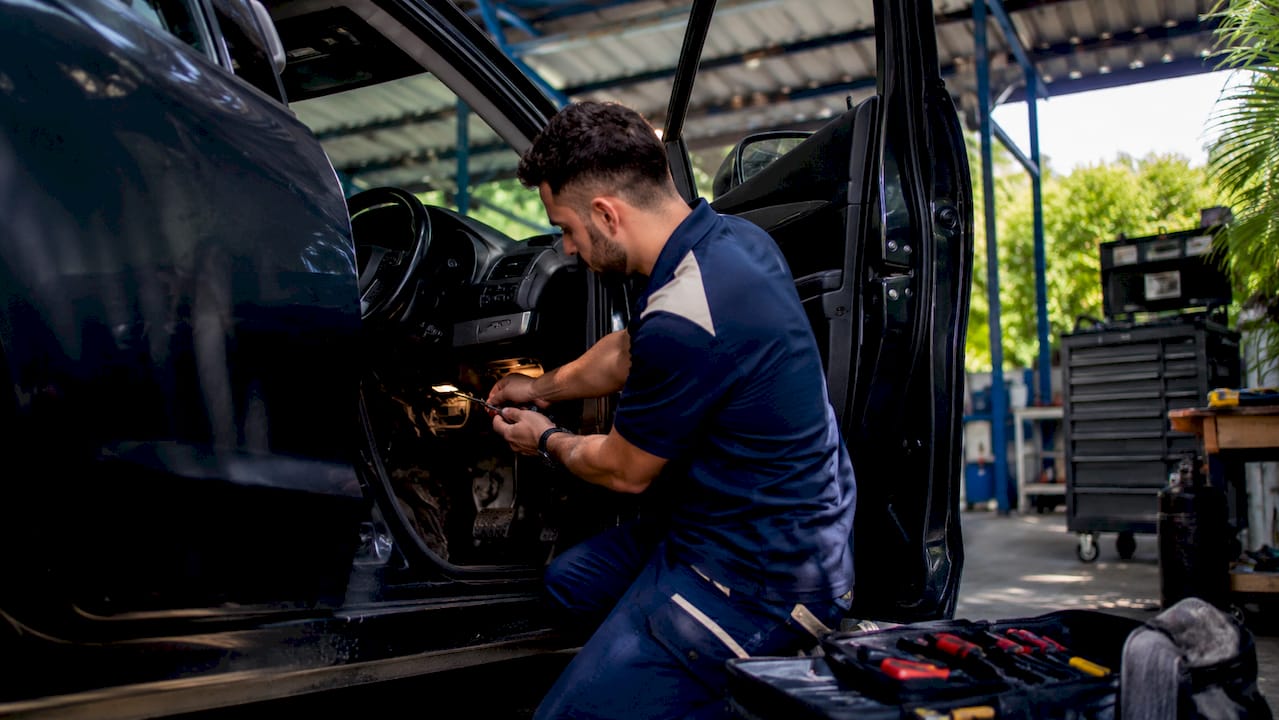
DIY installation does not satisfy insurance compliance. Insurers request installation certificates directly from accredited installers. A self-fitted tracker, regardless of the device quality, will likely void your theft protection entirely.
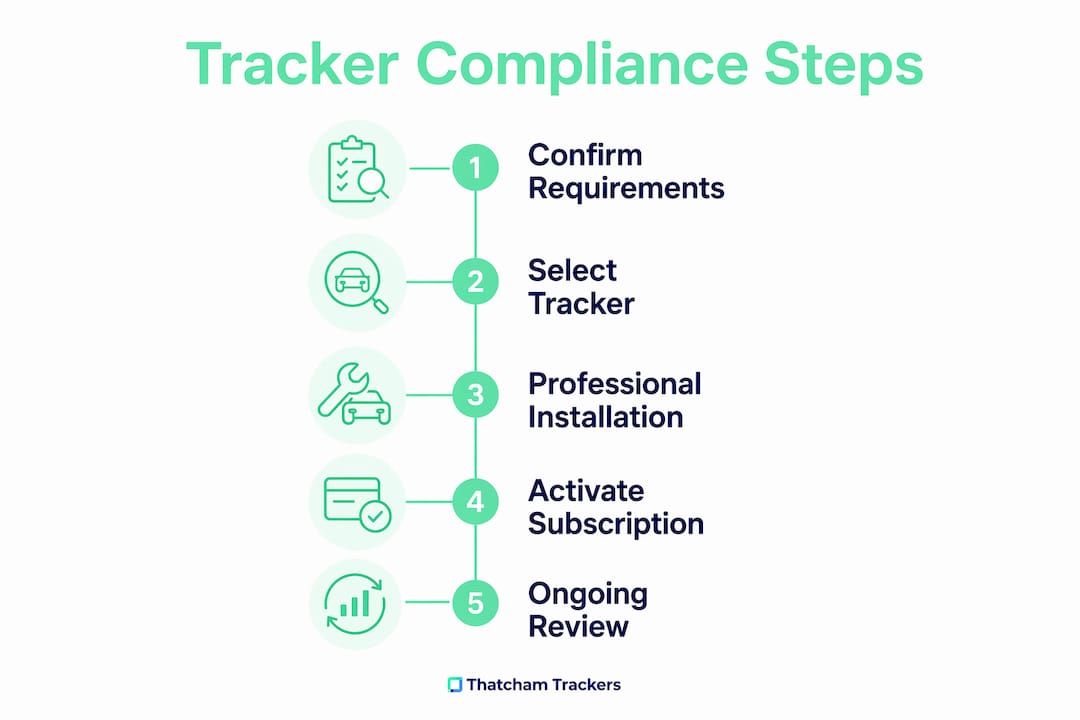
The steps to achieve compliant installation are:
- Confirm the exact category in writing. Contact your insurer and obtain written confirmation of the required Thatcham category before purchasing any device.
- Select a certified device. Choose a tracker from the correct Thatcham category. Thatcham Trackers lists devices by category to simplify this step.
- Book a Thatcham-accredited engineer. Only engineers holding recognised accreditation can issue the installation certificate your insurer requires.
- Fit within the required timeframe. Trackers must be installed within 7–14 days after the insurance policy start date. Missing this window risks claims denial or policy cancellation.
- Submit the certificate promptly. Send the installation certificate to your insurer immediately after fitting. Do not wait until renewal.
Pro Tip: Ask your installer to provide a duplicate certificate and keep one copy with your vehicle documents. Insurers occasionally lose paperwork, and having your own copy prevents delays during a claim.
The monitoring subscription requirement
Thatcham Research certification requires continuous professional monitoring. A GPS tracker without an active monitoring subscription is not insurance approved, regardless of the hardware category. Professional monitoring includes a Secure Operating Centre and Level 1 police response to theft alerts. The security ecosystem built around the device is as important as the device itself.
How to maintain ongoing compliance throughout the finance period
Compliance is not a one-time task. Your obligations continue for the full duration of the finance and insurance period.
The core ongoing responsibilities are:
- Keep subscription payments current. A lapsed subscription invalidates your insurance coverage. Set up a direct debit and confirm renewal dates in your calendar at least 30 days in advance.
- Perform monthly checks. Monthly checks include verifying subscription status, alert reception, and installation documentation retention. These checks catch lapses early and keep you claims-ready.
- Conduct quarterly compliance reviews. Tracker compliance must be reviewed quarterly and at policy renewal to ensure ongoing insurance validity. Changes in vehicle value, parking location, or theft risk require re-verification with your insurer.
- Notify your insurer of changes. If you move to a new address, change how you use the vehicle, or modify the car, contact your insurer. These changes can alter your tracker category requirement.
- Audit at renewal. Before each renewal, verify that your tracker device, category, and subscription all remain valid. Insurers occasionally update their approved device lists, and a previously compliant tracker can fall off the list.
Pro Tip: Set a calendar reminder three months before your policy renewal date. This gives you time to address any compliance gaps without rushing.
Failing to comply with tracker obligations can result in claim denial, policy cancellation, and breach of your finance agreement. These consequences are simultaneous, not sequential. A single lapse can trigger all three at once.
Step-by-step guide to selecting, installing, and registering your tracker
The table below summarises the full compliance process from selection to ongoing maintenance.
| Step | Action | Key detail |
|---|---|---|
| 1. Confirm requirements | Contact insurer in writing | Obtain exact Thatcham category and any approved device list |
| 2. Select device | Choose correct category | S7, S5, or S5+ as specified by insurer |
| 3. Book installation | Use accredited engineer only | DIY installation voids compliance |
| 4. Fit within deadline | 7–14 days from policy start | Late fitting risks claims denial |
| 5. Submit certificate | Send to insurer immediately | Keep a duplicate copy yourself |
| 6. Activate subscription | Set up continuous monitoring | Lapsed subscription invalidates cover |
| 7. Review quarterly | Check status and documentation | Update insurer if circumstances change |
Following these steps in order removes the guesswork from vehicle finance tracking. Each step has a direct consequence if skipped, so treat the sequence as a checklist rather than general guidance.
Thatcham Trackers provides professional fitting services by accredited engineers, which satisfies the installation certificate requirement your insurer demands. Pairing the correct device with certified fitting is the fastest route to full compliance.
Key takeaways
A Thatcham-approved tracker with professional installation and an active monitoring subscription is the minimum requirement for insurance and finance compliance on qualifying UK vehicles.
| Point | Details |
|---|---|
| Mandatory for high-value vehicles | Insurers require trackers on vehicles valued from £40,000, with theft cover voided if the condition is unmet. |
| Category must match insurer specification | S5, S7, and S5+ are not interchangeable; confirm the exact category in writing before purchasing. |
| Professional installation is compulsory | Only a Thatcham-accredited engineer’s certificate satisfies insurer requirements; DIY fitting voids cover. |
| Subscription must remain active | A lapsed monitoring subscription invalidates insurance approval regardless of device quality. |
| Quarterly reviews protect compliance | Changes in vehicle use, location, or insurer policy can shift your tracker requirements at any time. |
The compliance mistakes I see most often
The most common error is assuming that any device labelled “Thatcham approved” satisfies the policy condition. Assuming any Thatcham-approved tracker qualifies is a mistake; exact category and insurer confirmation are both required. Drivers fit an S7 when their insurer specified S5, then discover the error only when making a theft claim.
The second most frequent problem is a lapsed subscription. Drivers fit the correct device, obtain the certificate, and then allow the monitoring subscription to expire at renewal. The device continues to function as a GPS unit, but it loses its insurance-approved status the moment monitoring stops. This is a silent compliance failure because nothing visibly changes on the vehicle.
Documentation gaps cause real problems at claim time. Insurers ask for the original installation certificate, and drivers who cannot produce it face delays or outright rejection. Keep your certificate, subscription confirmation, and insurer correspondence in a single folder, whether physical or digital.
Early communication with your insurer before any change to your vehicle or circumstances is the single habit that prevents most compliance problems. Tracker compliance status can shift quickly with vehicle use, environment, or insurer policy changes. Proactive quarterly audits are the most reliable way to stay ahead of those shifts. Fitting the right tracker from the outset, through Thatcham Trackers, and maintaining it properly, is far less costly than dealing with a voided claim.
— Thatcham Trackers
Thatcham Trackers and your finance tracker obligations
Meeting your tracker obligation does not need to be complicated. Thatcham Trackers supplies a full range of insurance-approved S5 and S7 trackers certified by Thatcham Research to satisfy insurer conditions for high-value cars and motorhomes.
Every device comes with professional fitting by a Thatcham-accredited engineer, so your installation certificate is issued correctly from day one. Subscription plans covering 24/7 Secure Operating Centre monitoring are available alongside each device, keeping your cover valid throughout the finance period. Thatcham Trackers also supports certification and renewal queries, so you have a single point of contact for the full compliance process. Browse the Thatcham Approved S5 range to find the right device for your vehicle.
FAQ
What is a finance car tracker obligation?
A finance car tracker obligation is an insurer or lender condition requiring a professionally installed, Thatcham-approved tracker on certain vehicles as a prerequisite for theft cover or finance agreement validity. Failing to meet this condition can void theft protection and breach the finance contract.
Which Thatcham tracker category do I need?
The required category depends on your insurer’s specification. S7 is the baseline, S5 adds driver recognition for high-value and leisure vehicles, and S5+ includes remote immobilisation for the highest-risk vehicles. Always confirm the exact category in writing with your insurer before purchasing.
Can I install a tracker myself to meet the insurance condition?
No. DIY installation does not satisfy insurance compliance. Only a Thatcham-accredited engineer can issue the installation certificate that insurers require to validate your theft coverage.
What happens if my tracker subscription lapses?
A lapsed subscription removes the device’s insurance-approved status immediately. A GPS tracker without an active monitoring subscription is not insurance approved, meaning any theft claim made during the lapse period is likely to be denied.
How often should I review my tracker compliance?
Tracker compliance must be reviewed quarterly and at policy renewal. Changes in vehicle value, parking location, or insurer policy can alter your requirements, so regular checks are the most reliable way to stay fully covered.