

A tracker powered by a hardwire connection is defined as a GPS device wired directly into a vehicle’s electrical system, drawing continuous power from the battery rather than relying on a separate cell. This makes it the most reliable form of vehicle tracking available. Unlike battery-powered units, a hardwired GPS tracker never loses power mid-journey, never needs recharging, and cannot be disabled simply by removing a magnetic mount. For car owners and motorhome enthusiasts who need insurance compliance in 2026, this tracker powered hardwire car guide covers everything from tools and prerequisites to Thatcham certification categories and long-term maintenance.
What do you need before installing a hardwired tracker?
Preparation determines whether your installation works correctly and qualifies for insurance cover. Skipping any step here is the most common reason a tracker fails its certification check.
Tools and materials
Gather these before you begin:
- Voltage tester or multimeter
- Wiring kit with appropriate gauge cable
- Screwdrivers (flathead and Phillips)
- Cable ties and adhesive mounting pads
- Electrical tape and heat-shrink connectors
- Trim removal tools to access panels without damage
Paperwork and compliance checks
Confirm your tracker model carries a Thatcham Research approval rating before purchasing. Thatcham Research is the UK’s central automotive risk intelligence organisation. It independently tests and certifies vehicle security systems, and insurers use those ratings to assess theft risk. Insurance-approved trackers must be professionally installed by Thatcham-accredited engineers to qualify for policy discounts and theft cover compliance. A self-installed device, regardless of brand, will not satisfy most insurer requirements.
Electrical system compatibility
Check whether your vehicle runs on a 12V or 24V system. Most cars use 12V. Motorhomes and larger commercial vehicles frequently use 24V. Installing a 12V tracker on a 24V system will damage the device. Your vehicle handbook confirms the system voltage, or a multimeter reading at the battery terminals will show it directly.
Pro Tip: Photograph every wire connection before you disturb any trim panel. If something goes wrong during installation, those photos let you restore the original wiring quickly and accurately.
| Requirement | Details |
|---|---|
| Tracker model | Confirm Thatcham Research approval category (S7, S5, or S5+) |
| Electrical compatibility | Verify 12V or 24V vehicle system before purchasing |
| Tools | Voltage tester, wiring kit, trim tools, cable ties |
| Certification | Professional installation by a Thatcham-accredited engineer |
| Insurance documents | Check policy for specific tracker category requirements |
How to hardwire a GPS tracker in your vehicle step by step
Professional hardwired installations typically take 30–60 minutes and provide a permanent, tamper-resistant power source that enables continuous real-time tracking. That time estimate assumes a clean installation with no complications. Follow these steps in order.
1. Disconnect the vehicle battery
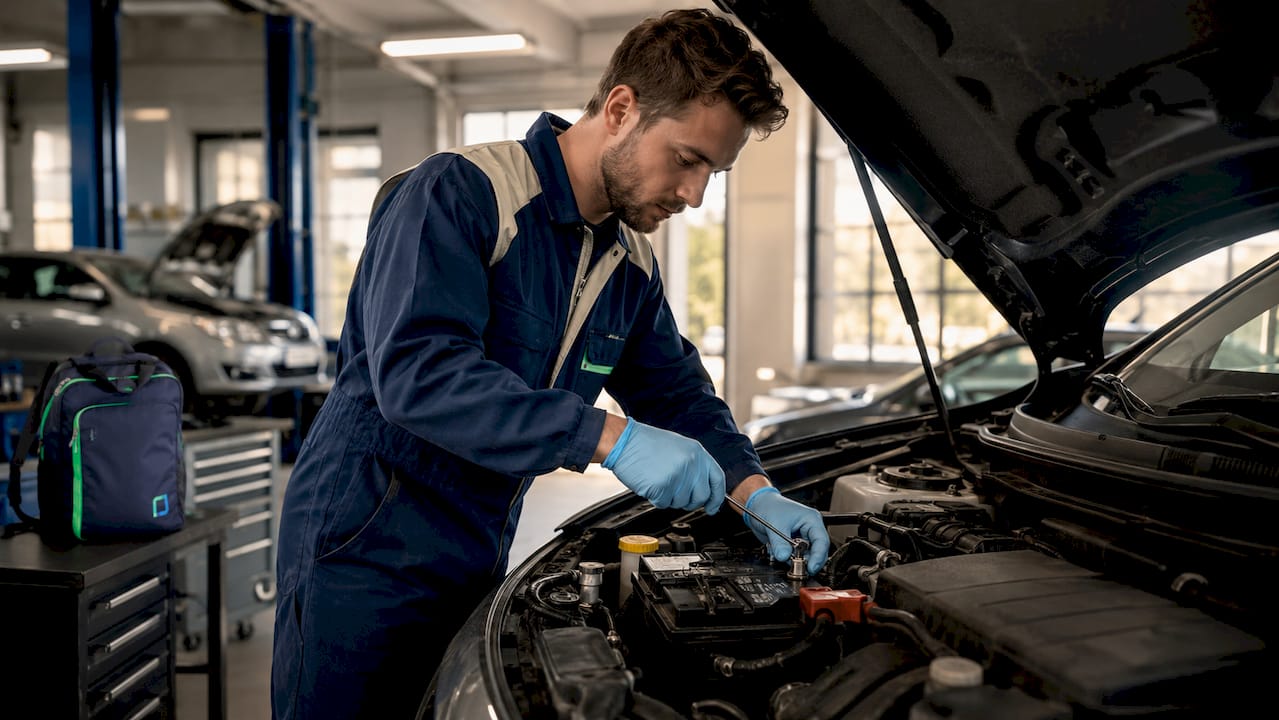
Remove the negative terminal before touching any wiring. This prevents shorts and protects both you and the vehicle’s electronics.
2. Locate a constant 12V or 24V power source
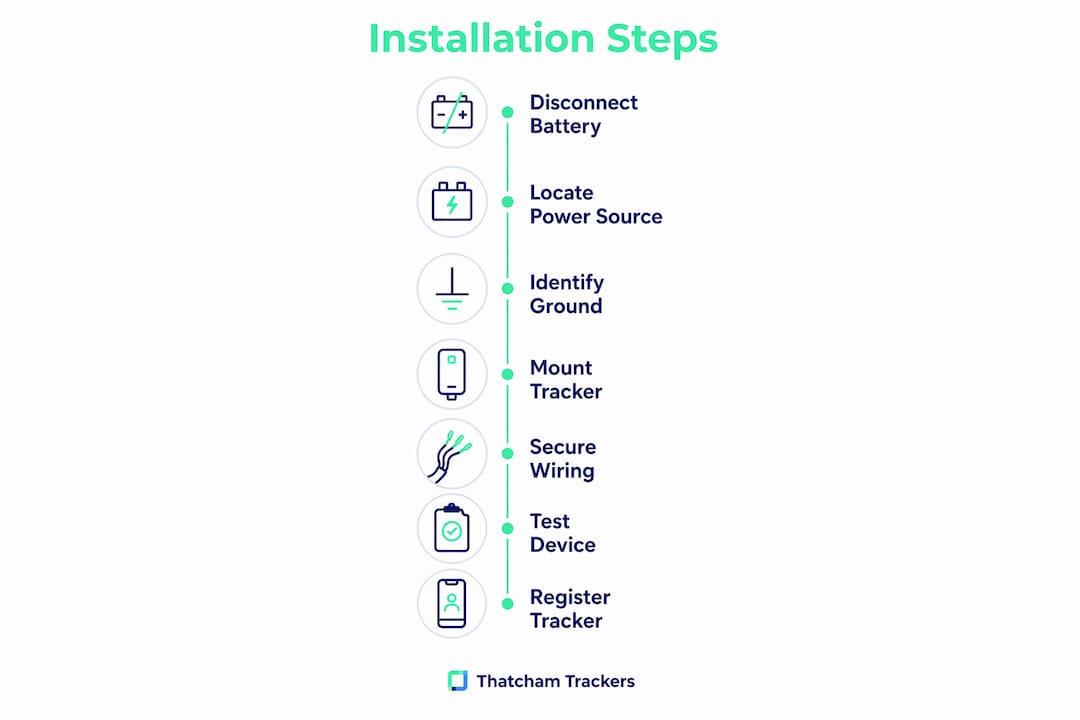
Use your voltage tester to identify a wire that carries power at all times, not just when the ignition is on. The fuse box is the most accessible point. A constant feed keeps the tracker active even when the vehicle is parked and the engine is off.
3. Identify the ground wire
Connect the tracker’s ground wire to a clean, unpainted metal point on the vehicle chassis. A poor ground connection causes intermittent signal loss, which is one of the most common faults reported after DIY installations.
4. Mount the tracker discreetly
Placement affects both signal quality and tamper resistance. Avoid mounting directly next to metal panels, which can block GPS and GSM signals. The area beneath the dashboard, behind trim panels, or under a seat base works well for most vehicles. For motorhomes, the area above the cab or within a storage cavity provides good signal with low visibility.
5. Secure all wiring
Use cable ties to fix every wire run. Loose wiring vibrates against metal edges and eventually chafes through insulation, causing shorts. Route cables away from heat sources such as the exhaust or engine bay where possible.
6. Reconnect the battery and test
Reconnect the negative terminal and power on the tracker. Confirm the device acquires a GPS signal and transmits its position correctly. Most devices show a status LED during the initial acquisition phase.
7. Register with your monitoring centre or insurer
A tracker that is not registered with a 24/7 monitoring centre provides no theft response capability. Complete the registration process immediately after installation. Your insurer may also require a certificate of installation from the accredited engineer.
Pro Tip: Thatcham-approved trackers use GPS, GSM, and often VHF signals, making them resistant to jamming by thieves. Mounting the device away from the vehicle’s central electronics reduces interference from the vehicle’s own systems.
| Step | Priority | Common tool |
|---|---|---|
| Disconnect battery | Critical | Spanner |
| Locate constant power | Critical | Voltage tester |
| Ground connection | High | Multimeter |
| Discreet mounting | High | Trim tools, adhesive |
| Wiring secured | Medium | Cable ties |
| Registration | Critical | Phone or online portal |
For detailed placement advice, the hidden tracker installation guide from Thatcham Trackers covers concealment options for a wide range of vehicle types.
Troubleshooting common issues with hardwired car trackers
Intermittent signals and power loss are the two most common symptoms of a poor installation. Both are usually caused by a loose ground connection or a fuse that has blown without being noticed.
Diagnosing the problem
Start with the fuse box. Locate the fuse protecting the circuit your tracker draws from and test it with a voltage tester. A blown fuse is a five-minute fix. If the fuse is intact, check every connector along the wiring run for corrosion or looseness. Reconnecting a corroded terminal often restores full function immediately.
When to call a professional
Hardwired options are more economical long-term for powered vehicles because they remove the battery maintenance cycle entirely. That said, any fault that affects insurance certification requires a Thatcham-accredited engineer to inspect and sign off the repair. Attempting to fix a certification-critical fault yourself may void your policy cover.
Maintenance do’s and don’ts
- Do run a system test every three months by checking the tracker’s live position via its monitoring portal.
- Do confirm software or firmware updates are applied when notified by the monitoring centre.
- Do check the device’s battery backup (where fitted) annually, as backup cells degrade over time.
- Don’t re-route wiring without retesting all connections afterwards.
- Don’t apply additional adhesive over the device casing, as this can trap heat and damage internal components.
- Don’t ignore a persistent “signal lost” alert. It rarely resolves itself.
Pro Tip: Thieves increasingly use GPS jammers near known high-value vehicle locations. A tracker that combines GPS, GSM, and VHF signals provides protection that a single-signal device cannot match.
Which hardwired tracker category do you need for insurance?
Thatcham Research certifies trackers under three main categories: S7, S5, and S5+. Each category offers a different level of protection, and insurers specify which one they require based on vehicle value and theft risk.
S7: Reactive tracking
S7 is the entry-level insurance-approved category. It provides GPS tracking and 24/7 monitoring centre support. When a theft is reported, the monitoring centre locates the vehicle and liaises with police. S7 suits standard cars and lower-value vehicles where the insurer does not mandate a higher category.
S5: Driver recognition
S5 adds driver recognition technology to the S7 feature set. The system identifies whether the person driving the vehicle is an authorised user. If an unrecognised driver is detected, the monitoring centre receives an alert. S5 is the standard requirement for many motorhomes and vehicles valued above £40,000.
S5+: Remote immobilisation
S5+ adds remote immobilisation to the S5 feature set. The monitoring centre can instruct the vehicle to prevent a restart after the engine is switched off. Insurers often require Thatcham-approved trackers for motorhomes and vehicles over £40,000 or on high-risk lists, and the absence of an approved device may void theft cover entirely.
The S classification is largely dictated by vehicle value and theft risk profile. High-value or keyless-entry vehicles need a proactive system such as S5 or S5+. You can compare S5 and S7 categories in detail on the Thatcham Trackers website.
| Category | Key feature | Typical requirement |
|---|---|---|
| S7 | Reactive GPS tracking and monitoring | Standard cars, lower-value vehicles |
| S5 | Driver recognition added | Motorhomes, vehicles over £40,000 |
| S5+ | Remote immobilisation added | High-risk or very high-value vehicles |
Professional installation certification is mandatory for all three categories to satisfy insurer requirements.
Key takeaways
A hardwired, Thatcham-approved tracker provides continuous GPS coverage, satisfies insurer requirements, and offers far greater reliability than any battery-powered alternative.
| Point | Details |
|---|---|
| Hardwired means continuous power | A direct vehicle connection removes battery limits and keeps tracking active at all times. |
| Professional installation is mandatory | Only Thatcham-accredited engineers can certify an installation for insurance compliance. |
| Category choice affects cover | S7, S5, and S5+ differ by features; insurers specify which category your vehicle requires. |
| Preparation prevents faults | Checking voltage compatibility and gathering the right tools before starting avoids the most common installation errors. |
| Maintenance protects certification | Regular system tests and prompt fault repairs keep the device compliant and the insurance policy valid. |
What Thatcham Trackers has learned from hardwired installations
The most consistent mistake we see is owners choosing a tracker category based on price rather than what their insurer actually specifies. An S7 device fitted to a motorhome that requires S5 cover leaves the owner with a gap in their policy they may not discover until they make a claim. Matching the category to the insurer’s requirement is not optional.
Professional installation is worth the cost every time. The appeal of a DIY powered car tracker setup is understandable, but a self-installed device will not carry the certification an insurer needs. Beyond compliance, a professional engineer routes wiring correctly, mounts the device where signal quality is highest, and tests the full system before leaving. That combination of placement and testing is difficult to replicate without the right equipment.
Hardwired trackers also remove the operational burden of battery maintenance. For motorhome owners who use their vehicles seasonally, a battery-powered tracker left dormant over winter will often fail to report when the vehicle is moved. A hardwired device draws from the vehicle’s own battery management system and remains active throughout.
Periodic reviews matter too. A tracker registered to an old phone number or an expired monitoring subscription provides no real protection. Check your registration details annually, particularly after changing your mobile number or insurer.
— Thatcham Trackers
Thatcham Trackers: approved devices and professional fitting
Thatcham Trackers supplies insurance-approved GPS trackers for cars, motorhomes, and vans, with professional installation available across the UK.
Every device in the Thatcham-approved tracker range carries Thatcham Research certification and is fitted by accredited engineers who issue the installation certificate your insurer requires. The collection covers S7, S5, and S5+ categories, so you can match the device to your vehicle’s specific insurance requirement. Compliant installations frequently reduce annual premiums, making the upfront cost straightforward to justify. Contact Thatcham Trackers directly to confirm which category your insurer requires and arrange a fitting appointment.
FAQ
What is a hardwired GPS tracker?
A hardwired GPS tracker is a device connected directly to a vehicle’s electrical system, drawing continuous power rather than relying on a replaceable battery. This provides uninterrupted real-time tracking and tamper-resistant operation.
Does a hardwired tracker need professional installation?
Yes. Insurance-approved trackers must be fitted by a Thatcham-accredited engineer to qualify for policy discounts and theft cover compliance. A self-installed device does not satisfy insurer certification requirements.
What Thatcham category do I need for my motorhome?
Most motorhomes and vehicles valued above £40,000 require at minimum an S5-category tracker with driver recognition. Check your policy documents directly, as insurer requirements vary by vehicle value and theft risk classification.
How long does a hardwired tracker installation take?
A professional hardwired installation typically takes 30–60 minutes. The engineer connects the device to a constant power source, mounts it discreetly, tests the signal, and issues a certification document on completion.
Can a thief disable a hardwired tracker?
Thatcham-approved trackers use GPS, GSM, and often VHF signals, making them resistant to the jamming methods most commonly used by thieves. A battery-powered device can be removed physically; a hardwired and concealed unit is significantly harder to locate and disable.