

Relay theft is defined as a keyless car theft method where criminals use electronic devices to amplify a key fob’s signal and trick a vehicle into unlocking and starting without the physical key. Understanding how tracker counters relay theft is the most direct step any vehicle owner can take to protect against this threat. Relay theft accounts for approximately 58% of all UK keyless vehicle thefts, and with around 60,900 car thefts recorded in the UK in 2025, the scale of the problem is significant. Keyless cars are twice as likely to be stolen as vehicles with traditional keys. The good news is that certified tracker technology, particularly Thatcham Research S5-rated systems with Automatic Driver Recognition (ADR), directly counters this threat in ways that basic GPS tracking cannot.
How does relay theft work?
Relay theft exploits the convenience of keyless entry by fooling a car’s computer into believing the legitimate key is present. Two criminals work together, each carrying a relay device. One stands near the front door of a house, capturing the faint signal emitted by the key fob inside. The second stands next to the target vehicle, receiving and retransmitting that amplified signal. The car detects what it believes is the genuine key and unlocks.
The process is alarmingly fast. Relay theft can be completed in as little as 30–60 seconds using devices that cost criminals as little as £80–£100. That speed means the theft is often over before a neighbour or security camera can register anything unusual.
This differs sharply from traditional car theft. Older methods required physical force, lock picking, or hotwiring. Relay theft leaves no visible damage. The car simply drives away, and the owner often has no idea until they look out the window the next morning.
- Thief A positions near the property entrance, typically within one to two metres of the front door.
- Thief A’s relay device captures the key fob’s passive signal through walls and doors.
- Thief B stands beside the vehicle and receives the amplified signal via a second relay device.
- The vehicle’s computer accepts the signal as genuine and disengages the immobiliser.
- The car starts and drives away, with no forced entry and no alarm triggered.
Pro Tip: Store your key fobs in a metal tin or a dedicated Faraday pouch at night. Even a biscuit tin placed away from the hallway can block signal capture effectively.
How does a tracker counter relay theft?
Standard GPS trackers cannot detect relay theft. The reason is straightforward: the vehicle’s computer registers a legitimate signal, so the car behaves normally. GPS trackers alone cannot distinguish between an authorised start and a relay attack because the theft looks identical to a normal journey from the vehicle’s perspective.
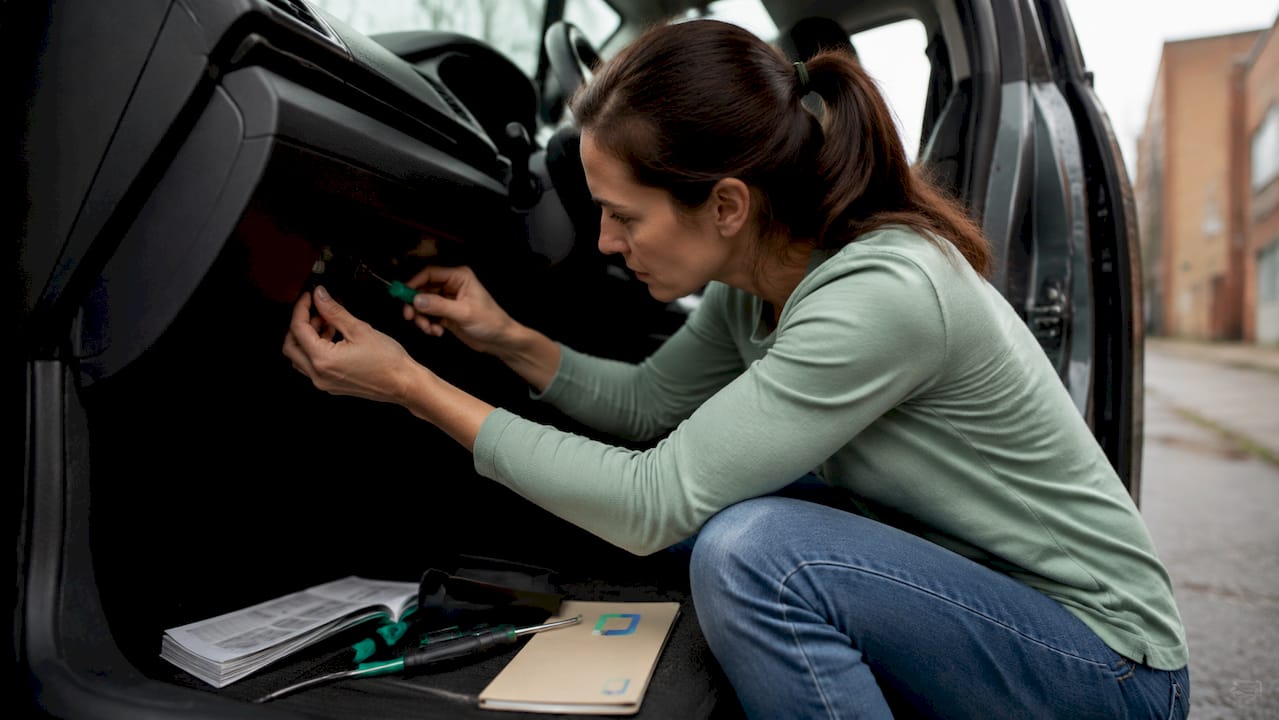
This is where Automatic Driver Recognition changes everything. ADR technology adds a secondary authentication step that GPS alone cannot provide. The driver carries a small ADR tag, a separate electronic token that communicates with the tracker unit fitted to the vehicle. When the car moves, the tracker checks whether the ADR tag is present. If it is not, the system immediately registers unauthorised movement.
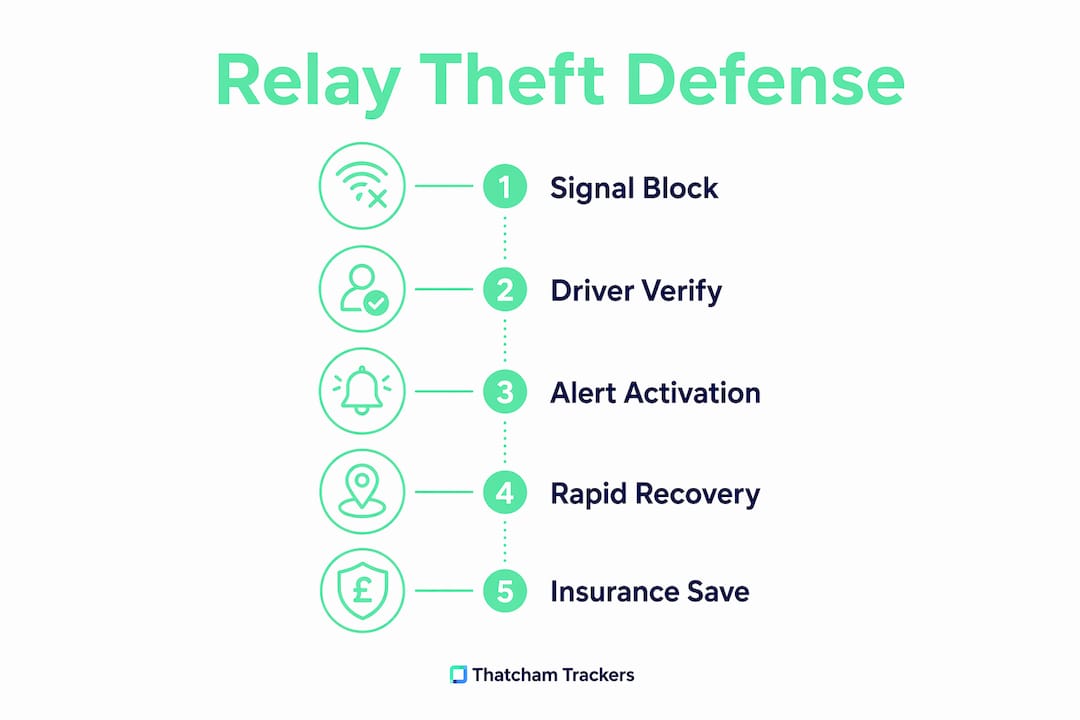
S5 trackers with ADR detect stolen movement instantly, regardless of how the vehicle was started. That is the critical distinction. The relay attacker may have fooled the car’s keyless entry system, but they cannot replicate the ADR tag. The moment the vehicle moves without the tag present, the tracker triggers an alert.
The alerting process works as follows:
- The tracker detects movement without the ADR tag and sends an immediate alert to the owner’s mobile.
- A 24-hour monitoring centre receives a simultaneous notification.
- The monitoring centre contacts the owner to confirm whether the movement is authorised.
- If the owner confirms theft, the monitoring centre contacts police with a live GPS location.
- Police receive real-time tracking data, giving them the best possible chance of intercepting the vehicle.
Thatcham Research certifies these systems under its S5 category, which is the industry standard for vehicles at high risk of keyless theft. Insurance companies recognise S5 certification and frequently require it for high-value vehicles or reward owners with lower premiums. You can read more about what S5 certification means for your vehicle’s protection.
Pro Tip: Professional installation is not optional for S5 trackers. An incorrectly fitted unit can fail to communicate with the ADR tag, leaving you with GPS tracking only and no relay theft protection. Always use an approved installer.
What practical steps stop relay theft alongside a tracker?
A tracker is the most effective single tool against relay theft, but layered security measures combining trackers, physical deterrents, and careful key storage markedly reduce successful relay theft attempts. Each layer adds friction for the criminal and reduces the probability of a successful attack.
Key fob signal blocking
Faraday pouches and signal-blocking cases are among the most effective low-tech relay theft solutions available. A Faraday pouch contains a metallic lining that prevents radio frequency signals from passing through. Place your key fob inside one every time you are not using it, particularly overnight. Signal-blocking boxes, often sold as key safe boxes, work on the same principle and sit neatly on a hallway shelf.
Key storage location matters as much as the container. Keys left near a front door, hallway table, or ground-floor window are far more vulnerable to signal capture than keys stored in a bedroom or kitchen drawer at the back of the property.
Physical deterrents and parking choices
Visible deterrents such as steering wheel locks create a secondary barrier even after a relay attacker has started the engine. A thief who has used a relay device to start the car will still face a locked steering wheel, which requires additional tools and time to defeat. That extra time increases the risk of detection.
Parking choices also reduce risk. A vehicle on a driveway with a CCTV camera covering it is a harder target than one parked on a public road. Motion-activated lighting draws attention to anyone approaching the vehicle at night. Some vehicle owners also choose to disable keyless entry entirely through the vehicle’s settings menu, forcing the use of a physical key button instead.
Motion-sensing and technology-based options
Newer key fobs from several manufacturers include a motion-sensing sleep mode. When the fob remains stationary for a set period, it stops broadcasting its signal. Check your vehicle handbook to see whether this feature is available and how to activate it. Ghost immobilisers, which require a hidden PIN sequence to start the vehicle, add another layer that relay attackers cannot bypass.
How does a tracker improve recovery after relay theft?
Prevention is the primary goal, but recovery matters too. Rapid recovery within hours is possible when vehicles carry professional GPS tracker systems, giving police and recovery teams live location data from the moment a theft is confirmed.
The recovery process depends on speed. The sooner a monitoring centre receives confirmation of theft, the sooner police can act on a live location. A vehicle that has been stationary for several hours is far harder to recover than one that is actively tracked in real time.
| Stage | Action | Outcome |
|---|---|---|
| Theft detected | ADR alert triggers immediately | Owner and monitoring centre notified within seconds |
| Theft confirmed | Owner confirms to monitoring centre | Police contacted with live GPS coordinates |
| Police response | Officers directed to vehicle location | Interception possible while vehicle is still moving |
| Recovery | Vehicle located and secured | Owner reunited with vehicle |
| Post-recovery | Incident report filed | Insurance claim supported by tracker data |
Professional recovery services achieve a 95% recovery rate within an average of 4.4 hours when trackers and monitoring are in place. Without a tracker, recovery depends entirely on chance sightings or ANPR camera hits, which are far less reliable. The role of GPS in theft recovery is well documented, and the data consistently shows that tracked vehicles are recovered faster and in better condition.
Thatcham-approved tracker systems also carry weight with insurers. A vehicle recovered quickly and intact costs the insurer far less than a total loss. That financial logic is why many insurers require Thatcham-approved devices and why owning one can reduce your premium. The reasons insurers require car trackers are directly tied to these recovery statistics.
Key takeaways
A Thatcham Research S5 tracker with ADR technology is the single most effective tool against relay theft because it detects unauthorised movement regardless of how the vehicle was started.
| Point | Details |
|---|---|
| ADR is the critical difference | GPS alone cannot detect relay theft; ADR verifies driver identity independently of the key fob. |
| S5 certification matters | Thatcham Research S5 is the industry standard for keyless theft protection and is recognised by insurers. |
| Faraday pouches add a first line | Signal-blocking pouches prevent key fob capture before a relay attack can begin. |
| Layered security reduces risk | Combining trackers, steering wheel locks, and careful key storage creates multiple barriers for criminals. |
| Recovery rates are high with trackers | Professional monitoring achieves a 95% recovery rate within an average of 4.4 hours. |
Relay theft is evolving, and so should your response
Relay theft devices have become cheaper and more accessible over the past five years. What once required specialist criminal knowledge now costs less than a tank of fuel. That shift means the threat is no longer limited to high-value prestige vehicles. Ordinary family cars with keyless entry are now targeted just as frequently.
The technology that counters this threat has kept pace. ADR-based S5 trackers represent a genuine step forward because they address the fundamental weakness that relay attackers exploit: the car’s inability to verify who is actually present. Adding a second authentication layer that the criminal cannot replicate is the correct response to a threat that bypasses the car’s own security entirely.
What concerns me most, from working in this space, is the number of vehicle owners who invest in a GPS tracker and believe they are fully protected. They are not. A basic GPS tracker tells you where your car is after it has been stolen. An S5 tracker with ADR tells you the moment it moves without authorisation, which is a fundamentally different level of protection. The distinction is not technical detail. It is the difference between finding your car three days later in a shipping container and intercepting it twenty minutes after it left your driveway.
The practical measures matter too. A Faraday pouch costs a few pounds. A steering wheel lock costs under £50. Neither replaces a certified tracker, but both reduce the probability that a criminal even attempts your vehicle. Opportunistic thieves choose the easiest target. Make your car the harder one.
— Thatcham Trackers
Thatcham Trackers: certified protection against relay theft
Relay theft requires a certified response. Thatcham Trackers supplies Thatcham-approved S5 trackers with ADR technology, professionally installed and connected to 24-hour monitoring centres. Every device in the range is certified by Thatcham Research, the UK’s central automotive risk intelligence organisation, and recognised by leading insurers.
The full range covers private cars, vans, and high-value vehicles, with options including S5, S5 Plus, and S7 categories. Professional installation is included, and the monitoring service operates around the clock. Vehicles fitted with a Thatcham-approved tracker benefit from the 95% recovery rate that professional monitoring delivers. Browse the full tracker range to find the right certified solution for your vehicle.
FAQ
What is relay theft?
Relay theft is a keyless car theft method where criminals use electronic relay devices to amplify a key fob’s signal and trick the vehicle into unlocking and starting. The attack typically takes 30–60 seconds and leaves no visible damage.
Does a standard GPS tracker stop relay theft?
No. Standard GPS trackers cannot detect relay theft because the vehicle’s computer registers a legitimate signal during the attack. Only trackers with ADR technology can identify unauthorised movement independently of the key fob.
What is an S5 tracker and why does it matter?
An S5 tracker is a Thatcham Research-certified device that includes Automatic Driver Recognition, which verifies the driver’s identity using a secondary tag. It is the industry standard for protecting keyless vehicles against relay theft.
How quickly can a stolen car be recovered with a tracker?
Professional monitoring services achieve a 95% recovery rate within an average of 4.4 hours when a certified tracker is fitted. Live GPS data is shared with police immediately upon theft confirmation.
Do Faraday pouches actually work against relay theft?
Yes. Faraday pouches block the radio frequency signals that relay devices capture from key fobs. Secured by Design recognises them as one of the most effective low-cost measures for preventing relay theft signal capture.