

Tracker recovery is defined as the process by which police locate and retrieve stolen vehicles using GPS and VHF signals transmitted by certified tracking devices. UK forces rely on this method as a primary tool in vehicle theft investigations, working alongside Secure Operating Centres that monitor alerts around the clock. The results are significant. Stolen vehicles worth £41.3 million were recovered in 2025, representing a 55% year-on-year increase. Understanding how police use tracker recovery clarifies why Thatcham-certified devices carry real weight in both law enforcement and insurance decisions.
How does tracker recovery technology work for police?
GPS and VHF technology form the foundation of police tracker recovery. GPS provides real-time location data transmitted via cellular networks, giving Secure Operating Centres and police officers a live map position for a stolen vehicle. VHF signals add a critical second layer. VHF signals survive GPS jamming, which means thieves who use signal blockers cannot defeat a dual-technology system. This matters because relay attacks and jamming devices are now common tools in organised vehicle theft.
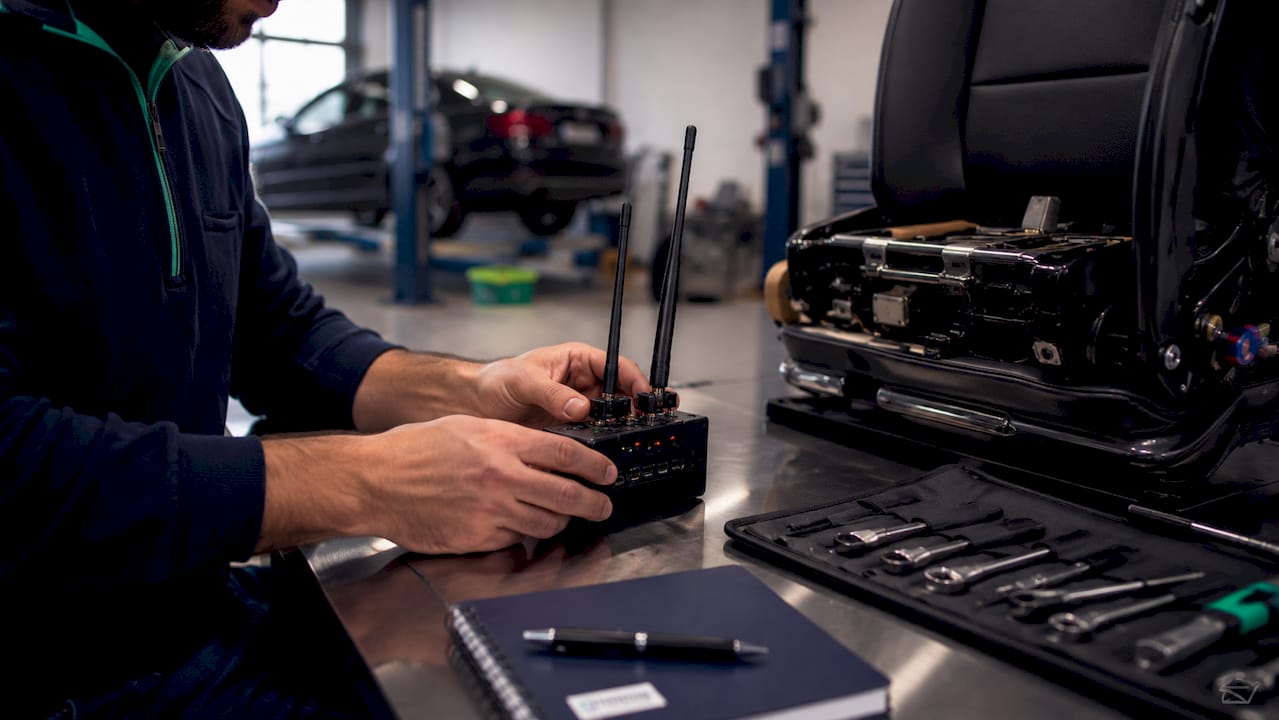
Police use specialist detector units fitted to patrol vehicles to pick up VHF signals on the ground. When a vehicle is hidden in an underground car park, a shipping container, or a warehouse, GPS alone fails. VHF penetrates those environments. Police helicopters equipped with detection units extend this capability to aerial searches, allowing officers to cover large areas quickly and triangulate a signal to a precise location.
Two additional features strengthen the system further:
- Automatic Driver Recognition (ADR) tags: A small tag carried by the authorised driver. When the vehicle moves without the tag present, the tracker triggers an alert immediately. ADR tags alert monitoring centres before the owner has even reported the theft, giving police a head start.
- Remote immobilisation: Higher-category trackers allow operators to send a signal that cuts engine power once police have confirmed the vehicle’s location and it is safe to do so.
Pro Tip: If you want to understand how GPS interfaces with police recovery operations in more detail, the role of GPS in theft recovery guide from Thatcham Trackers covers the full process for car owners.
How do police operationally use tracker data to recover vehicles?
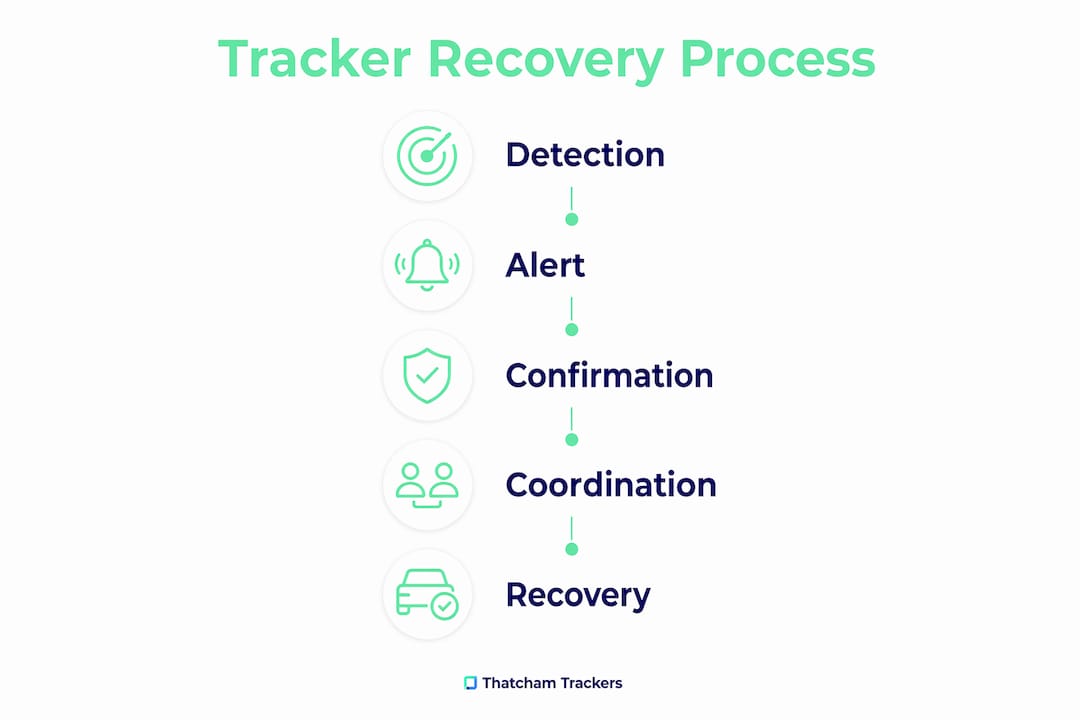
The operational process begins the moment a Secure Operating Centre receives an alert. These centres run 24 hours a day, 7 days a week, and 24/7 monitoring improves recovery speed by enabling an immediate coordinated response rather than waiting for a theft report. The centre contacts the vehicle owner to confirm the alert is genuine, then notifies the relevant police force with live location data.
Police forces follow a structured response sequence:
- Alert received: The Secure Operating Centre confirms the theft and passes location data to the force control room.
- Resource deployment: Officers are directed to the vehicle’s last known position using GPS coordinates.
- VHF sweep: If GPS is lost due to jamming or concealment, ground units and helicopters switch to VHF detection.
- Controlled approach: Officers approach the vehicle cautiously to avoid alerting suspects and to gather intelligence on who is present.
- Recovery and arrest: The vehicle is secured, suspects are detained where possible, and the scene is documented for intelligence purposes.
Tracker data does more than recover a single vehicle. Stolen Vehicle Intelligence Units (SVIUs) use location histories and alert patterns to map organised crime networks. Tracker alerts have led to the recovery of multiple stolen vehicles and stolen goods at a single site, exposing chop shop operations that would otherwise go undetected. This intelligence-led approach transforms each recovery into a potential disruption of a wider criminal network.
“Police view trackers not just as tools for individual vehicle recovery, but as intelligence assets that help map organised crime, recover multiple stolen vehicles at one location, and dismantle chop shop operations.”
Cross-force collaboration is also central to this process. Stolen vehicles frequently cross county boundaries within minutes of theft. SVIUs share tracker intelligence between forces, allowing a vehicle stolen in Essex to be intercepted by officers in Kent based on live data. The vehicle tracking response centre model is built specifically to support this kind of rapid, multi-force coordination.
What are the legal considerations for police using tracker data?
Police access to tracker data is governed by clear legal frameworks. GDPR and Home Office protocols require that location data is only shared with law enforcement under lawful authority. Tracker operators cannot simply hand over live data on request. They must follow data sharing agreements that define exactly when and how police can receive vehicle location information.
The key legal requirements include:
- Lawful basis for access: Police must have a legitimate investigative reason. A confirmed theft report or a live alert from a Secure Operating Centre satisfies this requirement.
- Data minimisation: Only the data necessary for the recovery operation is shared. Broader location histories require additional authorisation.
- Audit trails: All data sharing between monitoring centres and police is logged, creating accountability on both sides.
- Certified devices only: Police forces work with Thatcham-certified trackers, not consumer convenience apps. Convenience apps are not designed for security and lack the monitoring infrastructure needed for a lawful, coordinated police response.
Pro Tip: Thatcham Research independently tests and certifies tracking devices to ensure they meet the standards required for police integration. A certified device is not just an insurance requirement. It is the difference between a monitored alert reaching a police control room and an unmonitored app notification reaching only your phone.
Understanding these constraints also explains why the quality of the tracker matters. A device without 24/7 monitoring cannot trigger the Secure Operating Centre response that drives fast recovery. The legal framework and the technical framework work together.
What do the recovery statistics show about tracker effectiveness?
The numbers confirm that tracker recovery works at scale. 50% of tracked stolen vehicles are recovered within four hours and 80% within 24 hours. That speed matters because vehicle condition deteriorates rapidly once a car enters a chop shop. Recovery within hours means the vehicle is returned intact.
| Metric | Figure |
|---|---|
| Vehicles recovered within 4 hours | 50% |
| Vehicles recovered within 24 hours | 80% |
| Total value recovered in 2025 | £41.3 million |
| Year-on-year increase in recoveries | 55% |
The 55% year-on-year increase in recoveries is not accidental. It reflects growing adoption of Thatcham-certified devices that link directly into police alert systems. More certified trackers on the road means more actionable alerts reaching Secure Operating Centres. The £41.3 million figure represents vehicles returned to owners rather than broken for parts or exported. Without tracker technology, the majority of those vehicles would not have been found.
Vehicles without trackers rely entirely on CCTV, ANPR cameras, and witness reports for recovery. Those methods are slower and less reliable. A tracker-equipped vehicle gives police a direct line to the asset from the moment it moves without authorisation.
Key takeaways
Tracker recovery works because GPS and VHF technology, combined with 24/7 Secure Operating Centre monitoring and police collaboration, delivers recoveries that no other method can match at speed or scale.
| Point | Details |
|---|---|
| Dual technology is essential | VHF signals survive jamming, ensuring recovery even when GPS is blocked or the vehicle is concealed. |
| Speed defines outcomes | 50% of tracked vehicles are recovered within four hours, preserving vehicle condition and evidence. |
| Intelligence value extends beyond one car | Tracker data helps police locate chop shops and recover multiple stolen vehicles at a single site. |
| Legal frameworks govern data sharing | Police access tracker data under GDPR and Home Office protocols, requiring lawful authority at every step. |
| Certification determines police integration | Only Thatcham-certified devices connect to the monitoring infrastructure that triggers a Level 1 police response. |
Tracker recovery from where Thatcham Trackers stands
The statistic that stands out most is not the £41.3 million recovered. It is the 55% year-on-year increase. That growth reflects a structural shift in how police and monitoring centres work together, and it is accelerating.
What most car owners do not realise is that the tracker category matters as much as having a tracker at all. An S7 device provides GPS monitoring and police alert capability. An S5 adds ADR technology, which means the alert fires before the owner even knows the car has moved. An S5+ adds remote immobilisation. Each step up the category ladder gives police more tools and more time. The car theft prevention strategy built around these categories is not marketing. It reflects how police actually prioritise and respond to alerts.
The challenge going forward is jamming technology. Thieves are investing in more capable signal blockers, and the industry response is to make VHF more central rather than treating it as a backup. Forces are also expanding aerial detection capability. The direction of travel is clear: tracker recovery will become faster and more intelligence-driven, not less.
The public understanding of trackers as purely an insurance tool undersells their function. They are active law enforcement assets. Every certified device on the road adds to the intelligence network that police depend on.
— Thatcham Trackers
Thatcham Trackers and police-supported vehicle recovery
Thatcham Trackers supplies insurance-approved devices certified by Thatcham Research, the UK’s central automotive risk intelligence organisation. These devices are recognised by all 43 UK police forces and connect directly to Secure Operating Centres for 24/7 monitoring.
The range covers three certification levels. S7 trackers provide GPS monitoring with police alert capability. S5 trackers add Automatic Driver Recognition for proactive theft detection. S5+ trackers include remote immobilisation for the highest level of protection. Each category qualifies for insurance premium reductions, and each connects to the monitoring infrastructure that drives the recovery rates detailed in this article. A certified tracker is both a financial benefit and a direct contribution to police recovery capability.
FAQ
How does police tracker recovery work in practice?
A Secure Operating Centre receives an alert from a certified tracker, confirms the theft with the vehicle owner, and passes live GPS coordinates to the relevant police force. Officers are deployed immediately, with VHF detection used if GPS is blocked.
Can police track stolen items using tracker technology?
Police tracking technology is primarily used for vehicle recovery. Certified vehicle trackers connect to monitored Secure Operating Centres that relay location data to police, but tracking personal items requires separate, purpose-built devices with their own monitoring arrangements.
Why do police use VHF alongside GPS for vehicle recovery?
VHF signals are unaffected by the jamming devices that thieves use to block GPS and GSM signals. This means police can still locate a vehicle hidden in a container, underground car park, or building where GPS fails.
What is a Thatcham-certified tracker and why does it matter for recovery?
A Thatcham-certified tracker meets the standards set by Thatcham Research and integrates with the monitoring infrastructure that triggers a Level 1 police response. Devices without this certification do not connect to Secure Operating Centres and cannot initiate the coordinated police response that achieves fast recovery.
How quickly do police recover stolen vehicles with a tracker fitted?
50% of tracked vehicles are recovered within four hours and 80% within 24 hours, based on 2025 recovery data. Vehicles without trackers depend on slower methods such as ANPR cameras and witness reports.