

A monitoring centre tracker is defined as a GPS device fitted to a vehicle and linked permanently to a staffed response centre that monitors its location around the clock. The role of monitoring centre tracker technology goes well beyond simple position logging. It creates a live connection between your vehicle and trained operators who can alert police, verify movement, and coordinate recovery the moment something goes wrong. Thatcham Research, the UK’s central automotive risk intelligence organisation, independently certifies these devices, and insurers use those ratings to set premiums and, in many cases, to require coverage.
How do monitoring centres operate to support vehicle tracking?
Monitoring centres operate 24/7, providing real-time alerts and coordinating directly with law enforcement to respond swiftly to theft events. That continuous staffing is what separates a monitored tracker from a basic GPS logger you check yourself.
The operational sequence follows a clear protocol:
- Movement detection: The tracker registers unexpected movement outside set hours or outside a defined geofence.
- Operator verification: A trained operator reviews the alert and attempts to contact the registered owner to confirm whether the movement is authorised.
- Police notification: If the owner cannot be reached or confirms theft, the operator contacts the police with live location data.
- Active tracking: The centre continues feeding updated coordinates to officers until the vehicle is recovered.
- Incident logging: Every action is time-stamped and recorded, creating a clear audit trail for insurers and police.
A monitoring centre’s efficiency directly impacts recovery outcomes. A slow or poorly staffed centre can lose critical minutes while a vehicle is moved, loaded onto a transporter, or taken across county lines.
Pro Tip: When selecting a tracker, ask the supplier how many seconds it takes for an alert to reach a human operator. A centre that routes alerts through automated queues first adds delay that costs recovery time.
The quality of police liaison also varies. The best monitoring centres hold direct channels to dedicated vehicle crime units rather than routing calls through general 999 dispatch. That single difference can reduce response time by several minutes.
What technology underpins monitoring centre trackers?
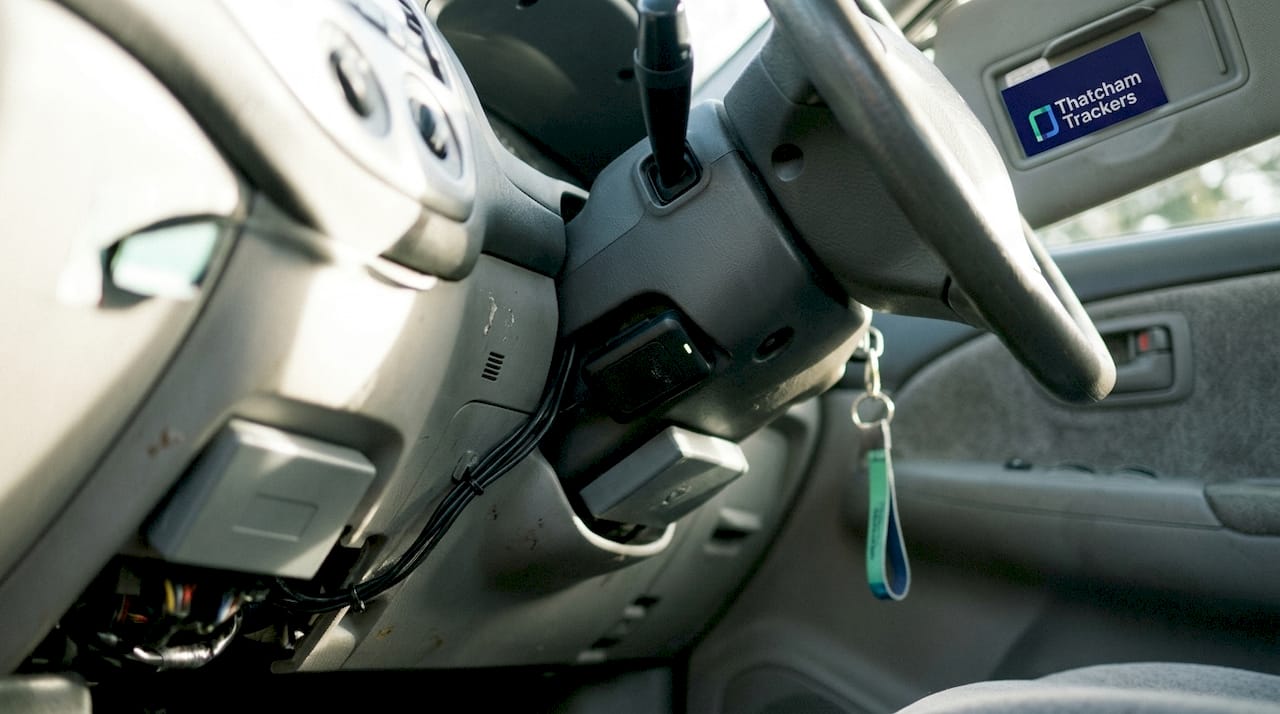
GPS and immobilisation technology form the foundation of every effective monitoring centre tracker. GPS pinpoints location to within a few metres, while cellular and sometimes VHF radio connectivity transmits that data to the monitoring centre without interruption.
Connectivity and data security
Data security and connectivity reliability are critical for effective tracker communication with monitoring centres, ensuring continuous vehicle visibility. Trackers that rely on a single mobile network can lose signal in underground car parks or rural areas. The most capable devices use dual-SIM or multi-network SIM cards that switch automatically between networks to maintain coverage.
Thatcham S5 and S7 categories
Thatcham S5 and S7 categories represent the gold standard in tracker certification because of their integration with professional monitoring centres and police liaison. S5 devices provide full monitoring centre connectivity with driver identification. S7 devices add a stolen vehicle response service with dedicated police liaison officers. Both categories require Thatcham Research approval before any insurer will recognise them.
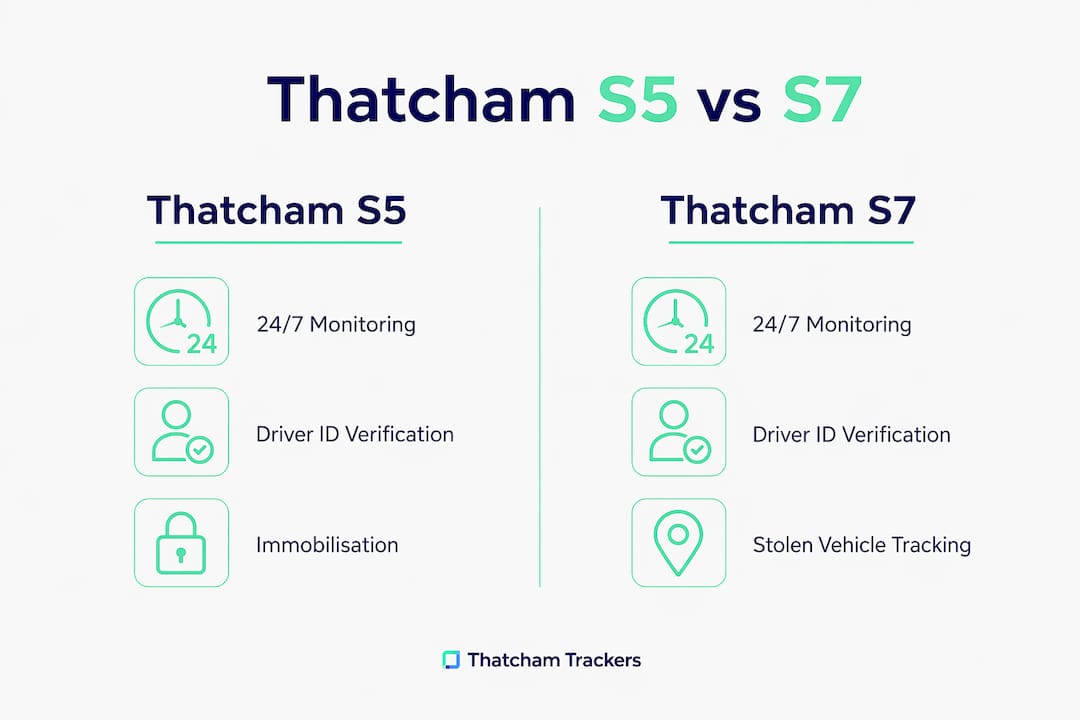
| Feature | Thatcham S5 | Thatcham S7 |
|---|---|---|
| 24/7 monitoring centre | Yes | Yes |
| Driver ID verification | Yes | Yes |
| Dedicated police liaison | No | Yes |
| Stolen vehicle response service | No | Yes |
| Insurance recognition | Yes | Yes |
Pro Tip: If your insurer specifically requires an S7 device, fitting an S5 will not satisfy the policy condition. Always confirm the exact category required before purchasing.
Immobilisation capability, available on selected devices, allows the monitoring centre to send a signal that prevents the engine from restarting once the vehicle stops. This feature is particularly valuable for fleet managers whose vehicles may be driven to a secondary location before police arrive.
What are the benefits of a monitoring centre tracker for vehicle owners and fleet managers?
Vehicles fitted with Thatcham-approved trackers with 24/7 monitoring achieve a 95% recovery rate within 24 hours of theft. The general UK recovery rate sits at 50.2%. That gap of nearly 45 percentage points represents the direct value of continuous monitoring and rapid police coordination.
Insurance savings
A Thatcham-approved tracker and immobiliser system can reduce car insurance premiums by up to 25%, with combined devices delivering 12–18% discounts on average. For owners of high-value vehicles, that saving frequently covers the cost of the tracker within the first year of ownership.
Benefits for fleet managers
Fleet managers benefit from monitoring centre trackers through live fleet visibility, rapid theft response, and more manageable asset oversight. The practical advantages extend well beyond theft prevention:
- Live location visibility: Dispatchers can see every vehicle in real time, reducing wasted mileage and improving job allocation.
- Theft response speed: A stolen van triggers an immediate alert rather than waiting for a driver to notice it missing the next morning.
- Insurance compliance: Many commercial fleet insurers now require Thatcham-approved monitoring as a policy condition for high-value vehicles.
- Driver accountability: Geofence alerts flag unauthorised use outside working hours, reducing fuel misuse and liability exposure.
- Evidence for claims: Time-stamped tracking data provides clear evidence in the event of an accident or disputed insurance claim.
For private vehicle owners, the benefit is simpler. You receive a phone call from a trained operator the moment your car moves without authorisation. You do not need to monitor an app or check a dashboard. The centre does that work continuously, every hour of every day.
What should vehicle owners consider when choosing a monitoring centre tracker?
Choosing the right tracker requires more than picking a device with the right certification badge. The monitoring centre behind it, the installation quality, and a few common misconceptions all affect how well the system performs when it matters.
-
Confirm Thatcham approval. Only devices certified by Thatcham Research carry genuine S5 or S7 status. Uncertified trackers may offer GPS tracking but will not satisfy insurance requirements or deliver the same recovery outcomes. Check the Thatcham Research register directly if you are unsure.
-
Require professional installation. Professional installation of Thatcham-approved trackers enhances reliability and ensures the vehicle is properly connected to monitoring services. A poorly wired device can lose power, fail to transmit, or be disabled by a thief who knows where to look. Approved installers follow wiring standards that make the device harder to locate and disconnect.
-
Assess the monitoring centre’s response quality. Not all monitoring centres perform equally. Ask whether the centre holds a BS 5979 Category II certification, which is the British Standard for vehicle tracking response centres. Centres that meet this standard follow documented procedures, maintain staffing levels, and are subject to independent audit.
-
Understand what the subscription covers. Some entry-level trackers include monitoring for the first year only. After that, the device continues to log GPS data but no operator watches it. Read the subscription terms carefully and confirm that 24/7 monitoring continues for the life of the contract.
-
Do not rely on a tracker alone. A monitoring centre tracker works best as part of a layered security approach. Combining it with a ghost immobiliser or steering lock increases the time a thief needs to move the vehicle, giving the monitoring centre more opportunity to alert police before the car leaves the area.
The most common misconception is that any GPS tracker provides the same protection as a monitored device. A self-monitored tracker requires you to notice the alert, interpret it correctly, and contact police yourself. A monitoring centre removes all three of those dependencies.
Key takeaways
A monitoring centre tracker delivers its full value only when paired with a Thatcham-certified device, professional installation, and a BS 5979-compliant response centre operating around the clock.
| Point | Details |
|---|---|
| Recovery rate advantage | Thatcham-monitored trackers achieve a 95% recovery rate versus the UK average of 50.2%. |
| Insurance savings | Approved tracker and immobiliser combinations reduce premiums by up to 25%. |
| S5 vs S7 distinction | S7 adds dedicated police liaison; S5 provides full monitoring without a stolen vehicle response service. |
| Professional installation matters | Approved installers wire devices to standards that improve reliability and resist tampering. |
| Monitoring centre quality varies | BS 5979 Category II certification is the benchmark for response centre standards in the UK. |
The practical reality of monitoring centre trackers
At Thatcham Trackers, we see a consistent pattern. Vehicle owners who fit a certified monitored tracker and then forget about it are the ones who benefit most when something goes wrong. The system works precisely because it removes the human delay from the theft response chain.
What the industry does not discuss enough is the gap between certified devices and the monitoring centres behind them. Two S7-rated trackers from different suppliers can deliver very different outcomes if one is backed by a well-staffed, BS 5979-compliant centre and the other routes alerts through an automated queue. The certification covers the device. It does not guarantee the quality of the human response.
The direction of travel in vehicle tracking is towards tighter integration between monitoring software, police systems, and insurer databases. Devices that can share live data directly with force control rooms, rather than relaying it through a human operator, will reduce response times further. That development will make the monitoring centre’s role more technical and less manual, but the fundamental principle stays the same. A vehicle needs a certified device, a reliable connection, and a trained team ready to act.
For fleet managers, the operational case is already clear. Live visibility, rapid theft response, and insurance compliance make monitored tracking a standard part of responsible fleet management rather than an optional extra.
— Thatcham Trackers
Thatcham Trackers: certified devices with professional monitoring
Vehicle owners and fleet managers who want the full protection described in this article need a device that carries genuine Thatcham Research certification and connects to a professional monitoring centre from day one.
Thatcham Trackers supplies a full range of Thatcham-approved trackers across S5, S5 Plus, and S7 categories, each paired with professional monitoring centre connectivity. Whether you need a single device for a private car or a fleet solution covering multiple vehicles, the Thatcham Trackers collection includes certified options with professional installation available nationwide. Every device meets the standards insurers require and the recovery outcomes vehicle owners deserve.
FAQ
What is the role of a monitoring centre tracker?
A monitoring centre tracker links a GPS device in your vehicle to a staffed response centre that monitors location 24/7, alerts police when theft is detected, and coordinates recovery in real time.
What is the difference between Thatcham S5 and S7 trackers?
Both categories include 24/7 monitoring centre connectivity and driver identification. S7 adds a dedicated stolen vehicle response service with direct police liaison officers, making it the higher standard of the two.
How much can a monitoring centre tracker reduce my insurance premium?
A Thatcham-approved tracker and immobiliser combination can reduce car insurance premiums by up to 25%, with combined devices delivering 12–18% discounts on average.
Does professional installation make a difference to tracker performance?
Professional installation ensures the device is wired correctly, connected reliably to monitoring services, and positioned to resist tampering, all of which directly affect how well the system performs during a theft event.
What is BS 5979 Category II?
BS 5979 Category II is the British Standard for vehicle tracking response centres. It sets documented procedures, staffing requirements, and audit obligations that monitoring centres must meet to carry the certification.