

Insurance-approved motorhome trackers are devices certified by Thatcham Research, the UK’s central automotive risk intelligence organisation, to meet insurer standards for vehicle security. The two primary certified categories are Thatcham S5 and S7, and fitting one can reduce your motorhome insurance premium by up to 25%. Brands such as ScorpionTrack, Phantom iTrack, and GPSBob all produce models within these categories. Understanding which type suits your vehicle value and insurer requirements is the most direct way to control both your security risk and your annual premium.
1. What are the types of motorhome trackers insurance approved?
The types of motorhome trackers insurance approved fall into two main Thatcham categories: S5 and S7. Both are independently tested and certified by Thatcham Research, and both are recognised by UK insurers as valid security upgrades. The distinction between them matters most when your motorhome exceeds a certain value threshold.
Thatcham S5 trackers offer a higher tier of security and are preferred by insurers for premium or high-value motorhomes. They use GPS and GSM technology to locate a stolen vehicle and transmit its position to a 24-hour monitoring centre. Key features include:
- Continuous GPS tracking with live position updates
- 24/7 professional monitoring centre support
- Tamper alerts sent directly to the owner and monitoring team
- Driver recognition technology on most models
- Full insurance acceptance across the majority of UK motorhome policies
Thatcham S7 trackers are the entry point for insurance-approved protection. S7 devices. For motorhomes valued above £60,000, many insurers specify an S5 device as a condition of cover.
Pro Tip: Check your policy schedule carefully. Some insurers list the minimum tracker category required as a condition of cover, not just a recommendation. Fitting an S7 when an S5 is required can invalidate a claim.
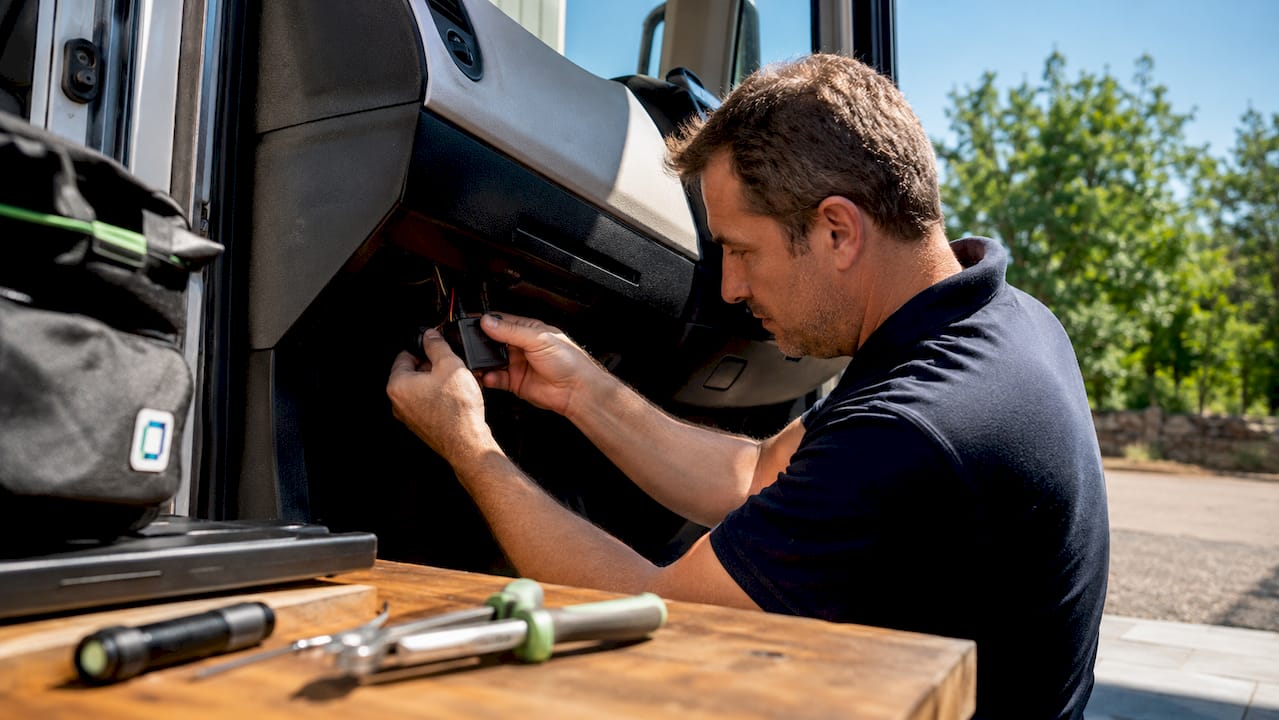
App-based or unmonitored trackers are a third category, but they sit outside the insurance-approved bracket. Unmonitored trackers typically cost under £250 and provide no professional oversight, which means insurers do not recognise them for premium discounts or policy compliance. They are useful for personal peace of mind but carry no formal certification.
2. How do insurance-approved trackers affect motorhome premiums?
Fitting a certified tracker produces measurable financial benefits. Insurers offer up to 25% discount on motorhome premiums when a Thatcham-approved device is installed. On a £1,200 annual premium, that represents a saving of £300 per year, which offsets a significant portion of the tracker’s total cost within the first two to three years.
Insurer requirements scale with vehicle value. The general thresholds used across the UK market are:
- Under £40,000: A tracker is recommended but rarely mandatory. Fitting one still earns a discount.
- £40,000 to £60,000: Most specialist insurers, including Adrian Flux and NFU Mutual, require a Thatcham S5 tracker as a condition of cover.
- £60,000 to £90,000: An S7 tracker is typically required, often alongside additional physical security.
- Over £90,000: Luxury motorhomes at this value level require a tracker combined with physical devices such as wheel clamps, hitch locks, and deadlocks. Insurers treat these as a bundled security package, not optional extras.
“Tracking mandates and requirements increase with motorhome value, reflecting rising insurer scrutiny and loss prevention measures.” — MyMoneyComparison
How motorhome insurer verification works is straightforward but strict. Insurers require professional installation with a signed certificate of fitment, proof of active monitoring subscription, and the device’s Thatcham certification number. Without these three elements, the tracker is not recognised for policy purposes, regardless of the device’s technical quality.
3. Costs and installation considerations
The total cost of fitting an insurance-approved motorhome tracker ranges from £600 to £1,000, covering hardware, professional fitting, and the first year of monitoring. Breaking that down gives a clearer picture of where the money goes.
| Cost component | Typical range |
|---|---|
| Hardware (S7 or S5 device) | £169 to £800 |
| Professional installation | Approximately £200 |
| Annual monitoring subscription | £100 to £200 per year |
| Warranty period | Typically two years |
Some suppliers, including those listed on Thatcham Trackers, offer free installation when you purchase a device directly. This can reduce the upfront outlay by £150 to £200, making the total cost closer to the lower end of the range. Always confirm that the installer is approved, as insurer certificates are only valid when issued by a qualified fitter.
Warranties add further value to the purchase. A two-year warranty, such as that offered with the Lockdown tracker fitted from £799 anywhere in the UK, means hardware faults are covered without additional expense during the critical early ownership period.
Pro Tip: Factor the annual monitoring fee into your cost comparison, not just the hardware price. A cheaper device with a higher subscription can cost more over three years than a premium device with a lower annual fee.
Budget alternatives exist but carry trade-offs. App-based trackers under £250 provide no monitoring centre, no Thatcham certification, and no insurance recognition. They are not a substitute for an approved device if your policy requires one.
4. Comparison of popular insurance-approved motorhome tracker models
Several brands dominate the UK market for certified motorhome trackers. The table below compares the leading models across key criteria.
| Model | Category | Monitoring | Insurance approved | Approx. price |
|---|---|---|---|---|
| ScorpionTrack Motorhome S5 | Thatcham S5 | 24/7 monitoring centre | Yes | £500 to £650 |
| Phantom iTrack S5 | Thatcham S5 | 24/7 monitoring centre | Yes | £450 to £600 |
| GPSBob S5 | Thatcham S5 | 24/7 plus satellite backup | Yes | £349 to £600 |
Key points to note when comparing models:
- ScorpionTrack and Phantom iTrack both use GPS and GSM technology with driver recognition as standard on their S5 units.
- GPSBob’s S5 device adds satellite tracking, which continues to function when GSM signals are blocked or jammed. This is the primary technical advantage of S5 over S7.
- All three brands provide a certificate of fitment required by insurers, and all three maintain active monitoring subscriptions as part of their service agreements.
- Subscription costs vary by brand. Confirm the annual renewal fee before purchase, as this affects the total five-year cost of ownership.
The S5 tracker range suits the majority of motorhome owners with vehicles valued below £60,000. For owners of premium coach-built or A-class motorhomes, the S5 category provides the security level and insurer recognition that high-value policies demand.
5. How motorhome insurance tracker works in practice
Understanding how a tracker functions day-to-day removes uncertainty about what you are paying for. Once fitted, the device operates silently in the background. It draws power from the vehicle’s electrical system and communicates its position via GPS satellites and the GSM mobile network to a 24-hour monitoring centre.
If the vehicle moves without an authorised driver present, the monitoring centre receives an alert. They contact the registered owner to confirm whether the movement is legitimate. If it is not, they notify the police directly and provide live tracking data to assist recovery. Monitored devices increase the chances of recovery and reduce theft risk, adding confidence well beyond the insurance premium saving.
Driver recognition technology, present on most S5 and S7 models, uses a small fob or tag that the driver carries. If the vehicle moves without the fob being detected, the alert triggers automatically. This removes the need to manually arm or disarm the tracker, which reduces the risk of false alarms and improves reliability.
6. Choosing the right insurance-approved tracker for your motorhome
Selecting the correct tracker comes down to four practical factors. Work through each one before making a purchase decision.
- Vehicle value: Motorhomes under £40,000 are well served by an S5 device. Those above £60,000 require an S7. Check your insurer’s specific threshold, as it varies between providers.
- Insurer requirements: Request the exact wording from your policy schedule or call your insurer directly. Some specify a brand or model; others accept any Thatcham-certified device within the required category.
- Total cost over three years: Compare hardware price, installation, and annual subscription together. Use the tracker cost guide to benchmark options before committing.
- Additional security requirements: For motorhomes over £90,000, specialist underwriters bundle tracker mandates with physical security devices. Budget for wheel clamps, hitch locks, and deadlocks alongside the tracker cost.
For owners who tour frequently or store their motorhome off-site, a monitored S7 device with satellite backup provides the most reliable protection. For owners with lower-value vehicles who simply want to meet insurer requirements and earn a discount, a professionally fitted S5 from a recognised brand is the correct and cost-effective choice. Use the right tracker selector to match your vehicle and policy to the appropriate device.
Key takeaways
Fitting a Thatcham S5 or S7 tracker is the most direct way to meet insurer requirements and reduce motorhome insurance premiums by up to 25%.
| Point | Details |
|---|---|
| S5 vs S7 categories | S7 suits most motorhomes; S5 is required for vehicles valued above £60,000. |
| Premium discount | Insurers offer up to 25% reduction when a certified tracker is professionally fitted. |
| Total cost range | Budget £600 to £1,000 for hardware, installation, and first-year monitoring combined. |
| Insurer verification | A signed fitment certificate and active monitoring subscription are both required for policy recognition. |
| Luxury vehicle requirements | Motorhomes over £90,000 require a tracker bundled with physical security devices such as wheel clamps. |
Our view on motorhome trackers and insurance value
At Thatcham Trackers, we see a consistent pattern: owners who fit a certified tracker before renewing their policy negotiate from a stronger position. Insurers respond to documented security upgrades. Presenting a Thatcham fitment certificate at renewal is not a formality. It is evidence that changes the insurer’s risk calculation.
The peace of mind argument is equally real. A monitored device means a trained team is watching your vehicle around the clock, not just when you remember to check an app. For a motorhome that represents tens of thousands of pounds and months of planned travel, that level of oversight is worth the subscription cost alone.
One point that owners frequently overlook: fitting a tracker after a near-miss or a theft in the area is reactive. Fitting one before your next renewal is proactive, and it is the approach that produces both the premium saving and the security benefit simultaneously. Do not wait for a reason to act.
— Thatcham Trackers
Find the right insurance-approved tracker for your motorhome
Thatcham Trackers supplies a full range of certified devices for UK motorhome owners, from entry-level S5 units to advanced S7 systems for high-value vehicles.
Browse the complete insurance-approved tracker range to compare models, prices, and installation options in one place. For owners of premium motorhomes, the S7 tracker collection lists every certified device that meets the highest insurer standards. All devices come with professional installation and the fitment certificate your insurer requires. Rated 4.8 out of 5 on both Trustpilot and Google Reviews, Thatcham Trackers is a trusted source for certified vehicle security across the UK.
FAQ
What is the motorhome tracker insurance requirement?
Most UK insurers require a Thatcham S5 or S7 certified tracker for motorhomes valued above £40,000, with professional installation and an active monitoring subscription as mandatory conditions of cover.
Does fitting a tracker reduce motorhome insurance costs?
Yes. Insurers offer up to 25% discount on motorhome premiums when a Thatcham-approved tracker is fitted, which typically offsets the tracker’s total cost within two to three years.
How does a motorhome insurer verify a tracker?
Insurers verify tracker compliance by requesting a signed certificate of professional installation, the device’s Thatcham certification number, and proof of active monitoring. All three are required for the tracker to be recognised under the policy.
What is the difference between S5 and S7 trackers?
S7 trackers provide GPS and GSM tracking with 24/7 monitoring and meet standard insurer requirements. S5 devices add ADR tracking that functions , making them the required category for high-value motorhomes above £60,000.
Are cheap app-based trackers accepted by insurers?
No. App-based or unmonitored trackers costing under £250 are not Thatcham certified and are not recognised by UK insurers for premium discounts or as a condition of cover.