

An S5 tracker is a Thatcham-approved vehicle security system defined by one core feature: Automatic Driver Recognition (ADR), which detects unauthorised vehicle movement instantly and alerts a 24/7 monitoring centre, even when a thief has possession of the physical key. Thatcham Research, the UK’s central automotive risk intelligence organisation, independently tests and certifies these devices. Insurance companies then use those certifications to set cover conditions and calculate premiums. If your insurer has asked you about S5 tracking, understanding what that certification actually means is the first step to making the right choice.
What does S5 tracker mean and how does ADR work?
ADR identifies unauthorised movement by checking whether a recognised driver ID tag is present each time the vehicle moves. That tag takes the form of a small key fob, card, or smartphone credential paired to the system during installation. If the vehicle moves without a valid tag in range, the tracker triggers an alert to the monitoring centre within seconds.
This detection speed is what separates S5 systems from standard GPS trackers. A GPS-only device records where a vehicle has gone. An S5 tracker recognises that something is wrong before the vehicle has left the street. The monitoring centre then contacts the registered keeper and, if necessary, notifies police with live location data in real time.
The practical process works as follows:
- The driver carries a small ADR tag at all times when using the vehicle
- On every journey, the tracker confirms the tag is present before movement is logged as authorised
- If no tag is detected, the system flags the movement as a potential theft immediately
- The 24/7 monitoring centre receives the alert and initiates the response protocol
Pro Tip: Keep your ADR tag separate from your vehicle keys. If a thief takes both together, the recognition step is bypassed. Storing the tag on a different keyring or in a bag removes that risk entirely.
How do S5 and S7 trackers compare?
Both S5 and S7 are Thatcham tracker categories that require professional installation and 24/7 monitoring. The single defining difference is ADR. S5 includes it as a mandatory requirement; S7 does not. That distinction has significant consequences for how quickly a theft is detected and how insurers view the two categories.
An S7 tracker relies on GPS positioning and movement detection. It will record that a vehicle has moved and can alert the monitoring centre, but it cannot confirm whether an authorised driver is present. An S5 system adds that second layer of authentication, making it far harder for a thief to move a vehicle without triggering an immediate response.
| Feature | S5 tracker | S7 tracker |
|---|---|---|
| Automatic Driver Recognition | Yes, mandatory | No |
| 24/7 professional monitoring | Yes | Yes |
| Professional installation required | Yes | Yes |
| Theft detection trigger | Unauthorised movement without ADR tag | Movement or GPS deviation |
| Typical insurer requirement | High-value and high-risk vehicles | Standard vehicles |
| Detection speed | Immediate on movement | Dependent on GPS signal |
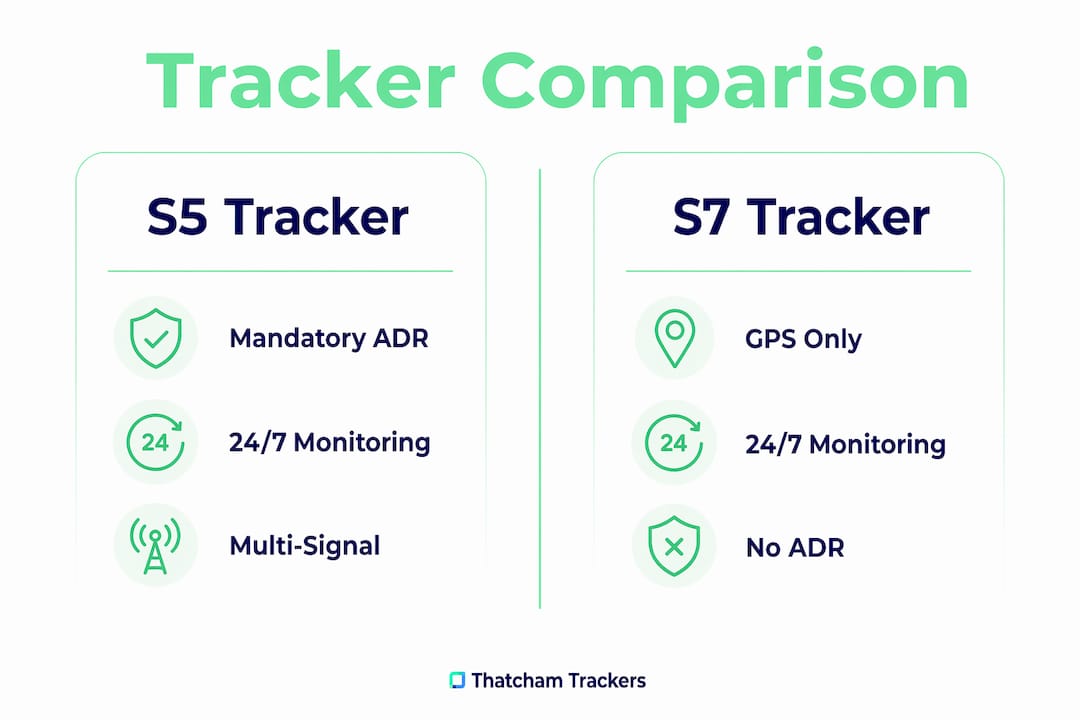
S5 is the higher security category and is increasingly mandated by insurers for prestige, high-value, and high-theft-risk models. Vehicles such as Range Rovers, BMW M-series, and Mercedes AMG variants are frequently listed by insurers as requiring S5 certification as a condition of cover, not merely as a recommendation.
Pro Tip: Before purchasing any tracker, ask your insurer for the exact Thatcham category they require. Some policies specify S5 as a minimum; others accept S7. Buying the wrong category means the device does not satisfy the policy condition, regardless of its quality.
Why does the S5 tracker matter for insurance and theft prevention?
The insurance case for S5 certification rests on two facts. First, non-certified devices or non-professional installation can invalidate a theft claim entirely. Second, ADR directly counters the most common modern theft methods, which standard trackers cannot address.
Relay attacks and key cloning are now the dominant techniques used to steal keyless-entry vehicles. In a relay attack, two thieves use electronic amplifiers to extend the signal from a key fob inside a house, tricking the car into unlocking and starting. The vehicle moves with a cloned or amplified key signal. A GPS tracker sees normal movement and raises no alert. An S5 system detects the absent ADR tag and flags the theft immediately, regardless of what the key signal says.
The practical benefits for vehicle owners include:
- Real-time alerts sent to the registered keeper the moment unauthorised movement is detected
- Police notification with live GPS coordinates, improving recovery chances significantly
- A documented, certified security layer that satisfies insurer conditions and protects claim validity
- Potential reduction in annual premiums for vehicles fitted with Thatcham-approved S5 devices
- Protection against relay attacks, key cloning, and other keyless theft methods that bypass physical locks
“Using non-certified devices or non-professional installation can invalidate insurance claims.” — Dolmen Insurance Brokers
For owners of prestige vehicles, the cost of an S5 tracker is modest relative to the risk of an invalidated claim on a six-figure car. The certification also signals to insurers that the vehicle owner has taken theft risk seriously, which can influence both premium calculations and the ease of the claims process.
You can read more about how relay attack protection fits into a broader vehicle security strategy for keyless-entry models.
What features and installation does an S5 tracker include?
Beyond ADR, S5 trackers include internal power backup, multiple signal transmission modes, journey data logging, and 24/7 professional monitoring as standard features. The internal backup battery means the tracker continues to function even if a thief disconnects the vehicle’s main power supply, a common tactic used during professional vehicle theft.
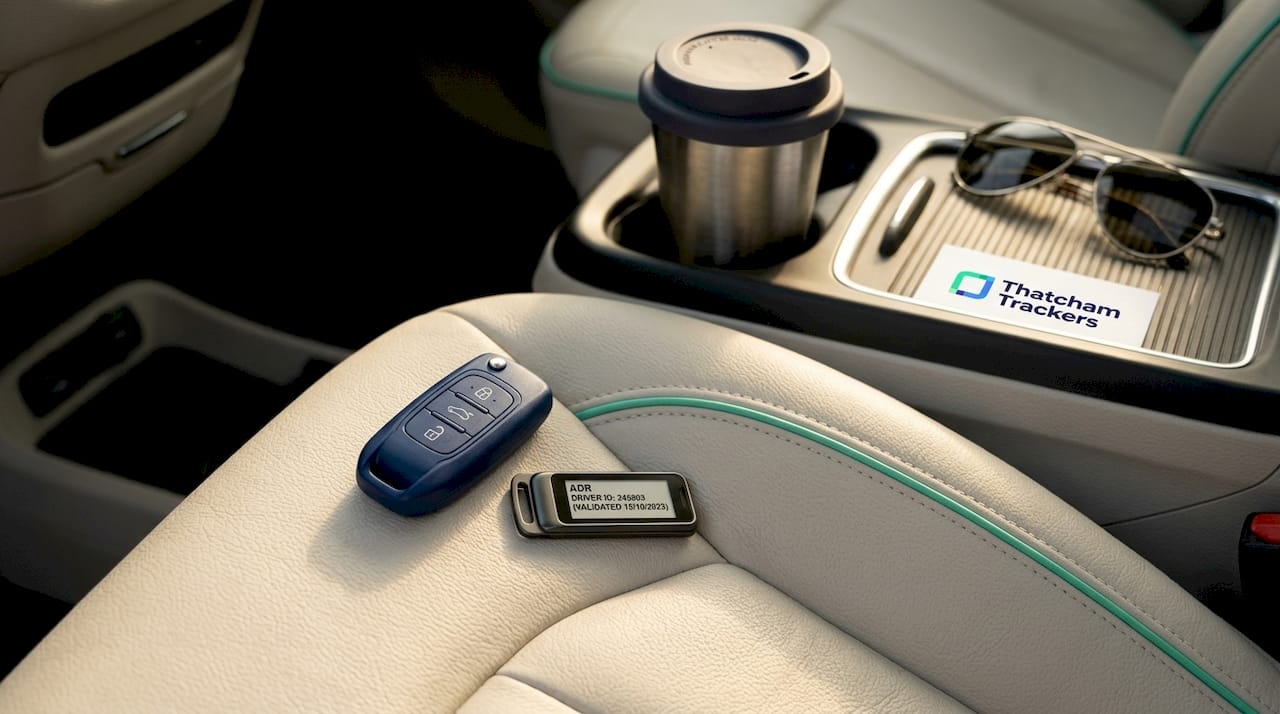
Multiple signal transmission modes typically combine GPS, GSM mobile network, and VHF radio. This combination matters because GPS signals can be jammed or blocked in underground car parks and metal-lined transporters. VHF radio penetrates those environments, ensuring the monitoring centre maintains contact with the device. Journey data logging provides a timestamped record of all vehicle movements, which supports both theft investigation and insurance documentation.
Installation must be carried out by a Thatcham-recognised engineer to satisfy insurer conditions. A self-installed device, regardless of its technical specification, does not meet the certification standard. The engineer registers the device to the vehicle, pairs the ADR tags to the system, and provides the documentation your insurer requires as proof of compliance.
The user experience after installation is straightforward. You carry your ADR tag whenever you drive. The monitoring service runs continuously in the background. Most providers offer a web portal or mobile app where you can review journey history, check device status, and manage your ADR tags. If you lend your vehicle to another driver, that person needs their own registered tag or the system will alert the monitoring centre on their first journey.
For a detailed breakdown of what to look for, the S5 monitoring features guide at Thatcham Trackers covers each specification in practical terms.
Key takeaways
An S5 tracker is the highest Thatcham security category, defined by mandatory ADR that detects unauthorised vehicle movement instantly and satisfies insurer conditions that S7 and standard GPS devices cannot meet.
| Point | Details |
|---|---|
| S5 definition | A Thatcham-certified tracker with mandatory Automatic Driver Recognition as its core feature. |
| ADR advantage | Detects theft even when a thief has the physical key, countering relay and cloning attacks. |
| S5 vs S7 | Both require professional installation and monitoring; only S5 includes ADR as a requirement. |
| Insurance compliance | Non-certified devices or amateur installation can invalidate a theft claim entirely. |
| Installation requirement | A Thatcham-recognised engineer must fit the device for it to satisfy insurer conditions. |
Why ADR-equipped trackers are the only sensible choice for high-value vehicles
At Thatcham Trackers, we see the same pattern repeatedly. A vehicle owner fits a budget GPS tracker, believes the job is done, and then discovers after a theft that their insurer required an S5-certified device. The claim is disputed. The tracker data exists, but the certification does not. That outcome is entirely avoidable.
The honest reality is that relay attacks have made GPS-only tracking insufficient for any vehicle with keyless entry. The theft happens in under 60 seconds, the vehicle is loaded onto a transporter within minutes, and a standard tracker’s alert arrives too late to matter. ADR changes that timeline. The alert fires the moment the vehicle moves without a recognised tag, not after the thief has already cleared the area.
There is also a common misunderstanding about cost. Owners sometimes assume S5 certification means a significantly higher price. In practice, the gap between a quality S7 device and a quality S5 device is modest. The difference in insurer requirements, premium impact, and claim protection is not modest at all. For any vehicle where the insurer specifies S5, the decision is straightforward. For vehicles where S7 is technically sufficient, it is still worth considering whether the ADR layer is worth the marginal additional cost given current theft trends.
The right tracker for your vehicle depends on your insurer’s specific requirements, your vehicle’s risk profile, and the level of protection you want. Those three factors rarely point in different directions.
— Thatcham Trackers
Find the right S5 tracker for your vehicle
Thatcham Trackers supplies a full range of insurance-approved S5 devices, each certified by Thatcham Research and available with professional installation by recognised engineers.
Every device in the Thatcham-approved S5 collection meets the certification standard insurers require, including mandatory ADR, 24/7 monitoring, and internal backup power. For vehicles requiring a higher specification, the S5 Plus range offers additional features suited to prestige and high-risk models. If you are unsure which category your insurer specifies, Thatcham Trackers can confirm the requirement before you purchase. Rated 4.8 out of 5 on both Trustpilot and Google Reviews, the service is trusted by vehicle owners across the UK.
FAQ
What does S5 tracker mean in simple terms?
An S5 tracker is a Thatcham-certified vehicle security device that uses Automatic Driver Recognition to detect unauthorised movement and alert a monitoring centre immediately, even if the thief has the vehicle’s key.
What is the difference between an S5 and S7 tracker?
Both categories require professional installation and 24/7 monitoring, but only S5 includes mandatory ADR. S7 relies on GPS and movement detection alone, making it less effective against relay attacks and key cloning.
Do I need an S5 tracker for insurance?
Some insurers require an S5-certified device as a condition of cover for high-value or high-risk vehicles. Fitting a non-certified device or having it installed by an unrecognised engineer can invalidate a theft claim.
How does ADR work in an S5 tracker?
ADR uses a small driver ID tag carried by the authorised driver. If the vehicle moves without that tag in range, the system immediately flags the movement as unauthorised and alerts the monitoring centre.
Can an S5 tracker detect relay attacks?
Yes. ADR detects the absent driver tag even when a relay attack replicates the vehicle key signal, triggering an alert that GPS-only systems cannot generate in the same situation.