

A Vehicle Tracking System (VTS) is a technology combining GPS hardware, connectivity networks, and software platforms to provide real-time vehicle location and operational data to owners and fleet managers. The term is widely used in automotive fleet management, though it carries a separate meaning in maritime contexts that causes frequent confusion. This article covers how VTS systems work, what technologies they use, and what vehicle owners and fleet managers should know before choosing one.
What is a VTS vehicle tracking system and how is it built?
A VTS is not a single device. It is three interacting layers working together: the onboard hardware, the connectivity network, and the software platform. A weakness in any one layer reduces the reliability of the whole system.
Hardware forms the foundation. A typical installation includes:
- A GPS receiver that calculates the vehicle’s position using satellite signals
- A telematics control unit (TCU) that collects vehicle diagnostics through the OBD-II or CAN-bus port
- Sensors and accelerometers that record speed, harsh braking, and cornering events
- A SIM card or modem that transmits collected data over a cellular or satellite network
Connectivity determines how reliably data reaches the platform. Cellular networks such as 4G and 5G cover most urban and suburban areas cost-effectively. Satellite communication is used where cellular coverage is sparse, though it carries higher hardware and subscription costs. For fleet managers operating across rural Britain or internationally, this choice directly affects whether tracking data arrives in real time or arrives in gaps.
Software platforms are where the data becomes useful. Backend servers process incoming data, while user-facing dashboards and mobile apps display live maps, alerts, and reports. Advanced platforms offer API integration with maintenance systems, HR tools, and business intelligence software, turning raw location data into operational intelligence.

Pro Tip: When comparing VTS products, ask specifically about offline data buffering. A reliable system stores and timestamps data locally on the device when connectivity drops, then uploads it once the signal returns. Without this, you lose tracking history every time a vehicle passes through a dead zone.
How does vehicle tracking work in practice?
The tracking process follows a clear sequence from vehicle to screen. Understanding each step helps you judge whether a system will meet your needs.
- Position calculation. The GPS receiver on board communicates with multiple satellites to calculate the vehicle’s precise coordinates. Most modern units update position every 10 to 60 seconds, depending on configuration.
- Data collection. Simultaneously, the telematics unit reads engine data from the OBD-II or CAN-bus port. This includes speed, fuel consumption, engine fault codes, and odometer readings. Telematics control units also log driver behaviour events such as harsh acceleration, sharp braking, and excessive idling.
- Transmission. The combined location and diagnostics data packet is sent over the cellular or satellite network to the provider’s backend servers, typically every few seconds to every few minutes.
- Processing and display. The server processes the data, applies any alert rules you have configured, and pushes the result to your web dashboard or mobile app. You see a live map of all vehicles, with colour-coded status indicators.
- Alerts and reporting. The platform triggers notifications when a vehicle leaves a defined geofence, exceeds a speed threshold, or records a fault code. Reports on fuel use, driver scores, and mileage are generated automatically.
The practical use cases extend well beyond knowing where a vehicle is. Fleet managers use this data for route optimisation and fuel efficiency, scheduling preventive maintenance before breakdowns occur, and providing evidence in the event of an insurance claim or driver dispute. For individual vehicle owners, the primary draw is theft recovery support, which is where Thatcham-approved trackers become particularly relevant.
What are the main benefits of a VTS for owners and fleet managers?
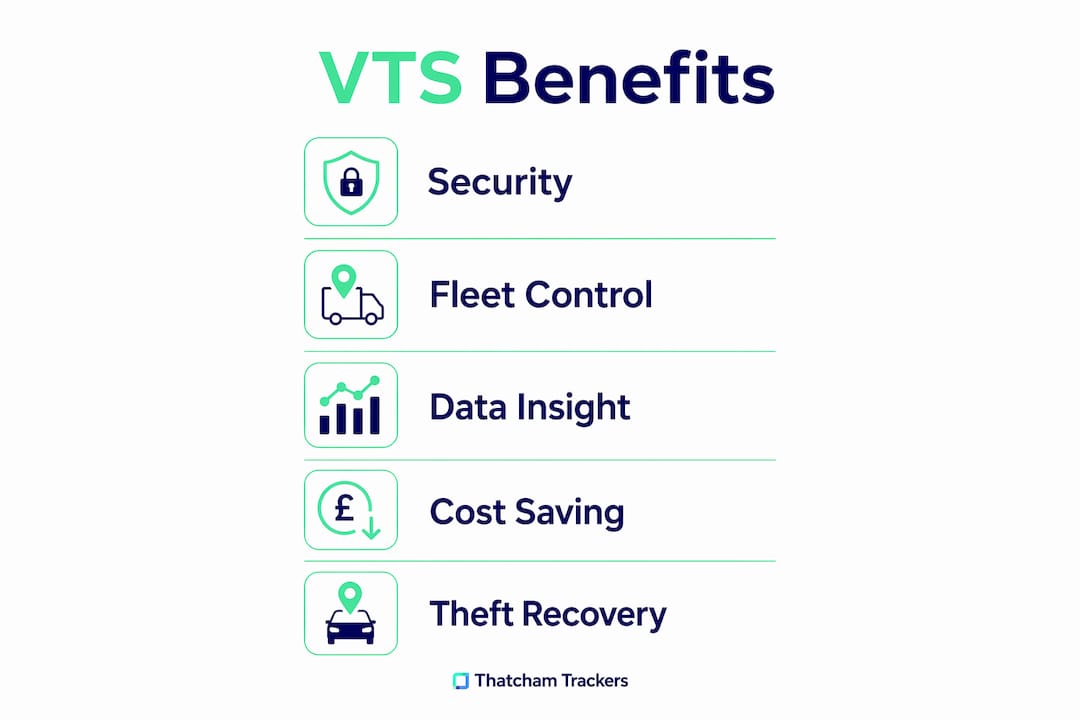
The benefits of a VTS system split cleanly between security and operational management. Both categories deliver measurable value.
Security and theft recovery. A tracker fitted to a vehicle gives recovery services a live location to work from. Vehicle tracking improves theft recovery rates significantly compared to vehicles without any tracking device. For high-value cars, insurers increasingly require a Thatcham-approved tracker as a condition of cover, or offer reduced premiums when one is fitted.
Fleet visibility and control. Fleet managers gain a live overview of every vehicle in operation. Unauthorised use outside working hours is immediately visible. Geofence alerts notify managers when vehicles enter or leave defined areas, which is useful for site access control and customer delivery confirmation.
Data-driven decisions. Telematics data from the OBD-II port provides engine health information that supports maintenance scheduling and wear reduction. Fault codes appear on the dashboard before a driver notices a problem, reducing unplanned downtime. Driver behaviour scores help managers identify training needs and reduce accident risk across the fleet.
Cost reduction. Route optimisation cuts fuel consumption by reducing unnecessary mileage. Idling alerts reduce wasted fuel when vehicles sit with engines running. Combined, these savings can offset the cost of a VTS subscription within months for a fleet of moderate size.
A practical guide on car theft prevention strategy outlines how tracking fits into a broader security approach for individual owners and fleet operators alike.
VTS vs GPS tracking: what is the difference?
GPS tracking and a full VTS are not the same thing, though the terms are often used interchangeably. Understanding the distinction helps you choose the right system.
A GPS-only tracker records and transmits location data. It tells you where a vehicle is, where it has been, and how fast it was travelling. That is the full scope of its capability. A VTS, by contrast, integrates GPS location with telematics diagnostics, driver behaviour monitoring, and a software platform capable of alerts, reporting, and third-party integrations. GPS tracking alone differs from telematics, which adds diagnostics, communication, and operational insight. For a sole trader tracking one van, a GPS-only device may be sufficient. For a fleet manager responsible for 20 vehicles, the additional telematics layer is what makes the system genuinely useful.
The software platform is also a meaningful differentiator. Two systems may use identical GPS hardware but deliver very different user experiences depending on platform alerting and reporting capabilities. Data ownership is another consideration. Some platforms retain full control of your fleet data; others allow export and API access. Ask about this before signing a contract.
For those operating vehicles across borders, understanding how international GPS tracking works is relevant when assessing whether a system’s cellular coverage extends to your routes.
How does automotive VTS differ from maritime vessel traffic services?
The acronym VTS creates genuine confusion because it refers to two entirely different systems depending on context.
In maritime use, VTS stands for Vessel Traffic Services. Maritime VTS is a shore-based monitoring system used by port authorities and coastguards to manage the safe movement of ships in busy waterways. It uses radar, VHF radio communication, and AIS (Automatic Identification System) transponders. Its purpose is traffic management and navigational safety, not theft prevention or fleet efficiency.
Automotive VTS, by contrast, is a vehicle-mounted system designed for individual owners and fleet operators. It uses GPS satellites, cellular networks, and cloud-based software. The two systems share an acronym and nothing else.
“Vessel Traffic Services are operated by port authorities to manage ship movements in defined waterways. They are entirely separate from automotive vehicle tracking systems, which are installed in road vehicles for security and fleet management purposes.”
Pro Tip: If you encounter the term VTS in a product listing or technical document, check the context immediately. A maritime VTS specification has no relevance to road vehicle tracking, and vice versa. The confusion is common enough that reputable suppliers will clarify this distinction without being asked.
Key takeaways
A VTS vehicle tracking system delivers reliable security and fleet management only when its hardware, connectivity, and software platform all function at the required standard.
| Point | Details |
|---|---|
| VTS is three layers | Hardware, connectivity, and software must all perform well for reliable tracking. |
| Telematics adds depth | OBD-II integration provides diagnostics and driver data beyond basic GPS location. |
| Software platform matters | Alerting, reporting, and API integration define the operational value of any system. |
| Maritime VTS is unrelated | Vessel Traffic Services is a port authority system with no connection to road vehicle tracking. |
| Thatcham approval adds value | Insurance-approved trackers reduce premiums and meet insurer requirements for high-value vehicles. |
Thatcham Trackers’ view on choosing the right VTS
The most common mistake made when selecting a vehicle tracking system is focusing entirely on the hardware specification while overlooking the software platform. A GPS unit with a fast update rate means very little if the platform behind it cannot configure meaningful alerts, produce useful reports, or export data when you need it.
Installation quality is equally underestimated. A tracker wired directly into the vehicle’s CAN-bus provides far richer data than a device simply plugged into the OBD-II port and left accessible. Hidden installation guidance matters both for data quality and for security. A tracker that a thief can locate and remove in 30 seconds provides limited protection.
For fleet managers, the temptation is to choose the system with the longest feature list. The more productive approach is to identify the three or four operational problems you actually need to solve, whether that is fuel waste, unauthorised use, or maintenance scheduling, and then assess which platform addresses those specifically. Overly complex systems with features you will never use create administrative burden without delivering proportionate benefit.
Data ownership deserves more attention than it typically receives. Some platforms lock your historical fleet data behind their subscription. If you switch providers, you may lose years of records. Ask for a data export clause before signing any contract.
For individual vehicle owners, the single most important factor is whether the tracker carries Thatcham Research certification. Insurers recognise Thatcham-approved devices as the standard for theft risk reduction in the UK. A certified tracker is not just a security tool. It is a financial instrument that can reduce your annual premium.
— Thatcham Trackers
Thatcham-approved trackers for your vehicle or fleet
Thatcham Trackers supplies insurance-approved vehicle tracking devices certified by Thatcham Research, the UK’s central automotive risk intelligence organisation. Every tracker in the range has been independently tested and rated, giving insurers the confidence to reduce premiums for vehicles fitted with certified devices. The product range covers cars, vans, and fleet vehicles, with options suited to individual owners and businesses managing multiple assets. Whether you need a basic theft recovery tracker or a full telematics solution for a working fleet, the right device is available. Browse the full range of Thatcham-approved trackers or use the tracker selection guide to find the correct fit for your vehicle and insurer requirements.
FAQ
What does VTS stand for in vehicle tracking?
In automotive contexts, VTS stands for Vehicle Tracking System. It refers to a combination of GPS hardware, telematics devices, connectivity networks, and software platforms used to monitor vehicle location and operational data.
How does a vehicle tracking system work?
A VTS collects GPS position and vehicle diagnostics data on board, transmits it over a cellular or satellite network, and displays it through a web or mobile platform. Most systems update location every 10 to 60 seconds and trigger alerts based on rules you configure.
Is vehicle tracking necessary for insurance purposes?
For many high-value vehicles in the UK, insurers require a Thatcham-approved tracker as a condition of cover. Even where it is not mandatory, fitting a certified device often qualifies the owner for a reduced premium because it lowers the insurer’s assessed theft risk.
What is the difference between GPS tracking and a full VTS?
GPS tracking provides location data only. A full VTS adds telematics diagnostics from the OBD-II or CAN-bus port, driver behaviour monitoring, maintenance alerts, and a software platform with reporting and integration capabilities. The distinction matters most for fleet operators who need operational insight beyond a map position.
What is maritime VTS and is it related to vehicle tracking?
Maritime VTS stands for Vessel Traffic Services and is a shore-based port authority system for managing ship movements using radar and VHF radio. It shares the acronym with automotive vehicle tracking but has no technical or functional connection to road vehicle tracking systems.