

Tracker engineer installation is the professional fitting of a GPS or asset tracking device into a vehicle by a trained engineer. It is not simply plugging in a device. The engineer selects the correct location, manages the wiring, tests signal integrity, and registers the device on a monitoring platform. For insurance purposes, particularly on high-value vehicles in the UK, professional installation by a certified engineer is often a condition of cover. Thatcham Research certification categories S5 and S7 set the benchmark for what qualifies as an approved vehicle tracking system in the UK, and meeting those standards depends heavily on how the device is fitted.
What professional tracker installation services cover across the UK
Professional tracker installation services are available nationwide, with mobile engineers travelling to depots, home addresses, or wherever a vehicle is located. The scope of service goes well beyond the physical fit.
Common service features include:
- Pre-installation vehicle compatibility assessment
- Choice of hardwired or OBD port fitting, depending on vehicle type and use case
- Concealed device placement to reduce the risk of tampering
- Post-installation system testing and signal verification
- Warranty on the installation itself
- Ongoing technical support and troubleshooting
Hardwired installation connects the device directly to the vehicle’s permanent live, ignition, and earth circuits. It is more secure and the standard choice for fleet use. OBD port fitting is quicker and suits short-term or lower-risk applications, but offers less concealment and is easier to remove.
| Installation type | Tamper resistance | Best suited for |
|---|---|---|
| Hardwired | High | Fleets, high-value vehicles |
| OBD port | Low | Short-term use, company cars |
| Battery-powered | Medium | Trailers, non-powered assets |
Pro Tip: If you are fitting trackers across a fleet, always opt for hardwired installation. The upfront time investment pays back in data reliability and reduced repeat engineer visits.
How engineers carry out the installation process
The tracker engineering process follows a defined sequence. Each step exists for a reason, and skipping any one of them creates problems downstream.
1. Vehicle assessment
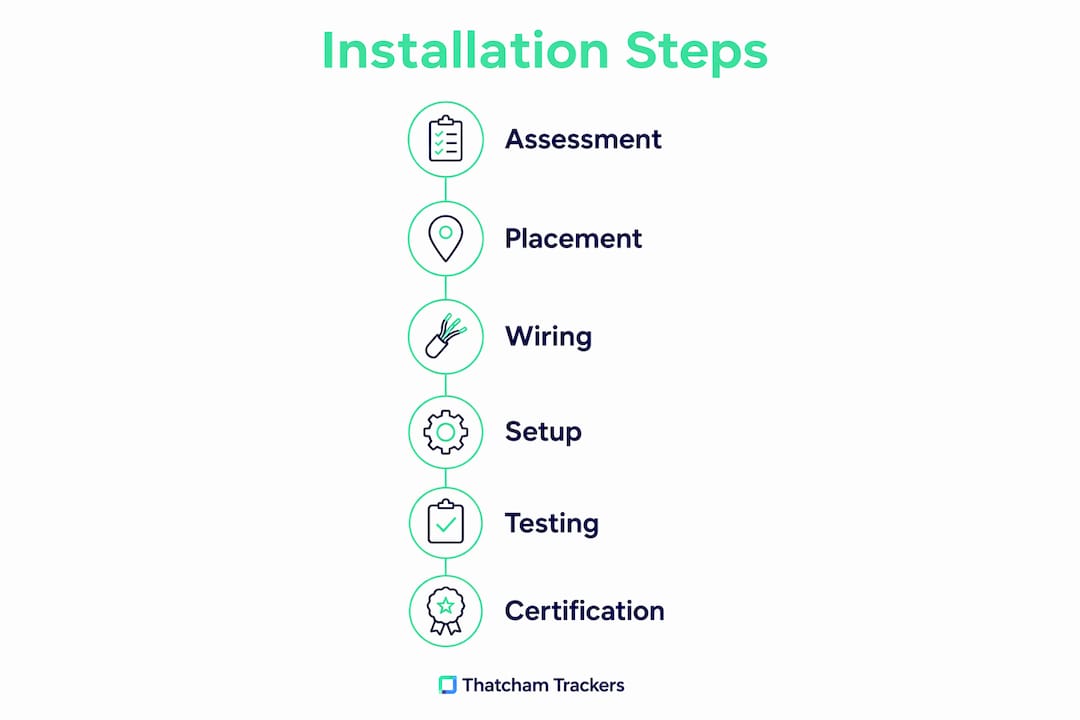
The engineer checks the vehicle’s electrical system, identifies suitable mounting locations, and confirms the tracker model is compatible. For fleet vehicles, this stage also involves reviewing any existing telematics hardware already fitted.

2. Device placement
Location selection is technical. Mounting near metal structures such as crash bars or brackets causes signal reflection, which produces unreliable location data. Engineers choose positions where the device has a clear line to the sky while remaining concealed from view.
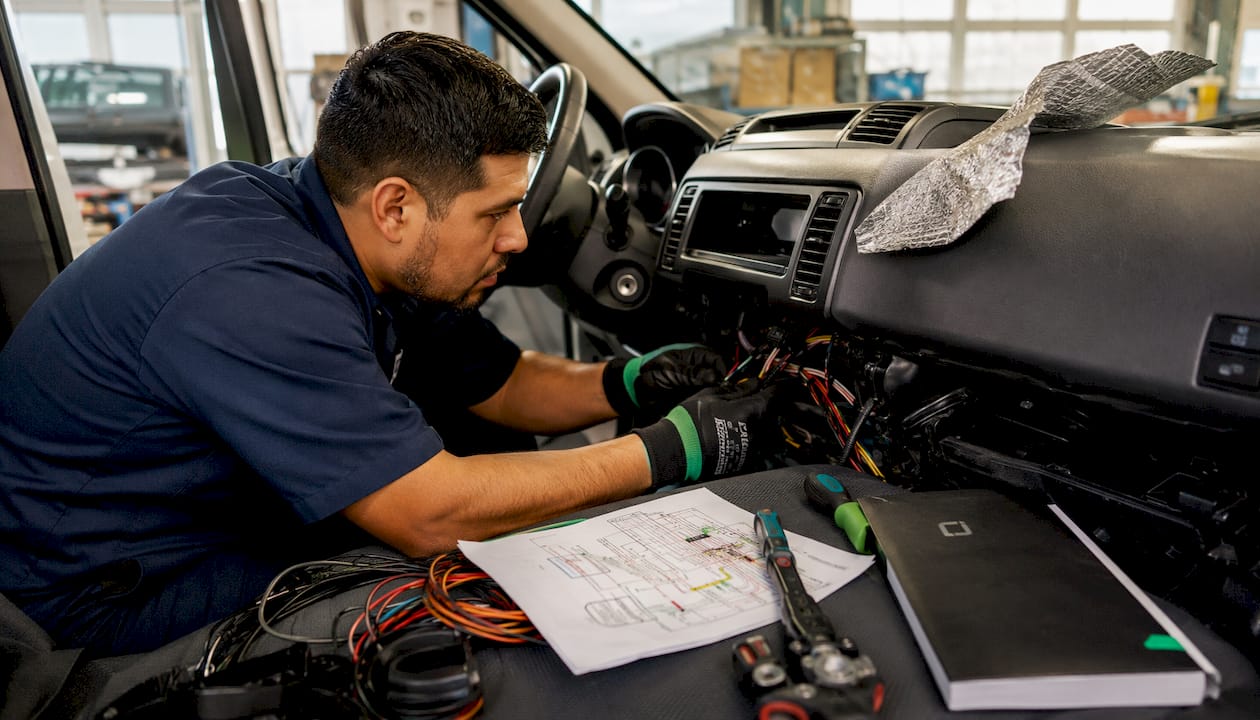
3. Wiring and power connection
For hardwired units, the engineer routes cables to the permanent live and ignition circuits, selecting the correct fuse rating to protect both the device and the vehicle’s electrical system. Correct fuse selection and clean wiring routing prevent battery drain and avoid interference with other vehicle systems.
4. SIM and software setup
The engineer registers the device on the tracking platform, activates the roaming SIM, and configures alerts. For Thatcham-certified systems, this includes connecting to a 24/7 monitoring centre.
5. Post-installation testing
The engineer confirms the device is transmitting location data accurately, checks battery backup function, and verifies tamper alerts are active. Professional GPS tracker installation typically takes under an hour for a single vehicle, keeping downtime to a minimum.
6. Sign-off and documentation
The engineer provides a certificate of installation. For insurance purposes, this document is the proof that the device was fitted by a qualified professional to the required standard.
Why using a professional engineer makes a practical difference
The benefits of tracker engineers go beyond convenience. The quality of the installation directly affects whether the device works as intended over its full service life.
Key advantages of professional installation:
- Concealment reduces the chance of a thief locating and disabling the device
- Correct wiring eliminates false alerts caused by power fluctuations
- Signal placement ensures accurate, continuous location data
- Compliance with Thatcham Research standards satisfies insurer requirements
- Documented installation supports insurance claims verification
For fleet managers, the operational case is equally clear. Fleet-wide professional installation delivers coordinated rollouts, consistent compliance across all vehicles, and reduced downtime compared with ad hoc fitting. A trained fitter understands which connector to use on which vehicle, where the unit needs to sit, and how to route wiring so the data stays clean.
A poorly fitted tracker can lose satellite lock, produce stop-start location data, or be found and removed within minutes of a theft. None of those outcomes are acceptable when the device is a condition of your insurance policy or the backbone of your fleet management operation.
Pro Tip: Always request a written installation certificate from your engineer. Insurance claims often require proof of certified fitting to honour theft recovery cover.
Thatcham-approved installations and UK insurance requirements
Thatcham Research has set the standard for vehicle security products in the UK since the 1990s. For tracking systems, two certification categories apply.
Category S5: Vehicle Tracking Systems
S5 covers active tracking systems designed to detect unauthorised vehicle use and maximise recovery probability. To achieve S5 certification, a device must meet a defined set of technical criteria, including:
- 24/7 monitoring to BS 8591 Category 1 or equivalent standard
- Roaming SIM for continuous network coverage
- GPS with vehicle motion detection
- Battery backup power supply
- Resistance to attack for a minimum of two minutes
- Bi-directional data transmission and data logging
Category S7: Asset Location Systems
S7 applies to asset location devices, typically used on trailers, plant, and non-powered equipment. The standard is less demanding than S5 but still requires certified monitoring and tamper resistance.
Thatcham certification is a biennial review process. Both the hardware and the installation method must continue to meet evolving criteria as theft techniques change. This means a device certified today may require reassessment if its installation method no longer meets the standard at renewal.
For UK drivers, insurance requirements for Thatcham trackers are increasingly common on high-value and high-risk vehicles. Insurers use Thatcham ratings to assess theft risk, and a certified S5 or S7 installation can directly affect your premium. When buying a used car, checking whether a certified tracker is already fitted is a practical step that many buyers overlook.
Installation engineers working on Thatcham-certified systems must understand the technical specifications and fit devices in a way that preserves certification validity. That means correct placement, proper wiring, and registration with an approved monitoring centre. An uncertified installation, however physically neat, does not satisfy insurer requirements.
Key takeaways
Professional tracker engineer installation is the only method that reliably satisfies UK insurance requirements, Thatcham Research certification standards, and the operational demands of fleet management.
| Point | Details |
|---|---|
| Professional installation is often mandatory | Insurers frequently require certified engineer fitting for high-value vehicle cover. |
| Thatcham S5 and S7 set the standard | These categories define the technical and monitoring requirements for approved tracking systems. |
| Placement affects signal quality | Mounting near metal causes signal reflection; engineers select locations that maintain accurate data. |
| Installation typically takes under an hour | Most single-vehicle professional fits complete in less than one hour for hardwired units. |
| Documentation matters for claims | A written installation certificate is required by many insurers to honour theft recovery cover. |