

Professional fitting for car trackers is the process by which a certified installer integrates a GPS tracking device into a vehicle’s electrical system without cutting factory wiring. For Thatcham-approved trackers, this is not optional. Insurers across the UK require professional installation as a condition for premium discounts and valid claims. A poorly fitted tracker is as good as no tracker at all. This guide explains why car trackers need professional fitting, what the process involves, and what you risk by skipping it.
What does professional fitting for car trackers involve?
Professional fitting goes well beyond plugging in a device. A certified installer connects the tracker to the vehicle’s electrical system using a fuse tap, which draws power from an existing fuse slot without touching the factory wiring loom. Thatcham-approved trackers integrate invisibly into a vehicle’s electrical system this way, avoiding cuts that thieves can detect using a continuity tester.
The placement of the tracker is equally critical. Professionals choose locations that are concealed from view, structurally protected, and positioned to maintain strong GPS and GSM signal. Common amateur mistakes include fitting trackers under the bonnet where heat and vibration degrade performance, or in locations a thief would check first.
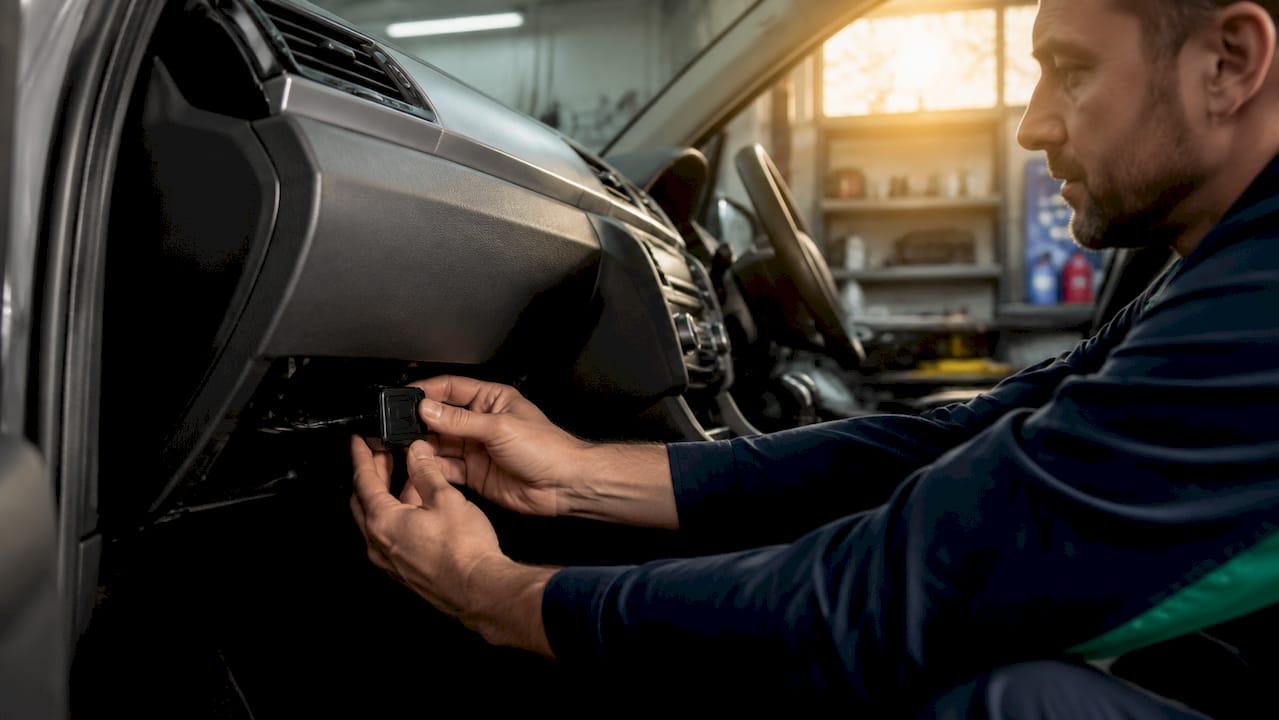
A professional installation also includes full system testing before the vehicle leaves the workshop. Professional fitting includes full system testing and warranty coverage, which confirms the device is live, reporting correctly, and drawing the right current. That verification step is what separates a certified fit from a guess.
Key elements of a professional installation:
- Fuse tap connection: Power is drawn from an existing fuse without cutting or splicing factory wiring.
- Concealed placement: The tracker is hidden in a location that resists both discovery and physical interference.
- Signal testing: GPS and GSM signal strength is confirmed at the chosen location before sign-off.
- Electrical integrity check: Professional installation avoids interference with vehicle electronics and preserves the manufacturer’s warranty.
- Post-fit documentation: The installer provides a certificate confirming the device and fitting method, which your insurer may request.
Pro Tip: Ask your installer for a written certificate of installation before you leave. Some insurers will not process a tracker-related claim without it.
How does professional fitting affect your insurance?
Insurers do not simply reward you for owning a tracker. They reward you for owning a tracker that works. Insurers often require Thatcham-approved trackers professionally fitted to qualify for premium discounts and reliable claims processing. The certification from Thatcham Research, the UK’s central automotive risk intelligence organisation, is only meaningful when the device is installed correctly.
Thatcham Research independently tests and certifies vehicle security systems. Insurance companies use those ratings to assess theft risk. A Thatcham S5 or S7 tracker carries a specific certification level, and that level is tied to a defined installation standard. If the installation does not meet that standard, the certification is effectively void.
The practical consequences of non-compliant installation are significant:
- Premium discounts refused: Your insurer may decline to apply the discount if the tracker was not fitted by an approved installer.
- Claims complications: If your vehicle is stolen and the tracker failed due to poor installation, the insurer may dispute the claim.
- Policy invalidation: Some policies include a clause requiring Thatcham-approved devices to be fitted to manufacturer specification. A DIY fit can breach that clause.
- No audit trail: Without a fitting certificate, you cannot prove the device was installed correctly at the time of the policy.
The insurance approved tracker best practices for 2026 are clear: professional installation is the baseline, not a premium add-on. Treating it as optional creates a gap between what your policy promises and what it will actually deliver.
What are the risks of DIY car tracker installation?
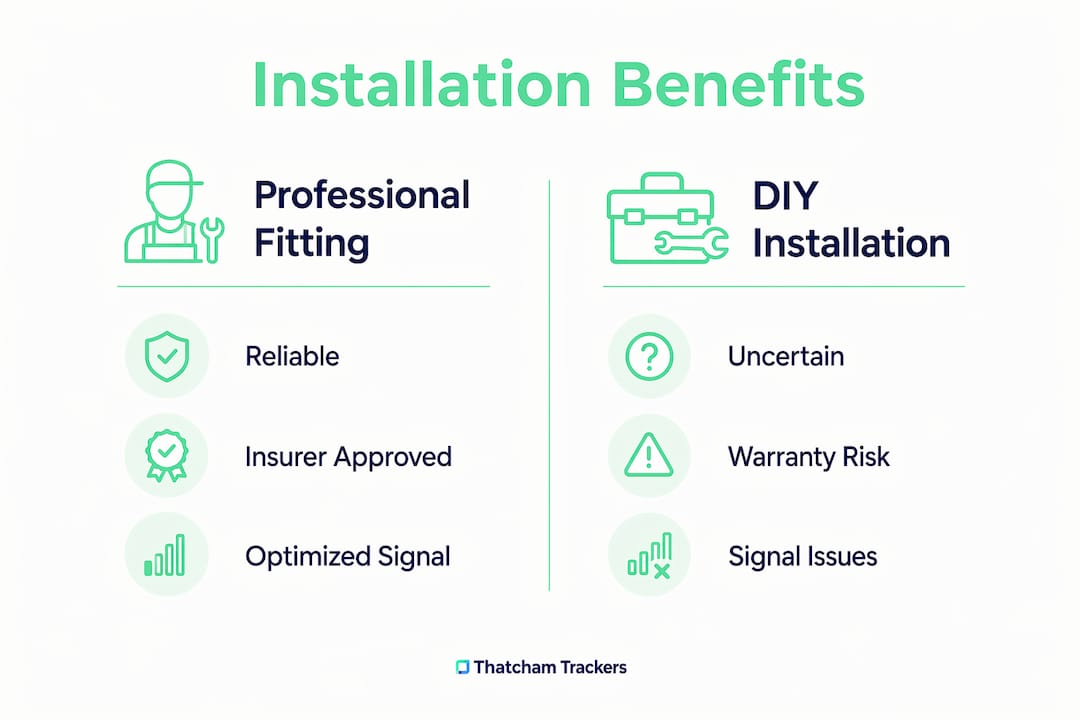
DIY installation is the leading cause of tracker failure in privately owned vehicles. Poorly installed trackers are the main reason for system failures and ineffective theft prevention. The risks fall into four clear categories.
-
Poor concealment. Most car owners fit trackers in obvious locations, such as under the dashboard or behind the glovebox. Experienced thieves know these spots. A tracker that is found is a tracker that is removed.
-
Electrical faults. Splicing into the wrong circuit or using an incorrect fuse rating can cause short circuits, blown fuses, or damage to the vehicle’s CAN bus system. Repairing CAN bus damage on a modern vehicle is expensive and can affect multiple systems simultaneously.
-
Battery drain and signal loss. Proper installation ensures trackers avoid battery drain and maintain signal quality. An incorrectly wired tracker can draw continuous current, flattening the battery overnight. A device placed near metal panels or in a signal-dead zone will fail to report location accurately.
-
Loss of warranty and support. Most tracker manufacturers void the device warranty if it is not fitted by an approved installer. You also lose access to professional support if the device malfunctions.
Pro Tip: If you are comparing the cost of DIY fitting against professional installation, factor in the potential cost of a refused insurance claim or an electrical repair bill. The professional fit is almost always cheaper in the long run.
A common DIY mistake is using self-adhesive mounting rather than a hardwired connection. Adhesive mounts fail over time due to heat and vibration. A tracker that has fallen behind a panel and is no longer powered is reporting nothing. For a detailed breakdown of what correct concealment looks like, the hidden tracker installation guide from Thatcham Trackers covers the technical requirements in full.
Does professional fitting improve tracker performance?
Professional fitting directly determines how well a tracker performs its core functions. Modern trackers provide driver behaviour monitoring, maintenance tracking, and anti-theft alerts that function best with expert integration. A device that is incorrectly wired or poorly placed cannot deliver those features reliably.
The table below shows the difference in real-world performance between a professionally fitted tracker and a DIY installation.
| Feature | Professionally fitted | DIY installation |
|---|---|---|
| GPS signal accuracy | Consistent, optimised placement | Variable, often degraded |
| Battery impact | Minimal, correct circuit used | Risk of continuous drain |
| Concealment from thieves | High, certified hidden location | Low, common locations used |
| Insurance compliance | Confirmed, certificate issued | Not guaranteed |
| Warranty status | Intact | Typically voided |
| Anti-tamper protection | Integrated, wiring secured | Exposed, easily disconnected |
Businesses using GPS-integrated vehicle maintenance report over 35% reduction in vehicle damage and 22% fewer minor accidents. That data comes from fleet environments where professional installation is standard. The performance gap between a correctly fitted tracker and a poorly fitted one is not marginal. It is the difference between a system that works and one that gives a false sense of security.
Professional fitting also supports integration with immobilisation systems. Thatcham Trackers offers products such as the Thatcham S5 that combine tracking with immobilisation, and those features require correct wiring to function at all. A certified installer understands how to connect both systems without creating conflicts in the vehicle’s electronics.
Key takeaways
Professional fitting is the single most important factor in whether a Thatcham-approved car tracker delivers genuine security and qualifies for insurance benefits.
| Point | Details |
|---|---|
| Fuse tap method is standard | Certified installers use fuse taps, not wire cuts, to preserve factory wiring and conceal the tracker. |
| Insurance compliance requires professional fitting | Insurers require certified installation to validate premium discounts and process theft claims. |
| DIY fitting voids warranties | Most tracker manufacturers void device warranties if installation is not carried out by an approved installer. |
| Concealment determines theft resistance | Professionally chosen locations resist discovery by thieves using detection tools. |
| Signal and power reliability depend on installation | Correct circuit selection prevents battery drain and maintains consistent GPS and GSM reporting. |
Thatcham Trackers’ view on professional fitting
The question we hear most often is whether professional fitting is really necessary or just an upsell. After working with car owners across the UK, the answer is straightforward: the fitting is where most tracker investments succeed or fail.
A tracker fitted incorrectly does not just underperform. It creates a false sense of security that is arguably worse than having no tracker at all. We have seen vehicles stolen where the tracker was present but not reporting, because the device had been placed in a signal-dead zone or had drained the battery through a poor wiring connection. In each case, the owner believed they were protected.
The Thatcham Research certification process is thorough. It tests the device itself under controlled conditions. What it cannot test is how that device will be installed in your specific vehicle. That responsibility falls to the installer. Choosing a certified professional is not a formality. It is the step that makes the certification meaningful.
For car enthusiasts with modified vehicles or high-value cars, the stakes are higher still. Non-standard wiring configurations and aftermarket electronics require an installer who understands your specific setup. A generic DIY approach on a modified vehicle is a reliable route to electrical problems. The car theft prevention strategy guide from Thatcham Trackers covers how professional installation fits into a broader security approach worth reading before you make any decisions.
— Thatcham Trackers
Get a professionally fitted Thatcham-approved tracker
Thatcham Trackers supplies insurance-approved trackers with professional fitting included. Every device in the range is certified by Thatcham Research and installed by approved engineers who follow manufacturer guidelines and issue a fitting certificate on completion.
The Thatcham-approved tracker range covers S5, S5 Plus, and S7 categories, each suited to different vehicle types and insurance requirements. S7 devices offer the highest certification level for high-value vehicles, while S5 Plus trackers combine tracking with driver alerts and immobilisation features. All products come with warranty coverage that is only valid when fitted by a certified installer. If you want the insurance benefit and the security to be real, the fitting is where it starts.
FAQ
Why do insurers require professional fitting for car trackers?
Insurers require professional fitting because it confirms the tracker is installed to the standard that makes the Thatcham certification valid. Without a certified installation, the device may not perform reliably, and the insurer cannot verify it will function in the event of theft.
Can a DIY-fitted tracker still qualify for an insurance discount?
Most insurers will not apply a premium discount for a DIY-fitted tracker. The discount is tied to Thatcham certification, which requires installation by an approved professional. A self-fitted device is unlikely to meet that requirement.
What is a fuse tap and why does it matter?
A fuse tap connects the tracker to the vehicle’s power supply through an existing fuse slot, without cutting or splicing the factory wiring loom. This method preserves electrical integrity and makes the tracker harder for thieves to detect using continuity testers.
Will a DIY installation void my tracker’s warranty?
Yes. Most tracker manufacturers void the device warranty if it is not fitted by an approved installer. This means any fault with the device after a DIY installation will not be covered, leaving you without support or replacement.
How do I know if my tracker has been fitted correctly?
A correctly fitted tracker comes with a written installation certificate from the engineer. The device should be live, reporting accurate location data, and drawing no measurable impact on the vehicle battery. Your insurer may request the certificate as proof of compliant installation.