

An insurance policy lists a tracker because it is a security device recognised for reducing vehicle theft and insurance claims costs. Specifically, UK insurers reference trackers that meet Thatcham Research standards as part of their Vehicle Risk Rating (VRR) framework, a model that combines safety, security, and repairability to calculate how much a vehicle costs to insure. The term you will see on policy documents is “Thatcham-approved tracker,” and understanding why insurers specify this rather than any generic GPS device is the key to making an informed purchase. For UK car owners and motorhome owners, this distinction directly affects both your premium and your ability to recover a stolen vehicle.
Why insurance policy lists tracker: the risk scoring connection
Insurers do not list trackers on policies as a formality. They list them because approved security devices feed into a measurable risk reduction model that affects both the likelihood and the severity of a theft claim. Thatcham Research is the UK’s central automotive risk intelligence organisation, and it independently tests and certifies vehicle security systems, including trackers, against defined benchmarks. When a tracker meets those benchmarks, it earns a place in the VRR framework, which insurers use to price policies accurately.
The VRR framework treats security as one of its core pillars alongside safety and repairability. A vehicle with a certified tracker scores better on the security pillar, which lowers its overall risk profile. That lower risk profile translates directly into reduced expected claims costs for the insurer. Because insurance pricing links risk reduction to lower expected claims costs, a listed tracker is not just a box-ticking exercise. It is a data point that justifies a lower premium.
Thatcham’s NVSA (New Vehicle Security Assessment) benchmark is the specific standard most relevant to tracker certification. It assesses vulnerabilities including digital attacks and keyless-entry exploits, which are now among the most common methods used to steal modern vehicles. A tracker that meets NVSA criteria demonstrates it can withstand or respond to these threats, giving insurers confidence that the device will perform when it matters. Generic GPS trackers, by contrast, are not tested against these criteria and therefore do not qualify for the same risk reduction credit.
Pro Tip: When speaking to your insurer, ask specifically whether they require a Thatcham Category S5, S6, or S7 tracker. Each category covers a different level of monitoring and response, and knowing which one your policy requires prevents you from purchasing a device that does not qualify.
- Category S5: Immobilisation of the vehicle using the ADR tag
- Category S7: Stolen vehicle recovery with a monitoring centre response
What makes a tracker “insurance-approved” and why generic devices fall short
The phrase “insurance-approved tracker” refers specifically to a device that has been independently tested and certified by Thatcham Research against its NVSA benchmarks. This is not a self-declared status. A manufacturer cannot simply claim their tracker is approved. Thatcham tests the device, and only those that pass are listed. This independent certification is what insurers use in underwriting to assess whether a tracker genuinely reduces theft risk.

A common misconception is that any GPS tracker qualifies for insurer listings. It does not. Security performance matters, not just the existence of a tracking device. A £30 GPS dongle purchased online may show you where your vehicle is, but it offers no resistance to digital theft methods, no monitoring centre response, and no integration with insurer risk frameworks. Insurers know this, which is why policy documents specify approved devices rather than trackers in general.
The table below summarises the key differences between a Thatcham-approved tracker and a generic GPS device:
| Feature | Thatcham-approved tracker | Generic GPS tracker |
|---|---|---|
| Independent certification | Yes, tested by Thatcham Research | No |
| NVSA benchmark compliance | Yes | No |
| Monitoring centre response | Yes | Typically no |
| Insurer risk rating credit | Yes, feeds into VRR scoring | No |
| Keyless-entry attack resistance | Assessed and certified | Not assessed |
| Premium reduction eligibility | Yes | No |
Pro Tip: Before purchasing, verify the tracker’s certification on the Thatcham Research website or check the product listing against the insurer’s approved device list. Buying the wrong category can mean your policy condition is unmet, which could affect a claim.
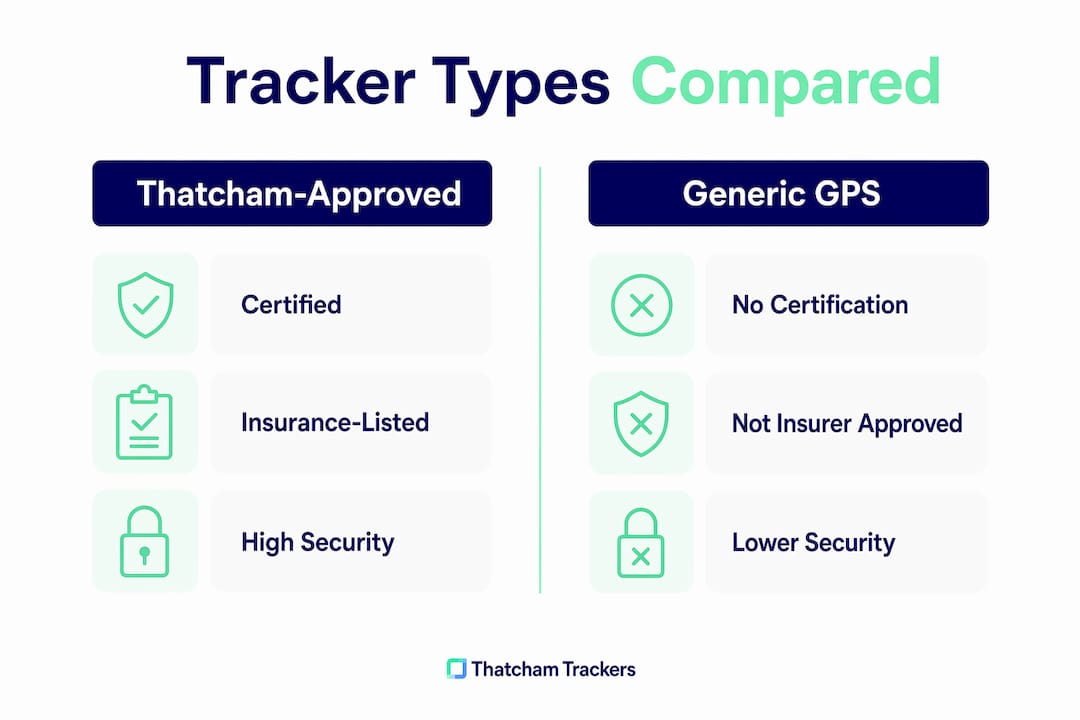
Understanding vehicle tracking technology in broader terms also helps here. Modern approved trackers combine GPS positioning with cellular communication, tamper alerts, and in some cases driver recognition. These combined features are what make them genuinely useful to insurers, not just to owners.
Benefits of an insurance-listed tracker for UK car and motorhome owners
The practical advantages of fitting a Thatcham-approved tracker extend well beyond satisfying a policy condition. For motorhome owners in particular, where vehicles can sit unattended for weeks at a time, the benefits are especially significant.
-
Reduced theft likelihood. Vehicles fitted with certified trackers are a less attractive target. Thieves are aware that approved trackers trigger monitoring centre alerts, making a clean getaway far harder. Thatcham-certified devices lower theft incidents, which is reflected in insurer risk data.
-
Lower insurance premiums. Because approved trackers reduce expected claims costs, insurers reward their presence with lower premiums. The saving varies by insurer and vehicle type, but for high-value cars and motorhomes, the annual reduction can comfortably exceed the cost of the tracker itself.
-
Faster vehicle recovery. When a theft does occur, a monitoring centre can track the vehicle in real time and coordinate with police. Trackers reduce loss severity by enabling faster recovery, which means less damage, fewer total-loss claims, and a quicker resolution for the owner.
-
Policy compliance. Some insurers make a Thatcham-approved tracker a condition of cover, particularly for high-value or high-risk vehicles. Fitting the correct device keeps your policy valid and prevents the risk of a claim being declined on a technicality.
-
Peace of mind. Knowing your vehicle is monitored 24 hours a day, seven days a week, provides genuine reassurance. For motorhome owners who leave their vehicle on a site or in storage, this is not a minor benefit. It is a material difference in how securely you can leave your vehicle unattended.
How to track and manage your insurance policies and trackers effectively
Fitting a tracker is only part of the picture. Keeping accurate records of your insurance policies and the tracker details attached to them is equally important, particularly when it comes to renewals, claims, and switching insurers.
Effective insurance policy tracking means knowing, at any given moment, which tracker is fitted to which vehicle, which category it belongs to, when the monitoring subscription renews, and which insurer has been notified of its presence. Without this information organised in one place, it is easy to let a monitoring subscription lapse or to forget to inform a new insurer that a tracker is fitted, losing the premium benefit entirely.
Tools like the Notion Insurance Policy Tracker template allow you to consolidate all your policies, track renewal dates, record premium spend, and store documents in a single location. This kind of insurance documentation tracker is particularly useful for owners with multiple vehicles or policies, where the risk of missing a renewal or overlooking a policy condition is higher.
App-based solutions such as PolicyZen offer a similar function on mobile, allowing you to monitor policies and compliance conditions from your phone. For motorhome owners who may have separate policies for the vehicle, its contents, and European travel cover, having everything in one place removes the risk of a coverage gap.
- Record the tracker’s make, model, and Thatcham category alongside each vehicle policy
- Note the monitoring centre subscription renewal date separately from the insurance renewal date
- Store the tracker installation certificate, as insurers may request this at claim stage
- Update your insurer in writing whenever a tracker is added, upgraded, or removed
- Review your policy conditions annually to confirm the listed tracker still meets the required category
Organised policy tracking also strengthens your position during premium negotiations. When you can demonstrate to an insurer exactly which certified device is fitted and confirm the monitoring subscription is active, you present a lower-risk profile. That specificity supports a better renewal quote.
Key takeaways
Thatcham-approved trackers are listed on insurance policies because they meet independently verified security standards that demonstrably reduce theft risk and claims costs within the VRR framework.
| Point | Details |
|---|---|
| Why insurers list trackers | Approved devices reduce theft likelihood and claims costs, feeding directly into VRR risk scoring. |
| NVSA certification matters | Only trackers tested against Thatcham’s NVSA benchmarks qualify for insurer risk rating credit. |
| Generic trackers do not qualify | A standard GPS device lacks the certification and monitoring response that insurers require. |
| Premium and recovery benefits | Certified trackers lower premiums and enable faster vehicle recovery after theft. |
| Policy tracking is equally important | Keeping organised records of tracker details and renewal dates protects your cover and premium savings. |
Our view on tracker selection and what most owners get wrong
At Thatcham Trackers, the single most common mistake we see is owners purchasing a tracker based on price alone, without checking whether it meets the category their insurer specifies. They fit the device, inform their insurer, and assume the job is done. Then, at renewal or at claim stage, they discover the device does not meet the required standard and the premium benefit is withdrawn or, worse, the claim is complicated.
The second mistake is treating the monitoring subscription as optional. The tracker hardware is only part of what insurers are paying attention to. An active monitoring centre subscription is what enables the rapid response that justifies the risk reduction credit. A tracker with a lapsed subscription is, from an insurer’s perspective, closer to a generic GPS device than a certified security system.
The direction of travel in vehicle security is clear. As keyless theft and relay attacks become more sophisticated, Thatcham’s NVSA benchmarks will continue to evolve, and insurers will tighten their requirements accordingly. Owners who select certified devices now, and keep their records in order, are better positioned for those changes than those who treat tracker compliance as a one-time task.
The right Thatcham tracker for your vehicle depends on your insurer’s specific requirements, your vehicle’s value, and how it is used and stored. Getting that match right from the start is the most reliable way to protect both your vehicle and your premium.
— Thatcham Trackers
Find the right tracker for your insurance policy
Thatcham Trackers supplies a full range of insurance-approved trackers certified by Thatcham Research to meet UK insurer requirements. Whether you drive a high-value car or a motorhome, every device in the range is independently tested and listed for insurance purposes.
Choosing a certified tracker from Thatcham Trackers means your device meets the NVSA benchmarks that insurers use in their VRR risk scoring, giving you the best chance of a lower premium and full policy compliance. The range covers Category S5, S6, and S7 devices, with professional installation available. Browse the full selection of Thatcham-approved trackers and confirm your device meets your insurer’s exact requirements before you buy.
FAQ
Why does my insurance policy list a specific tracker?
Your insurer lists a specific tracker because only devices certified by Thatcham Research meet the security benchmarks used in their Vehicle Risk Rating model. Generic GPS trackers do not qualify for the same risk reduction credit.
Does a Thatcham-approved tracker lower my insurance premium?
Yes, in most cases. Because certified trackers reduce expected theft claims costs, insurers reflect this in lower premiums, particularly for high-value cars and motorhomes.
What is the difference between tracker categories S5, S6, and S7?
S5 provides stolen vehicle recovery with a monitoring centre response. S6 adds driver ID recognition, and S7 includes remote immobilisation. Your insurer will specify which category your policy requires.
Will any GPS tracker satisfy my insurer’s tracker condition?
No. Only approved devices tested against Thatcham’s NVSA benchmarks satisfy insurer requirements. A standard GPS tracker does not meet the certification standard and will not qualify for a premium reduction or fulfil a policy condition.
How do I keep track of my tracker and insurance policy details?
Use an insurance documentation tracker such as the Notion Insurance Policy Tracker template or an app-based tool to record your tracker category, monitoring subscription renewal date, and installation certificate alongside your policy documents. Review the best practices for 2026 to keep your records current.