

UK insurers require Thatcham-approved trackers, usually Category S5 or S7, before offering fleet cover or discounted premiums. Two conditions matter more than the hardware itself: professional installation and an active, fully paid subscription. Miss either one, and insurers can and do decline theft claims, even when a certified device is fitted.
TL;DR:
- Insurance claims can be declined if the tracker is not actively maintained, even with Thatcham-approved devices, such as lapsing subscriptions or inactive driver recognition during theft.
- Fleet managers must ensure installation is professional, accompanied by signed certificates, device records, and active subscriptions, with ongoing checks for device functionality.
- Thatcham certification standards are reviewed every two years, so older certificates may no longer meet current insurer requirements, requiring regular verification.
- Insurers often specify detailed conditions like active subscriptions and functionality, meaning a dormant tracker or missed renewal can void coverage even with certified hardware.
- Using the approved devices from Thatcham and maintaining documentation and subscriptions prevents claim disputes, especially when insurers scrutinise after theft incidents.
Table of Contents
- What does Thatcham security certification mean for S5 and S7 trackers?
- How do insurers word tracker endorsements, and what happens if you don’t comply?
- What installation, subscription, and technical checks does a fleet need before accepting a fit?
- Compliance checklist: what fleet managers should do before, during, and after fitment
- Thatcham Trackers’ perspective: why certification rigour still gets underestimated
- Getting your fleet compliant with Thatcham-approved tracking
- Where to verify certification and ombudsman rulings
- Sources
- FAQ
What does Thatcham security certification mean for S5 and S7 trackers?
Category S5 covers vehicle tracking systems with anti-theft functions as detailed in this complete UK industry guide. Category S7 covers asset location systems, the category fleets use for trailers, plant equipment, and other non-powered assets that need tracking but not immobilisation. Both categories exist because insurers needed a single, testable standard rather than dozens of competing manufacturer claims.
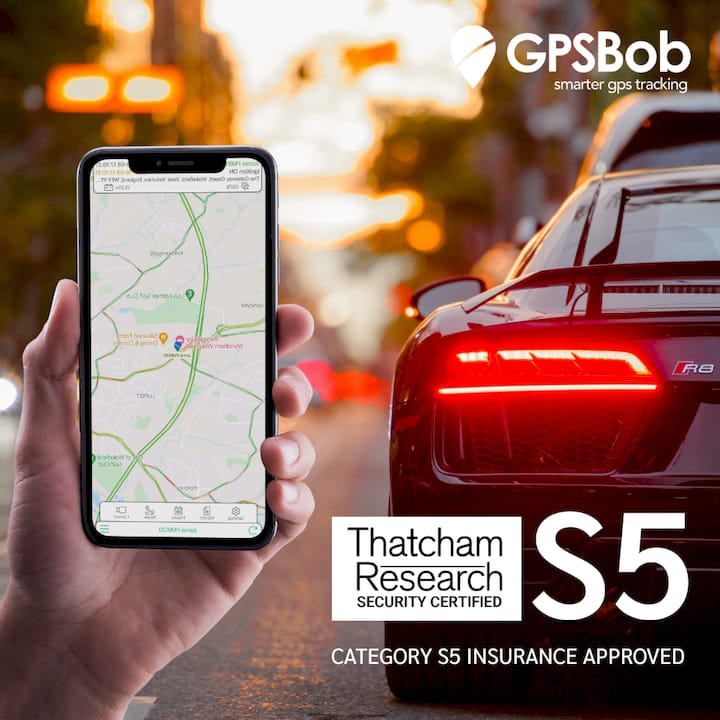
Thatcham Security Certification verifies these products through engineering tests, and certifications are reviewed on a biennial basis to confirm the standard has been maintained, not just achieved once and forgotten. That review cycle matters for fleet managers: a device certified three years ago may have since been superseded by a newer specification, and insurers checking accepted device lists will notice.
Insurers lean on Thatcham ratings because it gives them a consistent benchmark across manufacturers.
- S5 devices must demonstrate reliable anti-theft tracking under Thatcham’s engineering tests.
- S7 devices are assessed specifically for asset recovery rather than vehicle-specific anti-theft functions.
- Certification numbers are reviewed on a biennial basis, so an older certificate may no longer reflect current standards.
Thatcham’s own research and safety facilities, including engineering labs used to develop vehicle risk ratings, back these categories with genuine testing infrastructure rather than a paper exercise. That is a large part of why insurers treat “Thatcham-approved” as shorthand for reliable and verified, rather than asking fleet managers to justify every device individually.
How do insurers word tracker endorsements, and what happens if you don’t comply?
Policy endorsements rarely just say “must have a tracker.” They specify conditions, and those conditions are where fleets get caught out. Typical wording includes phrases like “installed and in operation at time of loss,” “maintained under contract,” and “subscriptions fully paid.” Each phrase is a separate condition, and insurers only need one of them to fail to challenge a claim.
Financial Ombudsman rulings show this isn’t theoretical. In one case, an insurer declined a claim because the tracker’s automatic driver recognition function wasn’t active at the time of theft, even though the vehicle had a Thatcham-approved device fitted. In another, a Category 5 tracker had lapsed on subscription payments, and the insurer’s decision to decline the claim was upheld.
That principle runs through several ombudsman decisions: the burden sits with the vehicle owner, not the tracker company, to keep the system live.
Practical takeaways fleet managers should act on:
- Read the full policy schedule, not just the summary, since endorsement wording sits in the small print.
- Treat “maintained under contract” as a literal requirement, meaning a lapsed direct debit is a compliance failure.
- Assume the insurer will check activation status after a theft, not before.
A tracker sitting dormant because a card expired is functionally the same as no tracker at all in the eyes of most insurers.
What installation, subscription, and technical checks does a fleet need before accepting a fit?
Professional installation isn’t a formality. Insurers specify it because self-fitted or improperly wired trackers are more prone to tamper vulnerabilities and false negatives, and because a professional fit generates the paperwork insurers ask for during claims.
Before signing off on any installation, confirm:
- A signed installation certificate showing date, installer details, and vehicle registration.
- The device’s unique serial number and IMEI, recorded against the vehicle in your fleet log.
- The digital certificate details that link the specific device to the insurer’s accepted record.
- Confirmation of active subscription status, including the renewal date and payment method.
- That automatic driver recognition, immobilisation, and tamper alerts are all functioning, not just installed.
Subscription responsibility should sit with one named person or department in the fleet, not with individual drivers. Payment failures on a single vehicle can leave that vehicle’s endorsement void while the rest of the fleet stays compliant, creating a patchwork of risk that’s easy to miss until a claim is refused.
Pro Tip: Ask your installer for the digital certificate number at the point of fitment, not weeks later. Insurers increasingly ask for this reference during new policy setup, and chasing it retrospectively after installation delays cover.
Continuous monitoring capability is worth confirming too. A tracker that only reports location on demand isn’t the same as one offering 24/7 monitoring compatibility, and some insurer endorsements specify the latter explicitly.
Compliance checklist: what fleet managers should do before, during, and after fitment
Compliance isn’t a single event. It’s a sequence that starts before you buy and continues for the life of the vehicle.
Before purchase:
- Confirm the specific device model appears on your insurer’s accepted list, not just that it carries a Thatcham badge in general.
- Check the certification is current. A Thatcham approval reviewed biennially can lapse if the manufacturer doesn’t maintain standards.
- Cross-reference the certificate number your insurer expects against the one the manufacturer provides.
At fitment:
- Obtain a signed installation certificate from an approved fitter.
- Log the device serial number, activation date, and digital certificate reference against the vehicle asset record.
- Record the subscription provider, contract length, and renewal date in your fleet management system.
Ongoing:
- Set renewal alerts at least 30 days ahead of subscription expiry, not on the day.
- Maintain an audit log covering every vehicle’s device status, reviewed quarterly.
- Run periodic spot checks to confirm devices are transmitting, since a silent failure can go unnoticed for months.
- Prepare a compliance report your insurer can request at renewal or after an incident.
Centralising this into one fleet-wide contract, rather than leaving individual drivers responsible for their own subscriptions, closes the single-point-failure gap that shows up repeatedly in ombudsman cases.
Thatcham Trackers’ perspective: why certification rigour still gets underestimated
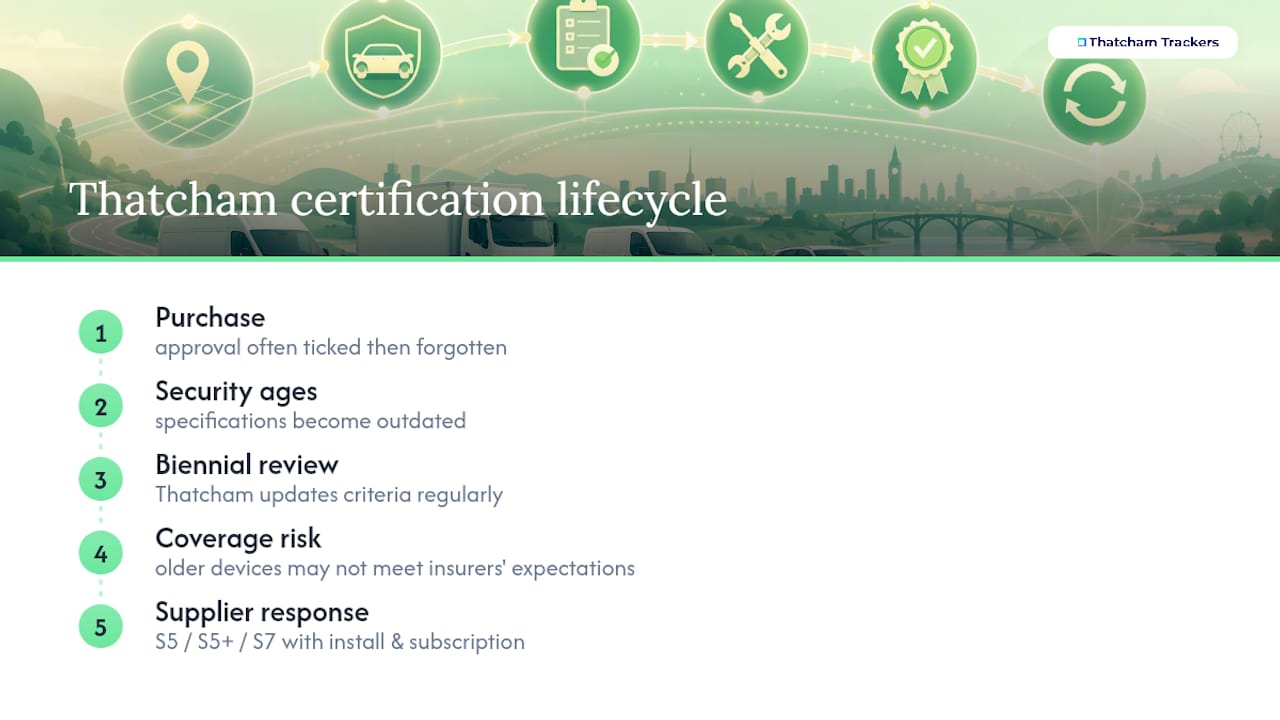
Most fleet managers treat Thatcham approval as a box to tick at purchase and then forget it. That’s the wrong instinct. Certification is reviewed biennially precisely because security specifications age, and Thatcham has updated its criteria to address newer risks such as relay attacks. A device bought five years ago under an older standard may technically still work while no longer reflecting what your insurer expects today.
Tracker suppliers offer S5, S5+, and S7 devices with nationwide installation and ongoing subscription support, built around this reality rather than a one-off sale.
— Thatcham Trackers
Getting your fleet compliant with Thatcham-approved tracking
Thatcham Trackers supplies Thatcham-approved trackers across the S5, S5+, and S7 categories, alongside nationwide installation and subscription management built specifically to satisfy the documentary checks insurers ask for.
Fleets insuring standard vehicles typically need Category S5 devices, while higher-value vehicles often call for the enhanced authentication features in S5 Plus. Trailers and non-powered assets fall under S7 asset location systems. Fleets wanting an additional layer of theft deterrence alongside tracking can also review ghost immobilisation options.
Every installation comes with the documentation insurers usually request: a signed fitment certificate, device serial numbers, and digital certificate details tied to your policy. Request a fleet quote through the collections above, or book installation directly to get every vehicle compliant before your next renewal.
Where to verify certification and ombudsman rulings
- Thatcham Security Certification for current S5 and S7 standards.
- Security Technology guidance on insurer subscription and maintenance expectations.
- Financial Ombudsman decision DRN-3948169 and DRN-5245609 for real claim-denial precedents.
- Further reading on proof requirements for insurance claims.
Sources
- Thatcham Security Certification - Thatcham Research
- Security Technology - Thatcham Research
- Financial Ombudsman decision DRN-3948169
FAQ
Do all UK insurers require a Thatcham-approved tracker?
Not all insurers mandate one, but many fleet and high-value vehicle policies specify Thatcham S5 or S7 devices as a condition of cover or a requirement for premium discounts.
What’s the difference between Thatcham S5 and S7 trackers?
S5 covers vehicle tracking systems with anti-theft functions, while S7 covers asset location systems suited to trailers and non-powered equipment.
Can an insurer refuse a claim if my subscription lapsed?
Yes. Ombudsman rulings have upheld insurer decisions to decline theft claims where tracker subscriptions weren’t maintained at the time of loss.
Does self-installation meet insurer requirements?
Most insurer endorsements specify professional installation, since it provides the certificate and documentation insurers request during a claim, and reduces the tamper risk associated with DIY fits.
How often is Thatcham certification reviewed?
Certifications are reviewed on a biennial basis, so fleet managers should check that a device’s certification is still current rather than assuming a past approval still applies.