

Book a Thatcham-approved installer to remove and refit your tracker, then request a new Certificate of Installation the moment the fit is finished. Send that certificate to your insurer and get written confirmation the transferred unit still meets their required category, whether that’s S5 or S7. Skip either step and your cover could be invalid on the new car.
TL;DR:
- Verify the tracker model, serial number, and account details before booking an installer to ensure proper transfer and certification.
- Choose an accredited Thatcham installer who will correctly remove, refit, and test the device, then issue a valid Certificate of Installation.
- Confirm the device’s compliance with insurer requirements by obtaining written approval of acceptance and the updated certificate before completing the transfer.
- Expect a typical fee of around £20 plus VAT for the certificate update, taking about five working days from submission of proof.
- Test key functions like GPS location, tamper alerts, and immobiliser response after refit, and address wiring or signal issues promptly with the installer or monitoring provider.
Table of Contents
- How do you transfer tracker to a new car step by step?
- What documents and details do you need ready?
- What do insurers actually require to accept the transfer?
- What will it cost and how long will it take?
- How do you check the tracker is working after refit?
- Why does certified fitting protect your cover?
- Common mistakes owners make when transferring a tracker
- Buy a Thatcham-approved tracker and book accredited fitting
- Quick links to verify certification and update your certificate
- Sources
- FAQ
How do you transfer tracker to a new car step by step?
Moving a tracker between vehicles is a mechanical job and a paperwork job in equal measure. Miss the paperwork and the device might work perfectly while your insurer still treats the car as unprotected.
1. Confirm what you’re moving. Check the exact model (S5, S5 Plus, or S7), the account or subscription reference, and the new vehicle’s V5C details before you book anyone.
2. Book an accredited installer. Ask directly whether they are Thatcham-accredited for the category you hold. A professional tracker installer should be able to name their accreditation without hesitation.
3. Removal. The engineer should record the device serial number, power the unit down safely, and note the original wiring or mounting position before disconnecting anything.
4. Refit. On the new car, correct CAN bus integration or wiring matters as much as the device itself. If your setup includes an immobiliser, that pairing needs checking too.
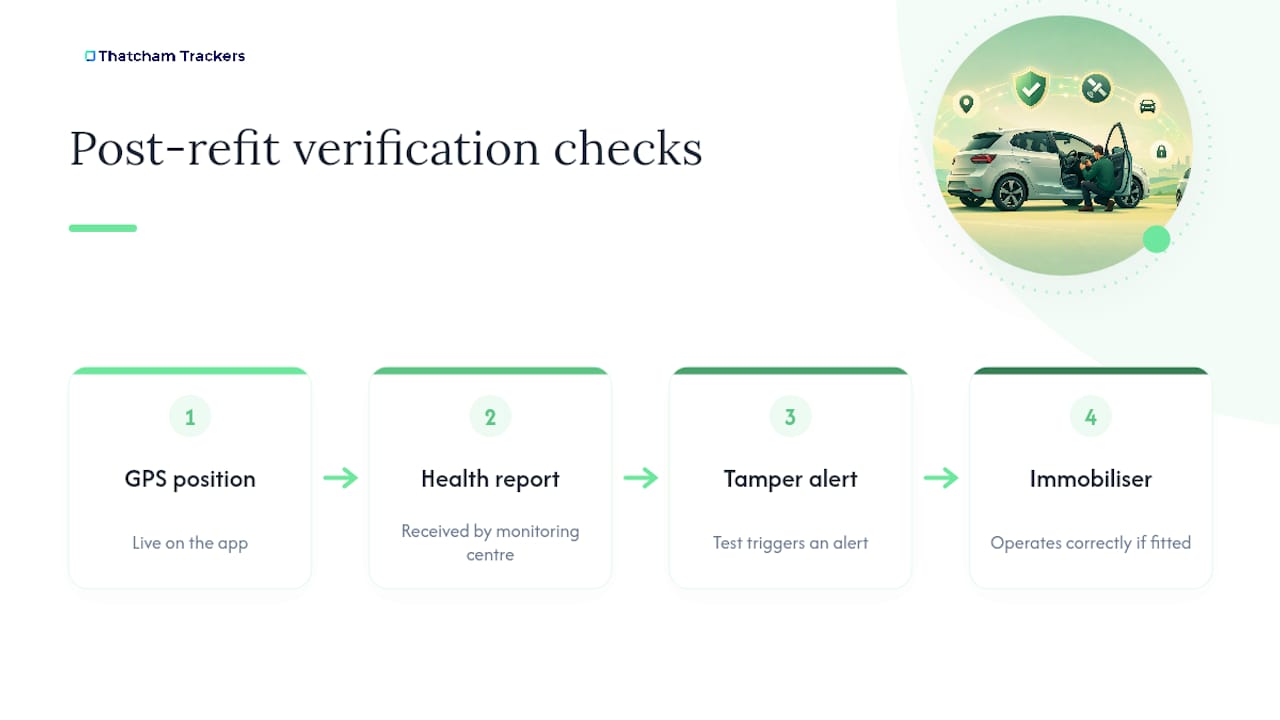
5. Post-fit verification. Before the installer leaves, confirm:
- A live GPS fix on the tracking app or portal
- A health check report sent to the monitoring centre
- A tamper alert test that actually triggers
- Immobiliser response, if fitted
Pro Tip: Watch the engineer run the health check in person rather than taking their word for it. A five-minute delay while you observe is far cheaper than discovering a fault weeks later when you actually need the tracker.
Once the fit is verified, the engineer issues a fresh Certificate of Installation, which is the document your insurer will want to see.
What documents and details do you need ready?
An installer working with incomplete information wastes their visit and yours. Have the following ready before the appointment:
- Paperwork: the V5C page showing current registration, photo ID if the installer requests it, and proof of ownership if the car is newly purchased
- Device details: model name, serial number, and the account email or subscription ID tied to the tracker
- Vehicle prep: a charged battery, clear access to the fusebox and under-dash areas, and a realistic appointment window rather than a rushed slot between meetings
The engineer will use these to complete the Certificate of Installation, which records the vehicle registration, device serial number, fitment date, and their own accreditation number. Missing any one of these details on the day is a common reason appointments overrun or need rebooking.
What do insurers actually require to accept the transfer?
Thatcham Research sets the technical bar through categories like S5, which covers vehicle tracking systems, and S7, which covers asset location systems. Certification confirms the device meets that bar. It does not automatically mean every insurer will accept it, because insurer recognition is a separate commercial agreement sitting on top of the technical standard.
The Certificate of Installation is the standard evidence insurers ask for. Some go further and want the monitoring contract details or the device serial number recorded on their policy file too. Rather than guess what your insurer wants, call them and ask directly:
- Which Thatcham category does our policy require, S5 or S7?
- Do you need the Certificate of Installation, the monitoring account reference, or both?
- Can you confirm acceptance of this specific transferred device in writing?
Pro Tip: A verbal “that should be fine” from a call centre agent is not evidence. Ask for confirmation by email, and keep it alongside the certificate itself. If you ever need to make a claim, that written trail is what protects you.
Store both documents somewhere you can retrieve them instantly, not just at renewal but if a claim ever hinges on proof the tracker was correctly recognised.
What will it cost and how long will it take?
Fees and timescales vary between schemes, but expect a modest administration charge for a certificate update, illustratively around £20 plus VAT, with the new certificate arriving within around five working days. That’s separate from whatever your installer charges for the physical refit.
- Certificate update fee: a modest administration charge (varies by provider)
- Certificate turnaround: usually a few working days once evidence is submitted
- Installer appointment lead time: book ahead, particularly near renewal dates
If your policy renews soon, book the transfer well before that date. Insurers querying a gap in cover will want evidence the appointment was booked in good time, so keep your booking confirmation alongside the certificate.
How do you check the tracker is working after refit?
Before you consider the job done, verify these functions yourself or ask the installer to demonstrate them: a live GPS position on the app, a completed health report reaching the monitoring centre, a tamper alert that fires when tested, and correct immobiliser behaviour if one is fitted.
Common faults after a transfer include a SIM that hasn’t activated roaming, CAN bus wiring that’s been connected to the wrong circuit, or unexpected battery drain. Ask the installer to recheck these specific points rather than accepting a generic “it’s working.”
Pro Tip: If the fault is a SIM or monitoring signal issue, contact the monitoring provider first. If it’s a wiring or fitment problem, that’s a re-visit request to the installer, not a call centre issue. This distinction saves a lot of wasted phone calls, and it’s consistent with how fleet-grade tracking faults get diagnosed too.
Why does certified fitting protect your cover?
Thatcham Research periodically reviews S5 and S7 certification standards, including requirements like 24/7 monitored centres, roaming SIM capability, and minimum resistance to attack. A correctly issued Certificate of Installation is the primary evidence insurers rely on to confirm those standards were actually met on your car, not just on paper. Skip a certified fitter and you risk a device that works technically but carries no evidence an insurer will accept.
Common mistakes owners make when transferring a tracker
Most problems trace back to timing. Owners book the installer a day or two before renewal, then panic when the certificate hasn’t arrived in time. Book early, request the Certificate of Installation the moment the fit finishes, and get your insurer’s acceptance in writing before you assume anything is covered.
— Thatcham Trackers
Buy a Thatcham-approved tracker and book accredited fitting
Thatcham Trackers is the practical alternative to chasing separate installers and certificate schemes yourself. Devices come with certification and fitting from an accredited engineer network, helping ensure transferred units meet insurer requirements.

Ordering online is straightforward. Have your vehicle registration, V5C details, and existing device serial number (if you’re transferring rather than replacing) ready before you book. Browse the Thatcham S5 range, the Thatcham S5 Plus upgrade options, or the full Thatcham S7 collection if your insurer specifies that category. If you’re also addressing immobiliser cover, the Casper Ghost-Like Immobiliser range is worth reviewing alongside your tracker order.
Once fitted, request your Certificate of Installation and keep the confirmation email safe. Then get your insurer’s written acceptance before you consider the transfer finished.

Quick links to verify certification and update your certificate
Save these before your appointment:
- Thatcham security certification for category definitions
- TASSA certificate update form for reissuing paperwork
- Insurance-approved tracker best practice guide for fitment standards
Sources
FAQ
Can I transfer my own tracker to a new car myself?
No. Insurers require a professional refit by an accredited installer, and only that installer can issue the Certificate of Installation insurers rely on as evidence.
Does the Thatcham category change when I move cars?
No, the category (S5 or S7) stays with the device, but your insurer must confirm in writing that the same category still satisfies the new vehicle’s policy requirement.
How much does updating a tracker certificate cost?
Expect an illustrative admin fee of around £20 plus VAT, with the updated certificate arriving within about five working days, though fees vary by scheme.
What happens if I don’t tell my insurer about the transfer?
Your policy may not recognise the tracker on the new vehicle, which can affect any theft-related claim even if the device is technically working.
Does Thatcham Trackers sell devices for a transfer situation?
Yes, Thatcham Trackers supplies Thatcham S5, S5 Plus, and S7 devices with nationwide accredited installation for owners replacing rather than refitting a unit.