

Keyless car theft remains a real and current risk on UK roads, and relay attacks are still the most common method used against vehicles with keyless entry. Keep your keys away from doors and windows, use a tested Faraday pouch or signal-blocking box, and always check your car has locked manually before walking away. Police guidance and Thatcham Research both confirm these three steps form the baseline of any effective defence.
TL;DR:
- Relay attacks can unlock and start a car in under a minute without damage, while OBD theft requires entry to program a blank key.
- The 2026 law criminalizes possessing, making, importing, or supplying vehicle theft devices, with penalties of up to five years’ imprisonment.
- Cars with passive keyless entry and no sleeping fob or ultra wideband technology face greater relay risk; easy to reach OBD ports add another vulnerability.
- A Thatcham approved tracker or immobiliser may meet insurer requirements and aid recovery, but it supplements rather than replaces physical and signal protections.
Table of Contents
- How relay attacks and related theft methods work
- UK prevalence and what the Crime and Policing Act 2026 changes
- Which cars and features carry the highest risk
- Layered defences: today, this week, this year
- Thatcham Research ratings and how approved devices fit in
- What to do if your keys or car are stolen
- Staying ahead of an evolving threat
- Protecting your car with Thatcham-approved devices
- FAQ
- Sources
How relay attacks and related theft methods work
Relay theft uses two small devices. One is held near your front door to pick up the signal from your key fob inside the house. The second sits by your car. It relays that signal to the car, tricking it into believing the key is close enough to unlock and start the engine. The whole process can take under a minute and needs no damage to the vehicle at all.
Signal jammers and amplifiers serve different purposes. A jammer blocks your key fob’s signal from locking the car, often used while you walk away believing it has locked. An amplifier, by contrast, extends a weak signal’s reach, which is the core tool in a relay attack.
The OBD port offers a separate route in. Located under the dashboard, it gives direct access to a car’s electronics, and West Yorkshire Police warn that criminals with the right programming device can use it to code a blank key once inside the vehicle.
- Relay attacks typically happen overnight, outside homes, within signal range of a key left near the front door.
- Jamming is often used in car parks to stop locks engaging as owners walk off.
- OBD attacks require physical entry first, making locked doors and steering locks useful deterrents.
UK prevalence and what the Crime and Policing Act 2026 changes
Vehicle theft has stayed a significant feature of UK crime, with ONS crime statistics providing the official baseline figures tracked by government and industry each year. Electronic devices designed to defeat keyless security have been a persistent feature behind these numbers.
The Crime and Policing Act 2026 now criminalises possession, importation, manufacture and supply of devices built to commit vehicle theft, carrying penalties of up to five years’ imprisonment. This closes a gap that previously let sellers and importers of relay and signal amplification kit operate with little legal risk.
- Possessing, making, adapting or supplying theft devices is now a specific offence, not just a secondary charge.
- Penalties of up to five years’ imprisonment apply to those convicted.
- The law gives police clearer grounds to seize devices and prosecute supply chains, not just individual thefts.
For owners, this should gradually reduce the availability of relay kits, though existing devices already in circulation mean practical precautions stay essential in the meantime.
Which cars and features carry the highest risk
Passive keyless entry and start (PKES) lets you unlock and start a car without pressing a button on the fob, as long as the key is nearby. It is now standard on many new vehicles, not just premium models, which has widened the pool of cars exposed to relay theft.
Some features reduce risk considerably. A “sleeping” fob that only wakes on button press is far harder to relay than one broadcasting constantly. Ultra-wideband (UWB) technology, which measures the exact distance between fob and car far more precisely than older systems, is appearing in newer models and makes relay attacks much harder to pull off.
- Standard-fit PKES with no motion-sensor or sleeping fob is the highest-risk configuration.
- Spare keys left on a hallway table or hook near a front door or window are a common point of failure.
- An OBD port that is easy to reach without removing trim panels makes a vehicle quicker to compromise once a thief is inside.
Layered defences: today, this week, this year
No single measure stops every theft method, which is why police and insurers both recommend layering physical, digital and insurer-accepted protections.
- Today: move all keys, including spares, away from doors, windows and hallway surfaces; test your Faraday pouch by trying to unlock the car with the fob sealed inside, standing next to the vehicle; manually check every door is locked before leaving the car.
- This week: fit a visible steering wheel lock, buy a quality signal-blocking pouch or box for home use, and park in a garage or a spot facing away from the street where possible.
- This year: ask your dealer about software updates, enquire whether a sleeping fob or UWB upgrade is available for your model, and look at a Thatcham-approved tracker or immobiliser fitted by a professional installer.
A lockable OBD port cover, or professional relocation of the port itself, closes off the secondary entry route that West Yorkshire Police flag as a growing concern once a thief has got inside the vehicle.
Pro Tip: Faraday pouches lose effectiveness as the lining wears, so test yours monthly rather than assuming it still works.
Physical deterrents slow a thief down, pouches and jammers-blockers protect the signal itself, and insurer-accepted tracking or immobilisation gives you a fallback if the first two layers fail. None of these replace the others.

Thatcham Research ratings and how approved devices fit in
Thatcham Research is the UK’s vehicle security testing body, and its New Vehicle Security Assessment (NVSA) programme rates how resistant a car’s factory security is to theft methods including relay attacks. Insurers use these ratings to assess risk, which is why a Thatcham-approved aftermarket tracker or immobiliser can influence the premium you’re offered.
- A Thatcham-approved tracker gives a monitoring centre the ability to locate a stolen vehicle and support police recovery.
- An approved immobiliser prevents the engine from starting without the correct authorisation, even if a key has been cloned.
- Certification is issued directly to insurers, which is why many require it as a policy condition on higher-risk models.
| Device | What it does | Typical use case |
|---|---|---|
| Thatcham S7 | Insurance-approved GPS tracking with tamper alerts | Owners needing a certified base-level tracker |
| Thatcham S5 | Advanced tracking with additional monitoring features | Higher-value vehicles needing stronger cover |
| Thatcham S5 Plus | Enhanced tracking and immobilisation support | Owners wanting the fullest tracking specification |
| Casper Ghost-Like Immobiliser | Blocks engine start without correct authorisation | Vehicles targeted by key cloning or OBD attacks |
A tracker or immobiliser is most useful once the physical and signal-blocking layers above are already in place. It is the insurer-recognised backstop, not a replacement for keeping your keys secure.
What to do if your keys or car are stolen
- Call the police first and get a crime reference number; have your registration, make, model and last known location ready.
- Contact your insurer as soon as possible to begin the claims process and confirm what documentation they need.
- If a tracker is fitted, inform the monitoring centre immediately and follow their instructions, as rapid reporting improves recovery chances.
- Gather evidence such as doorbell or CCTV footage and any neighbour accounts while they’re fresh.
- Once the immediate incident is dealt with, get any remaining keys reprogrammed and review where spares are stored.
Staying ahead of an evolving threat
Vehicle security and organised theft are locked in a constant back-and-forth: as manufacturers add sleeping fobs and UWB, criminals adapt their methods. Layered defences and the new legal tools in the Crime and Policing Act 2026 are shifting the balance back towards owners. Thatcham Research continues to work with manufacturers and insurers on raising standards, but the practical steps above still start with you.
— Thatcham Trackers
Protecting your car with Thatcham-approved devices
We supply trackers and immobilisers that meet standards insurers ask for, fitted through an installation network.
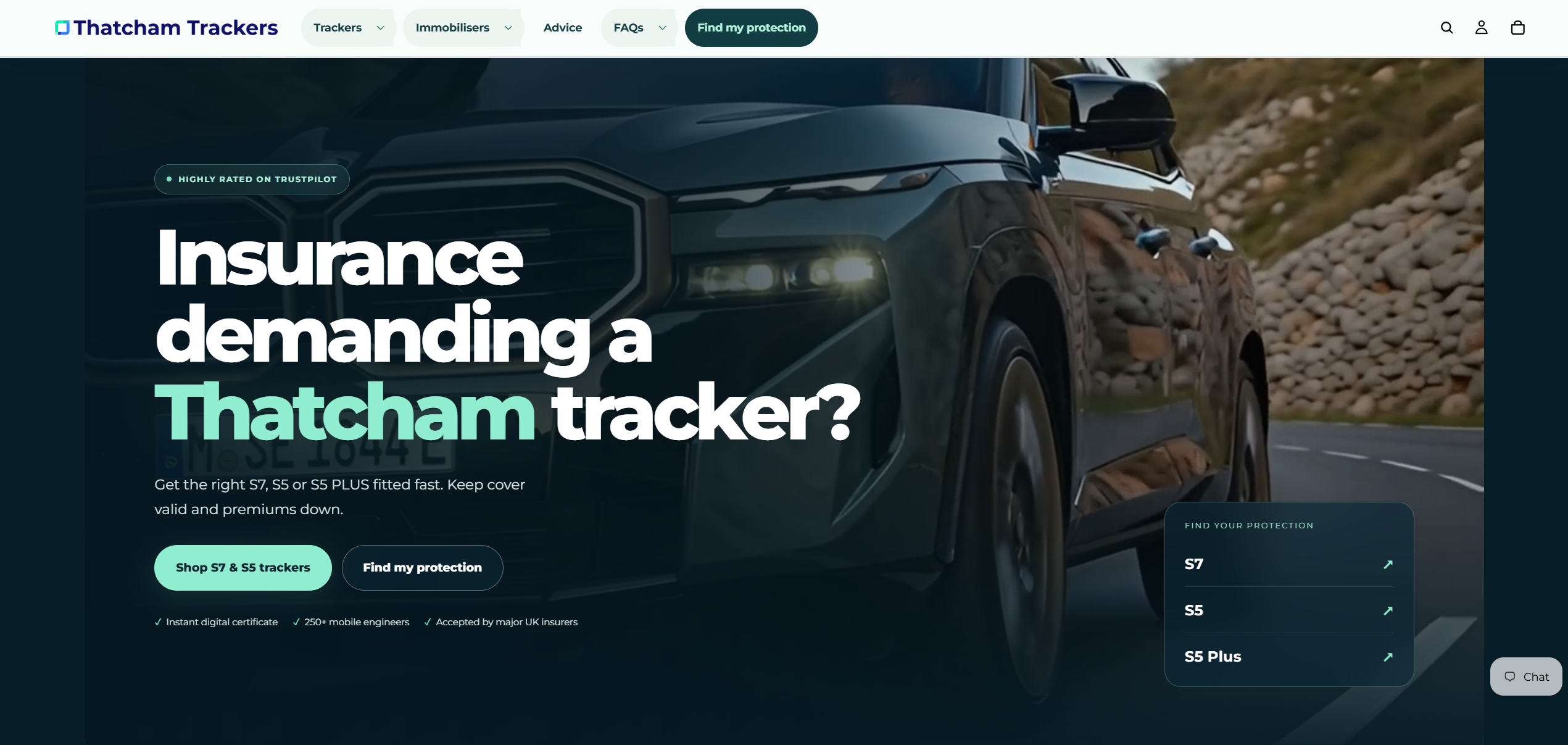
Our range includes the Thatcham S7, Thatcham S5, Thatcham S5 Plus, and the Casper Ghost-Like Immobiliser. Each device carries full Thatcham certification, so your insurer receives the digital certificate they require without delay.
- View the full tracker range and compare specifications before booking.
- Arrange fitting at a time that suits you.
- Get your certification issued as soon as installation is complete.
Browse our Thatcham-approved trackers and book your fitting today.
FAQ
Which keyless cars are most stolen in the UK?
Vehicles fitted with standard passive keyless entry and no sleeping fob or UWB technology tend to be targeted most often, as these systems are easier to relay. Models without factory upgrades to their keyless systems remain more exposed than newer vehicles with motion-sensor fobs.
Can thieves get into keyless cars?
Yes, relay attacks allow thieves to unlock and start a keyless car without ever touching the physical key fob, by relaying its signal from inside your home. Police guidance recommends storing keys away from doors and windows and using a signal-blocking pouch to prevent this.
Which cars are prone to keyless theft?
Cars with standard-fit passive keyless entry and no additional countermeasures, such as sleeping fobs or UWB distance measurement, are generally more prone to relay-based theft. Older keyless systems without these upgrades remain the most commonly targeted.
What is the UK’s most stolen car?
Specific current rankings of the most stolen individual car models are not publicly confirmed in official UK crime data. ONS crime bulletins track overall vehicle theft trends rather than model-specific theft league tables.
Does fitting a Thatcham-approved tracker reduce my insurance premium?
Many insurers factor Thatcham Research certification into their risk assessment, and some require an approved device as a policy condition on higher-risk vehicles. The exact effect on your premium depends on your insurer’s own terms.
Sources
- Crime and policing act 2026: serious crime factsheet
- Crime in England and Wales: year ending March 2025
- Preventing keyless car theft | PSNI
- Keyless theft | West Yorkshire Police
- Security technology | Thatcham Research