

Yes, usually, but it depends on two things: whether the device has a roaming SIM and whether your insurer has confirmed acceptance in writing. A Thatcham S5 or S7 tracker is built with cross-border features as standard. The certificate alone does not guarantee your insurer treats overseas cover the same way. Check both before you travel.
TL;DR:
- A roaming SIM is essential for tracking abroad, but coverage and acceptance depend on your provider’s country list and your insurer’s specific approval.
- Insurer recognition and Thatcham certification are separate; always obtain written confirmation that your insurer accepts the device and its certification for overseas use.
- Verify that your tracker’s agreement with your insurer explicitly covers your destination country, with no trip-length restrictions, before traveling.
- Fitting a tracker with accepted certification and keeping all related documents ready reduces disputes and speeds up claims or police interactions abroad.
- Cross-border police data sharing is improving, but vehicle recovery still relies heavily on local police cooperation and rapid reporting.
Table of Contents
- What S5 and S7 certification means for roaming capability
- How insurer recognition and policy wording affect overseas cover
- What to check on the device and service before you travel
- If the vehicle is stolen abroad: what actually happens and realistic outcomes
- Installation, paperwork and insurer evidence when fitting a tracker
- Practical pre-travel checklist for owners
- How owners and fleets treat overseas use in practice
- How Thatcham Trackers can help you prepare for travel
- Sources
- FAQ
What S5 and S7 certification means for roaming capability
Thatcham S5 and S7 are the two categories most commonly specified by UK insurers for vehicle tracking. The vehicle security product definitions set out what S5 devices must include: a roaming SIM, GPS positioning, a 24/7 monitored centre, bidirectional data transmission and battery backup.

The roaming SIM is the part that matters most for travel abroad. It lets the device exchange location and status data with the monitoring centre even when it has switched to a foreign mobile network. Bidirectional data means the centre can send commands back to the unit, not just receive signals from it.
None of these is a promise about which countries are covered or for how long. Certification tests whether the hardware performs to a technical standard. It says nothing about the commercial terms an operator sets for overseas use, or whether your specific insurer recognises that particular product. Those are separate questions, and both need answering before departure.
How insurer recognition and policy wording affect overseas cover
Thatcham has been direct on this point: certification and insurer recognition are not the same thing. The Thatcham security certifications page states that certification verifies design, functionality and performance, while insurers separately decide which certified products they accept and on what terms.
That distinction matters most when you’re planning a trip abroad. A policy might cover UK theft risk but stay silent on territorial limits, or it might name specific countries and day caps. Before travelling, ask your insurer to confirm the following in writing:
- The exact tracker category and certificate number your policy recognises
- Whether your installer and fitting method are accepted
- Which monitoring centre handles alerts and whether it covers your destination
- Any territorial or trip-duration limits attached to your cover
Keep that written confirmation alongside your fitting certificate. If you ever need to make a claim or involve local police, having both documents ready removes a layer of dispute at the worst possible time.
What to check on the device and service before you travel
A short pre-departure check avoids most problems. Work through it in order, ideally a week or more before you leave.
- Confirm your tracker’s exact model and retrieve its Thatcham certificate.
- Request the provider’s territorial country list and any trip-duration limits that apply.
- Verify the SIM is roaming-enabled and ask which monitoring centre handles overseas alerts.
- Check your monitoring subscription is active and paid up to date.
- Test the battery backup and tamper alert, and confirm the results with your provider.
- Save the monitoring centre’s contact numbers somewhere accessible without a UK SIM.
Pro Tip: Ring the monitoring centre before you travel and ask them to confirm your destination country on record. It takes a few minutes and removes any ambiguity if an alert ever needs escalating.
If the vehicle is stolen abroad: what actually happens and realistic outcomes
When a tracker signals a suspected theft abroad, the monitoring centre raises an alert and, where it can, tries to establish contact with local police in that jurisdiction. Recovery from that point depends heavily on local police cooperation and how quickly registration and location data can be checked.
The UK Government’s announcement on cross-border data sharing from June 2026 speeds up vehicle-registration checks between UK and European police forces through the Prüm system. That’s a genuine improvement in how fast a foreign force can confirm a vehicle’s status. It is a policing data-sharing measure, though, not a guarantee that any private tracker alert leads to recovery.
If you suspect your vehicle has been stolen abroad, contact your monitoring centre immediately, then alert local police yourself rather than assuming the centre has already done so. Keep your fitting certificate and insurer confirmation to hand: police and insurers both may ask for them, and having them ready speeds up every step that follows.

Installation, paperwork and insurer evidence when fitting a tracker
Insurers generally will not accept a tracker fitted by an unaccredited installer, regardless of the device’s certification. The fitting itself, and the paperwork it generates, is what turns a certified product into evidence your insurer can act on.
After fitting, insurers commonly ask for:
- The certificate number tied to the specific vehicle and device
- Contact details for the accredited installer who fitted it
- Confirmation that the monitoring subscription is active
- The activation timestamp recorded at fitting
Fit and register the device well ahead of any planned trip rather than the week before. Keep a digital and a paper copy of every document, and store them somewhere you can reach without depending on a UK-only cloud account while abroad.
Practical pre-travel checklist for owners
Run through this the day before you leave.
- Confirm your certificate is current and save a copy to your phone.
- Get written insurer confirmation of overseas use and any limits that apply.
- Verify your monitoring subscription and note which centre covers your route.
- Test the device’s tamper alert and confirm it reaches the monitoring centre.
- Pack a physical copy of your certificate and insurer confirmation alongside your travel documents.
Five minutes of checking now saves a difficult phone call later.
How owners and fleets treat overseas use in practice
Fleet managers who send vehicles across borders regularly tend to treat territorial cover as a contract line item, not an assumption. They ask providers for the country list and day limits in writing, then match that against insurer terms before a single vehicle leaves the yard.
The pattern holds for private owners too. A correct certificate, a documented activation date and written insurer confirmation resolve most disputes before they start. What none of this changes is the basic reality that no tracker guarantees recovery. Swift reporting and cooperation with the monitoring centre and local police remain the things that actually move a case forward.
— Thatcham Trackers
How Thatcham Trackers can help you prepare for travel
Some providers supply Thatcham-certified S5, S5 Plus and S7 devices, fitted by accredited engineers with a digital certificate issued after installation.
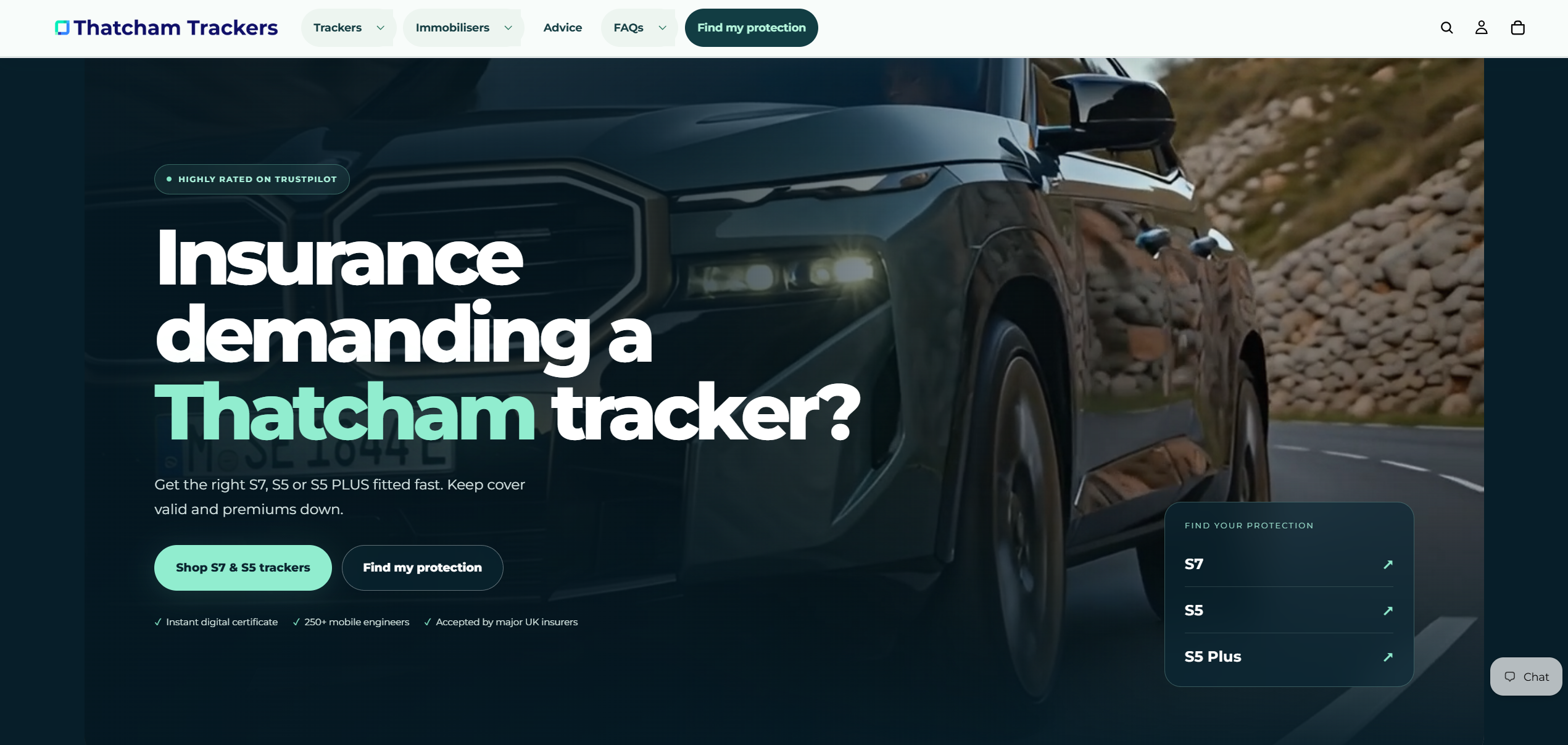
Confirm which model your insurer expects, then book fitting in good time before you travel so the certificate and activation record are settled well ahead of departure. Browse the Thatcham S7 collection or the Thatcham S5 range to see current models and fitting availability.
Sources
Save the Thatcham product definitions as proof of technical requirements, and the Thatcham certification page confirming certification does not equal insurer acceptance. Fleet operators comparing telematics contracts for cross-border cover may find this telematics fleet management overview a useful reference point.
- Vehicle security product definitions guidelines
- New police data‑sharing to target organised crime (Prüm context)
FAQ
Does a Thatcham-approved tracker automatically work abroad?
Not automatically. Most S5 and S7 devices include a roaming SIM that allows them to signal abroad, but coverage depends on the provider’s territorial list and your insurer’s specific acceptance terms, confirmed by Thatcham’s own guidance that certification and insurer recognition are separate matters.
What’s the difference between Thatcham certification and insurer acceptance?
Certification confirms the device meets a technical standard covering GPS, monitoring and roaming SIM requirements, as set out in Thatcham’s product definitions. Insurer acceptance is a separate commercial decision, so you should always get written confirmation from your insurer before relying on a certificate abroad.
Do trackers have country limits or trip-duration caps?
Some providers set specific covered countries and temporary-use limits, such as a 30-day cap on overseas tracking cited by one OEM stolen vehicle tracking service. These limits are provider-specific rather than a universal Thatcham rule, so check your own service terms directly.
Will a tracker guarantee my vehicle is recovered if stolen abroad?
No. A tracker alert can prompt faster police checks, and the UK Government’s June 2026 Prüm announcement shows cross-border registration checks are getting quicker, but recovery still depends on local police cooperation and circumstances, not the device alone.
What paperwork should I have ready before travelling with a tracker?
Keep your Thatcham certificate, the certificate number, your installer’s contact details and written insurer confirmation of overseas cover. Having both digital and paper copies to hand speeds up any interaction with police or your insurer while you’re away.